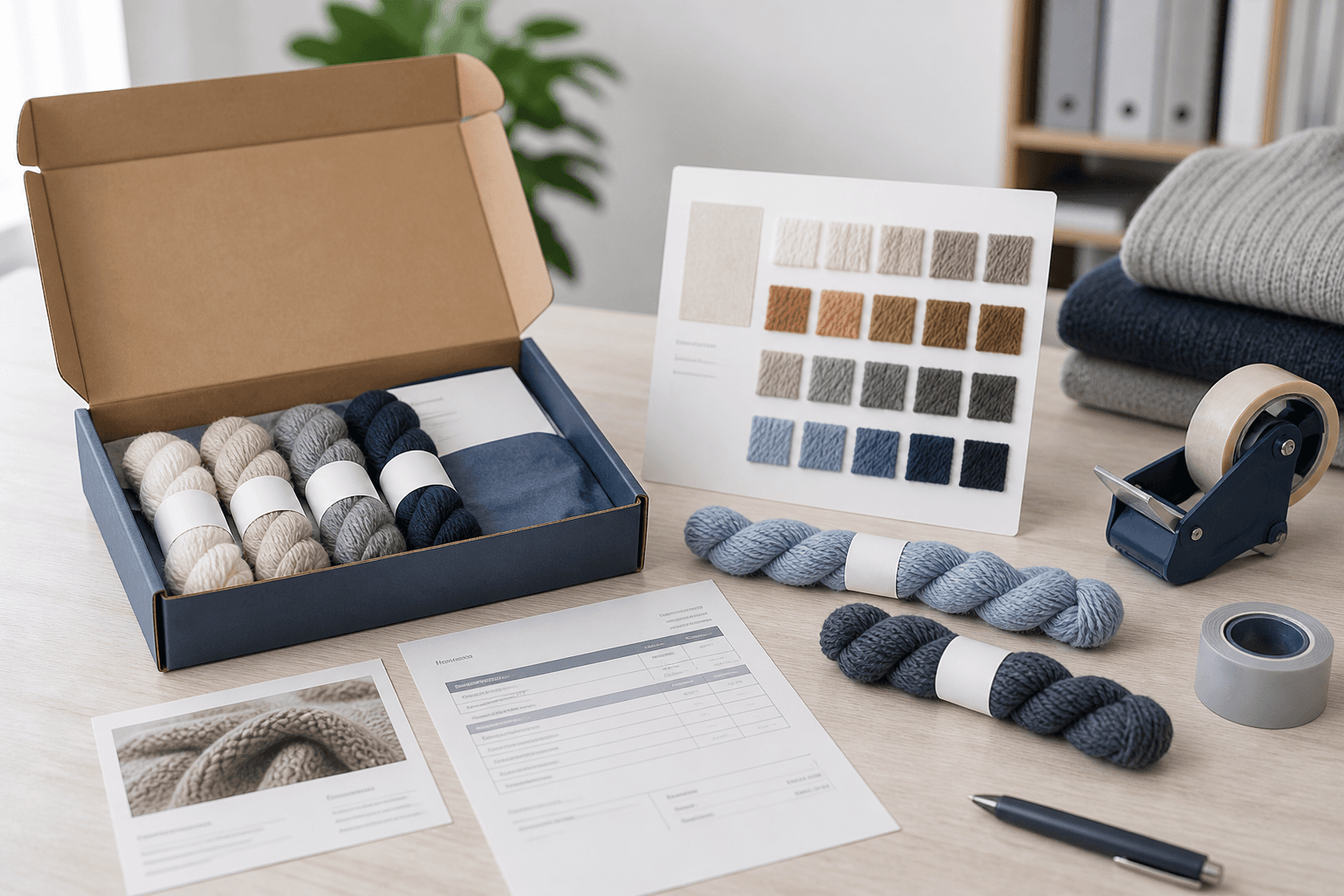
Sampling is the cheapest place to catch a wrong fiber, shade, or pack—and the most expensive place to skip. Importers who send a vague “send me samples” email get random stock balls; importers who send a written brief get comparable options, a retained standard, and a clean path to bulk.
This guide is the practical sample workflow for knitting and crochet yarn programs. Full sourcing map: How to Source Yarn from China. Custom shade work: Custom Yarn Color Matching & Lab Dip.
| Type | Purpose | Typical use |
|---|---|---|
| Stock / running sample | Feel an existing mill style | First shortlist |
| Development sample | New count, blend, or finish | OEM programs |
| Lab dip / shade sample | Approve color before bulk dye | Custom colors |
| PP / pre-production sample | Confirm bulk route matches approval | Before ship |
| Packaging mock | Labels, bands, hang tags, barcodes | Private label |
Asking for “a sample” without naming the type wastes a week. Say which one you need.
Include these fields in your first request (email or quote form):
Factories quote faster when the brief is complete. Incomplete briefs get generic stock picks.
| Step | Typical window |
|---|---|
| Brief + style shortlist | 1–3 days |
| Stock samples ship | 3–10 days (plus transit) |
| Custom development sample | 1–3 weeks |
| Lab dips | Often 5–14 days after standards received |
| Buyer evaluation + feedback | 3–10 days (your side) |
| PP sample before bulk | Built into production calendar |
Ocean freight and peak seasons stretch these windows—see Yarn Lead Time & Production Calendar.
| Situation | Common practice |
|---|---|
| Running stock styles | Often low-cost or credited against first PO |
| Heavy courier of many colors | Buyer pays freight |
| OEM development | Sample / development fee common |
| Lab dips for new palette | Usually charged per color |
Free samples with no style number are rarely free—you pay later in mismatch risk. Prefer paid, documented samples you can reference on the PO.
Skipping from “I like the sample” to a container is how shade and hand-feel disputes start.
| Signal | Risk |
|---|---|
| Samples with no style number | Cannot reorder the same yarn |
| “Close enough” shade without light source | Retail returns |
| Supplier refuses retained standard | Reorder lottery |
| Pressure to book bulk before evaluation | Inventory trap |
| Sample fiber differs from quote fiber | Label / customs issues |
Usually two to three factory-backed options for a new program—enough to compare, not so many that evaluation never ends.
It helps for hand feel and weight class, but still write fiber %, pack, and color intent. Competitors change lots; your PO needs your own standard.
No. Sampling proves product feel; certification needs documents tied to the production lot. Start claim checks early (GRS verification).
Send the brief via Get Free Quote, or browse the yarn catalog first and reference style numbers in your inquiry.
Treat sampling as a controlled gate, not a free gift bag. Brief clearly, evaluate against a checklist, retain standards, and only then open bulk. That sequence protects landed cost more than shaving a few cents off FOB.
Next steps: Draft a one-page sample brief, shortlist styles from the catalog, and request documented samples. For OEM development timing, see OEM manufacturing process.
Sullivans International supports sample-to-bulk programs for knitting and crochet yarn—stock styles, OEM development, and export packing. Get a free quote · Yarn manufacturer · Browse yarn catalog.