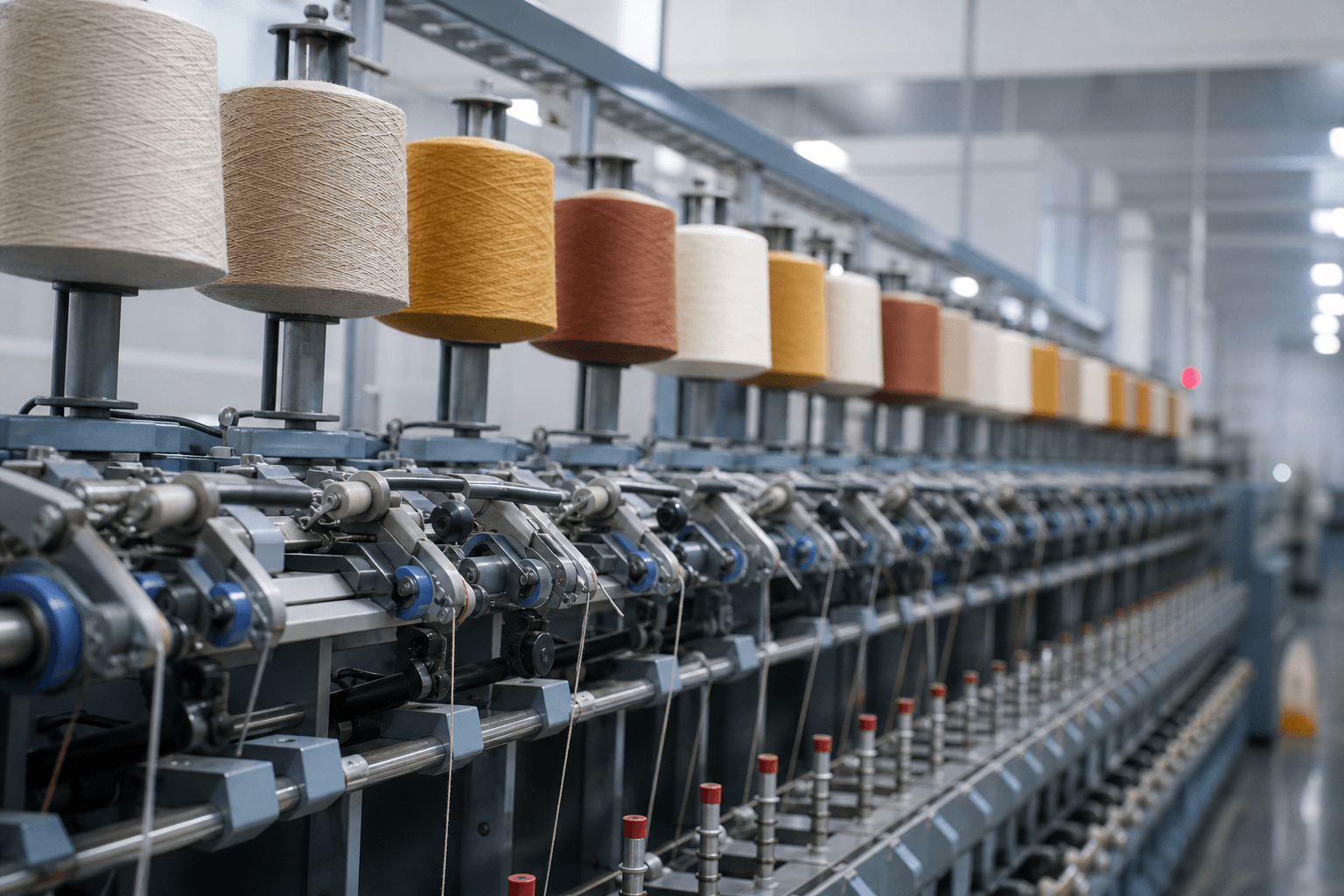

OEM yarn manufacturing turns your fiber, count, color, and packaging brief into a repeatable production program—not a one-off spot purchase. A clear process (brief → sample / lab dip → bulk → pack → QC → ship) is what separates factory-backed OEM from trading companies that only re-label stock.
This guide walks through each stage so importers, private-label brands, and marketplace sellers know what happens, what you approve in writing, and where delays usually appear. For capability overview, see our OEM yarn manufacturer page. For end-to-end sourcing context, use How to Source Yarn from China.
| Model | What you control | Typical use |
|---|---|---|
| Stock / running style | Color choice from existing card; standard pack | Fast replenishment |
| Private label | Branding on an existing yarn | Retail-ready packs |
| OEM / ODM | Construction and/or fiber recipe + color + pack | Exclusive or differentiated lines |
Many first programs start as private label on a proven style, then move to fuller OEM once volume justifies development. Packaging options are covered in Private Label Yarn: Packaging Options and Costs.
Document before sampling:
| Field | Examples |
|---|---|
| End use | Blanket, garment, craft retail, Amazon SKU |
| Fiber | Acrylic, cotton, wool blend, chenille, etc. |
| Count / weight | Nm, CYC category (see yarn weight chart) |
| Hand feel target | Soft, anti-pill grade, loft |
| Colors | Pantone, physical swatch, or “match sample” |
| Packaging | Cone, ball, cake; label language; barcode |
| Volume | First PO + 12-month outlook |
| Compliance | GRS, OEKO-TEX, market labeling rules |
Vague briefs (“soft acrylic like Amazon top seller”) create wrong samples and wasted weeks.
The mill checks:
Adapting a running construction with your color and pack is often faster and lower MOQ than inventing a new yarn from scratch.
| Output | Purpose | Typical window* |
|---|---|---|
| Yarn sample / hand loom swatch | Hand feel, loft, pilling check | Often within sample lead time |
| Lab dips | Color approval under agreed light | Commonly ~7–10 days for development |
| Shade card images | Assortment planning | Parallel to sampling |
*Indicative; confirm per project. Sample and freight charges are discussed case by case.
Buyer rule: approve color in writing (dip number + date + light source). Verbal “looks fine” is the #1 cause of shade disputes after bulk.
Before bulk:
Changing fiber or count after this stage usually means a new development cycle.
Typical internal sequence (simplified):
Lead time depends on quantity, color count, material availability, and line schedule—always confirmed on the order, not assumed from a catalog.
OEM often includes:
Freeze artwork early; late packaging changes delay ships even when yarn is ready. Details: private label yarn.
Recommended checks before cargo release:
| Check | Why |
|---|---|
| Shade vs approved dip | Lot consistency |
| Count / weight / ball length | Retail claims |
| Hand feel / appearance | Customer returns |
| Label accuracy | Customs and retail compliance |
| Carton marks & packing list | Freight and receiving |
Export docs (commercial invoice, packing list, certificates as agreed) should match the locked spec. Ports and terms: FOB Shanghai or Ningbo are common; CIF/DDP can be discussed for destination.
Build buffer into launch calendars—especially for seasonal craft and retail drops.
Sample and lab-dip development commonly takes on the order of 7–10 days once the brief is clear; bulk lead time is confirmed by quantity and schedule. First full programs (brief → first container) often land in a multi-week window—plan with your supplier rather than copying another buyer’s timeline.
You can start from a photo, but factories need measurable targets (fiber, count, weight) and physical or Pantone references for color. Expect a sampling loop.
If an existing style is close enough, private label is usually faster. Choose fuller OEM when you need exclusive construction or fiber performance.
Send fiber/count targets, end use, color count, packaging needs, and destination via Get Free Quote, or browse the yarn catalog for a base style to adapt.
OEM yarn succeeds when you treat it as a gated process: brief → feasibility → approved samples/dips → frozen commercial terms → bulk → pack → QC. The factory can only protect quality against a written standard.
Next steps: shortlist a base style, prepare a one-page brief, and request OEM guidance—or review capabilities on our OEM yarn manufacturer page.
Sullivans International has supported OEM, ODM, and private-label yarn programs since 2003. Get a free quote · OEM yarn manufacturer · Browse yarn catalog.