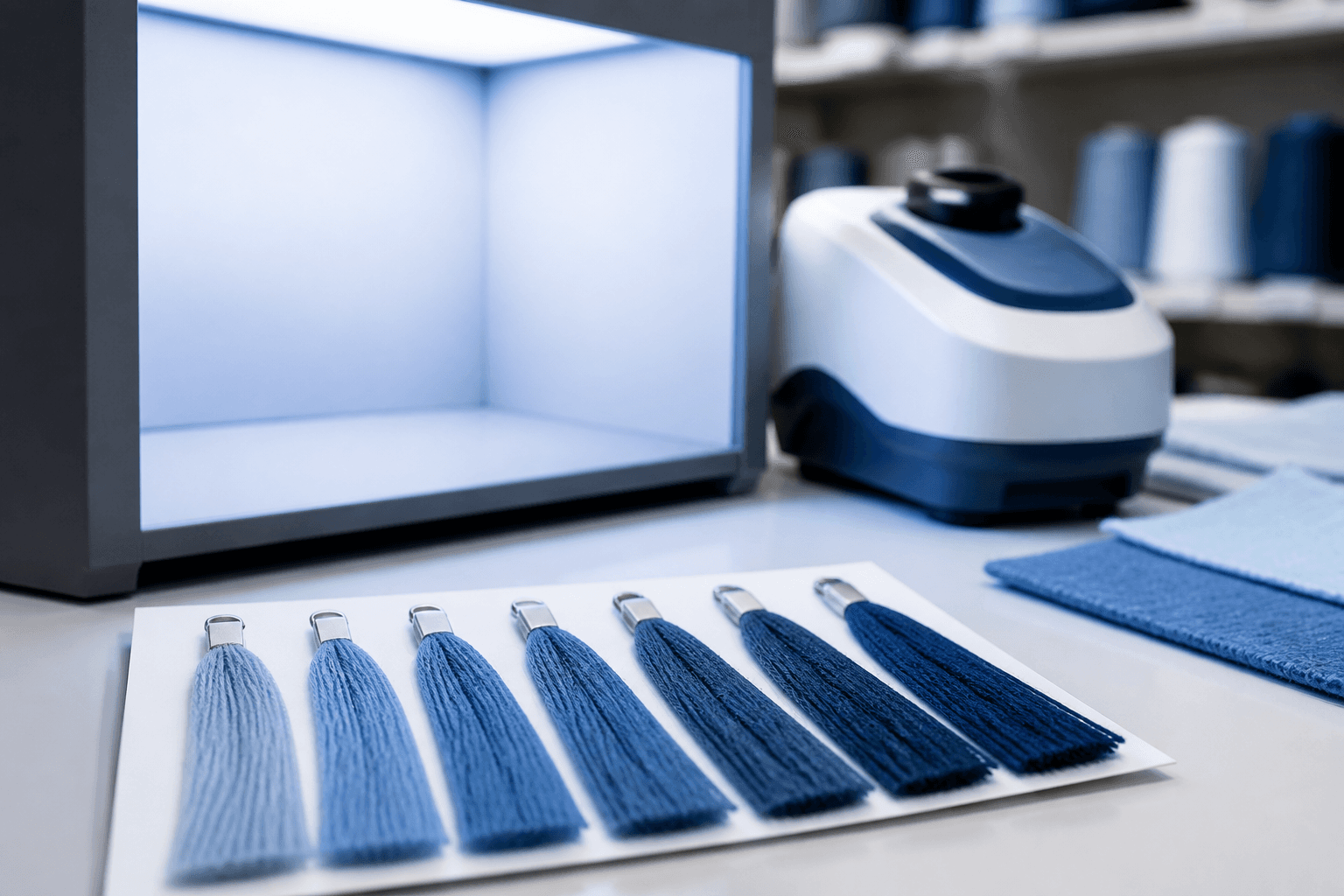

A lab dip is a small dyed sample submitted for color approval before bulk dyeing. Skipping it—or approving under the wrong light—is the fastest way to get a container that “looks different” from the sample ball you loved. Custom color is also a main driver of MOQ and lead time, so buyers should treat shade work as a project stage, not a free extra.
This guide covers how importers and brands should brief, approve, and lock yarn colors with a factory-backed partner. Process context: OEM Yarn Manufacturing Process. Sampling basics: Sample Request Process.
| Item | What it is | When you need it |
|---|---|---|
| Lab dip | Small dyed yarn / card for shade approval | Custom color on a defined base yarn |
| Running / stock color | Existing mill shade | Faster, lower MOQ path |
| Strike-off / strike | Early dye trial (naming varies by mill) | Development |
| Bulk shade check | Comparison of production lot to approved dip | Before or at shipment |
If your palette already exists on the mill’s shade card, you may not need lab dips—confirm the style number + color code in writing instead.
Send one clear package per color (or a numbered palette sheet):
Physical standards beat screens. Phone photos of a swatch are not a color standard.
| Stage | What happens | Buyer action |
|---|---|---|
| 1. Brief received | Mill checks dyeability on the base yarn | Confirm fiber/base locked |
| 2. First dip(s) | Lab submits 1–3 options toward the standard | Evaluate under agreed light |
| 3. Comments | “Darker / redder / cleaner” in writing | Avoid vague “make nicer” |
| 4. Revised dip | New submission if needed | Re-evaluate same way |
| 5. Approval | Signed / emailed approval with dip ID | Archive with PO file |
| 6. Bulk dye | Production follows approved dip | QC vs retained standard |
Expect iteration. One-round approvals happen; two to three rounds are normal for brand-critical colors. Build that into the production calendar.
If marketing and sourcing disagree on shade, resolve before bulk dyeing—not after.
| Factor | Effect |
|---|---|
| Many custom colors at low kilos each | Hits per-color dye MOQ (MOQ guide) |
| Critical match on tricky fibers | More dip rounds; longer lead time |
| Late color changes after approval | Re-dip + schedule slip |
| Different base yarn mid-project | Old dips may be invalid |
| Fancy yarns (e.g. chenille) | Shade and pile interact—sample construction first |
Running colors remain the fastest path for first test orders. Custom dips belong on confirmed SKUs.
Agree in writing:
Without this, “close enough” becomes a negotiation after freight is paid.
OEM packaging can run in parallel once colors are stable—see private label packaging.
Not reliably. Use a physical standard or controlled Pantone reference, then approve a physical dip.
Budget 1–3 submissions for commercial matches; brand-critical shades may need more. Ask the mill’s typical cycle when you brief.
No. Approve construction/hand feel on the base yarn, then lock shade with dips. Both matter for retail.
Share base style, standards, kilos per color, and markets via Get Free Quote, and review the OEM yarn manufacturer program page.
Lab dips turn “make it like this blue” into a traceable approval. Brief with real standards, evaluate under agreed light, archive dip IDs, and contract bulk shade before dyeing. That discipline protects reorders and brand color more than chasing the lowest dye quote.
Next steps: Lock the base yarn sample, prepare Pantone or physical standards, and request a lab-dip plan with kilos per color.
Sullivans International supports OEM color development for knitting and crochet yarns—lab dips, bulk dye lots, and export-ready packing. Get a free quote · OEM yarn manufacturer · Browse yarn catalog.