Aran-Wolle ist Wolle, benannt nach den Aran-Inseln vor Irlands Westküste. Sie wird für Wärme, Weichheit und Haltbarkeit geschätzt und ist eine der teureren Wollarten. Die hohen Kosten entstehen durch Wollqualität (Schafe in rauen Bedingungen gezüchtet, die sehr warme, weiche Faser produzieren), traditionelles Handspinnen und handwerkliche Methoden sowie hohe Nachfrage von Käufern, die ihren Charakter und ihr Erbe schätzen.
In diesem Leitfaden erklären wir, warum Aran-Wolle so teuer ist und wann die Investition sich lohnt.
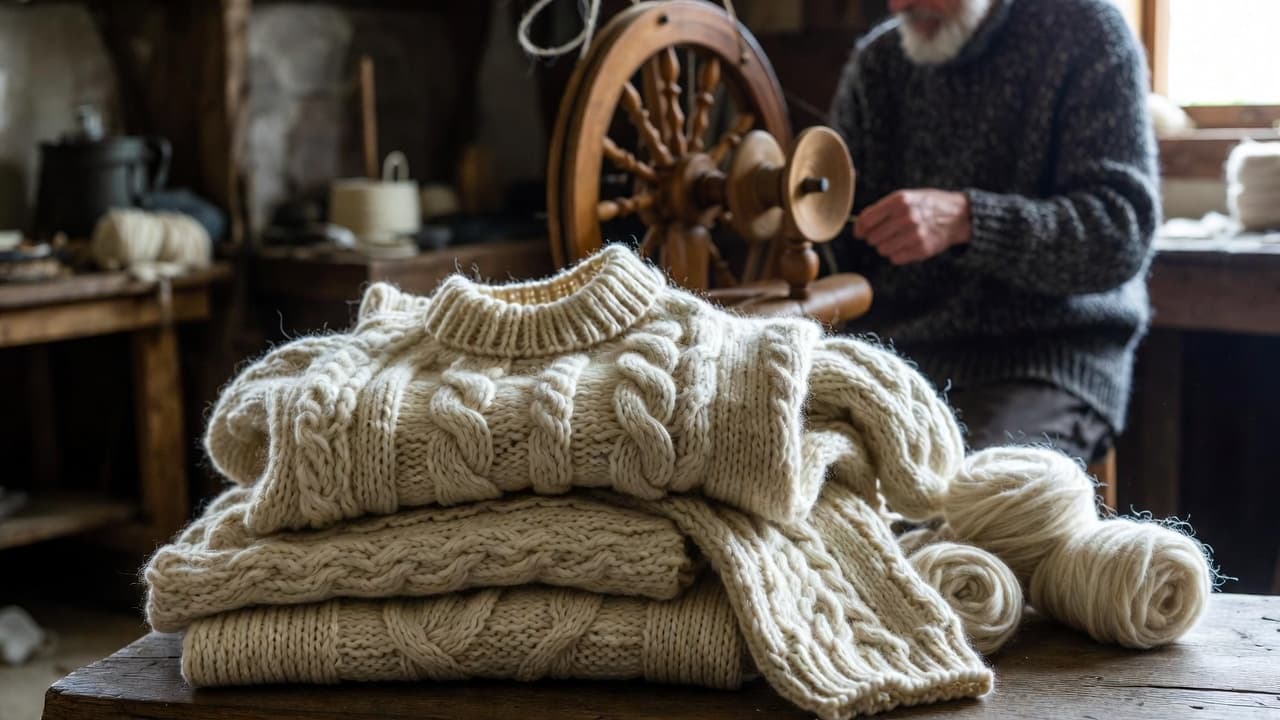
Aran-Wolle ist Wolle, die mit den Aran-Inseln (Irland) verbunden ist. Die Schafe, die diese Wolle produzieren, werden oft unter rauen Bedingungen gehalten, und ihre Wolle gehört zu den wärmsten und weichsten verfügbaren. Aran-Wolle wird häufig handgesponnen und mit traditionellen Techniken gefärbt; sie wird für Aran-Pullover und andere strukturierte, warme Strickwaren verwendet, die zum Symbol irischen Handwerks geworden sind.
Schafe, die Aran-Wolle produzieren, werden oft unter rauen Bedingungen (Wind, Regen, Kälte) gehalten. Dies kann dichte, warme und weiche Wolle erzeugen, die hoch geschätzt wird. Die Qualität der Rohfaser rechtfertigt einen Premium-Preis.
Aran-Wolle wird oft handgesponnen, was zeitaufwändig und arbeitsintensiv ist. Traditionelles Färben und Verarbeiten erhöhen die Kosten weiter. Diese handwerkliche Arbeit spiegelt sich im Endpreis wider.
Viele Aran-Produkte werden von qualifizierten Handwerkern mit traditionellen Methoden hergestellt, die über Generationen weitergegeben wurden. Diese Techniken sind langsam und erfordern Erfahrung, was die Produktionskosten erhöht und höhere Einzelhandelspreise stützt.
Aran-Wolle ist stark nachgefragt bei Menschen, die Wärme, Haltbarkeit und Erbe schätzen. Bereitschaft, einen Aufpreis zu zahlen, hilft, höhere Preise aufrechtzuerhalten.
Aran-Wolle ist teuer wegen Wollqualität aus rauen Klimazonen, Handspinnen und traditioneller Verarbeitung, qualifizierter handwerklicher Arbeit und starker Nachfrage. Für diejenigen, die Wärme, Haltbarkeit und Erbe schätzen, kann sie den Preis wert sein; für andere können alternative Wollarten praktischer sein.
Aran-Wolle ist Wolle, die mit den Aran-Inseln vor Irland verbunden ist. Sie ist bekannt für Wärme, Weichheit und Haltbarkeit und wird oft handgesponnen und für traditionelle Aran-Pullover verwendet.
Hauptgründe: hochwertige Wolle von Schafen unter rauen Bedingungen, Handspinnen und traditionelles Färben, qualifizierte handwerkliche Produktion und hohe Nachfrage nach authentischen Aran-Produkten.
Sie kann es wert sein, wenn Sie Wärme, Haltbarkeit, traditionelles Handwerk und Erbe schätzen. Wenn Budget oder einfache Pflege Priorität haben, können andere Wollarten besser passen.
Dieser Artikel ist Teil unserer Garnwissensserie mit praktischen Einblicken in Wollarten und traditionelles Handwerk.