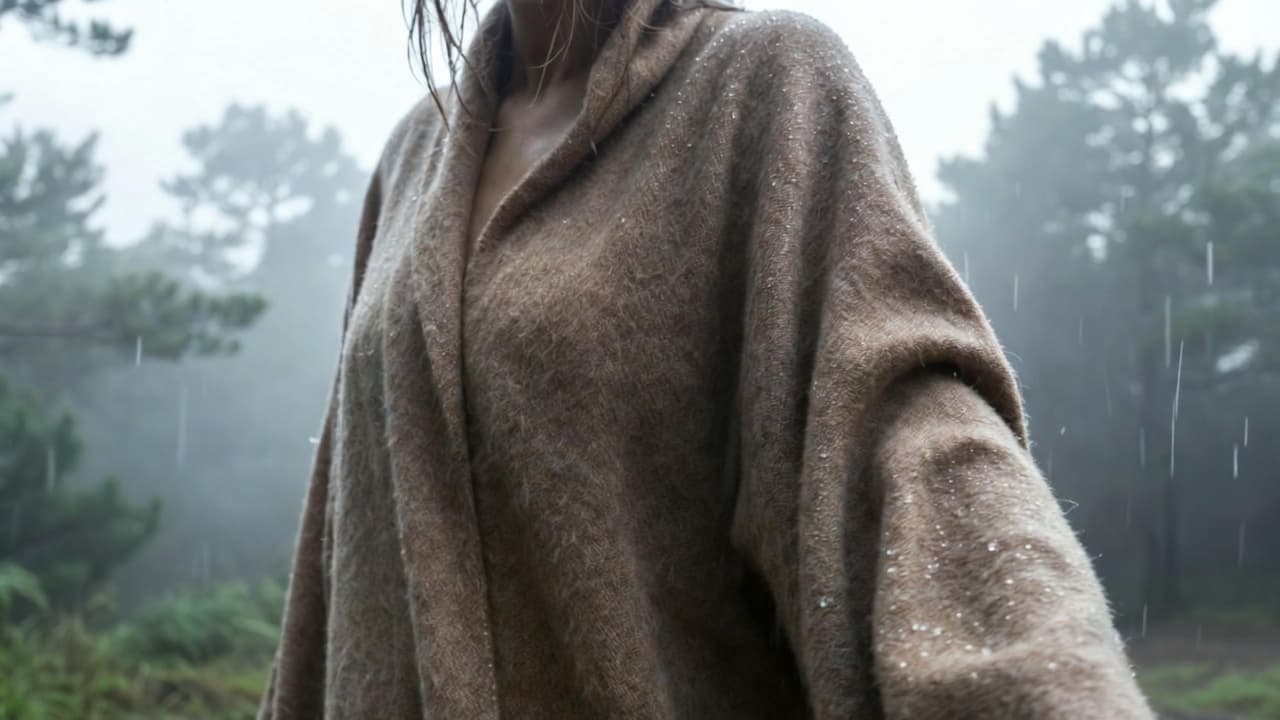

Nein, 100% Wol ist nicht vollständig wasserdicht. Wolle hat in gewissem Maße natürliche Wasserabweisung, vor allem durch die Lanolin-Beschichtung auf den Fasern, sodass sie leichten Regen oder Schnee widerstehen kann. Bei starkem oder langanhaltendem Regen wird Wolle schließlich durchweicht. Die Leistung bei nassem Wetter lässt sich verbessern durch Behandlung der Wolle (z. B. Wachs, wasserabweisende Ausrüstung), Wollmischungen mit Synthetik oder Schichtung der Wolle unter einer wasserdichten Außenschicht.
In diesem Leitfaden erklären wir, wie Wolle sich mit Wasser verhält und praktische Wege, Wolle in nassen Bedingungen zu nutzen.
Wolle ist nicht vollständig wasserdicht. Sie kann Wasser in gewissem Maße abweisen dank Lanolin (einer natürlichen Beschichtung auf der Faseroberfläche) und Faserstruktur. Das bedeutet, dass leichter Regen oder Schnee perlen oder langsam aufgenommen werden kann. Bei starkem oder langanhaltendem Regen wird Wolle nass und kann schwer und langsam trocknend werden. Kurz: wasserabweisend bei leichter Feuchtigkeit, nicht wasserdicht bei Wolkenbrüchen.
Behandeln Sie Wolle mit einem wasserdichtenden oder wasserabweisenden Produkt, wie:
Diese können die Wasserabweisung verbessern und Wolle besser für den Outdoor-Einsatz geeignet machen. Befolgen Sie die Produktanweisungen und tragen Sie bei Bedarf erneut auf.
Wolle gemischt mit synthetischen Fasern (z. B. Nylon, Polyester) kann wasserbeständiger sein oder schneller trocknen und bietet dennoch Wärme und Atmungsaktivität. Mischungen sind bei Outdoor- und Performance-Bekleidung üblich.
Verwenden Sie Wolle als Basis- oder Zwischenschicht und fügen Sie eine wasserdichte Außenschicht (Jacke, Shell) hinzu. So bleiben Sie warm und trocken, während Sie Wolles Isolierung und Feuchtigkeitsmanagement an der Haut oder in der Mittelschicht nutzen.
Wolle bleibt ein gutes Material für Outdoor-Aktivitäten, auch wenn es nicht vollständig wasserdicht ist. Sie ist warm, atmungsaktiv und feuchtigkeitstransportierend, was bei Wandern, Camping und kühlen, feuchten Bedingungen hilft. Mit Behandlung, Mischungen oder Schichtung kann Wolle Teil eines effektiven Nasswetter-Systems sein.
| Frage | Antwort |
|---|---|
| Ist 100% Wolle wasserdicht? | Nein. Widersteht leichter Feuchtigkeit; sättigt sich bei starkem Regen. |
| Warum widersteht Wolle Wasser? | Lanolin und Faserstruktur geben gewisse Wasserabweisung. |
| Wie verbessern? | Behandeln (Wachs, DWR), Woll/Synthetik-Mischungen verwenden oder schichten unter einer wasserdichten Shell. |
100% Wolle ist nicht wasserdicht, hat aber natürliche Wasserabweisung, die bei leichtem Regen oder Schnee hilft. Bei starkem Regen: behandeln Sie Wolle, wählen Sie Mischungen oder schichten Sie Wolle unter einer wasserdichten Außenschicht, um trocken zu bleiben und dennoch von Wolles Wärme und Atmungsaktivität zu profitieren.
Ja. Wolle hat natürliche Wasserbeständigkeit durch Lanolin und Faserstruktur. Sie kann leichten Regen oder Schnee widerstehen, durchweicht aber bei starkem oder langanhaltendem Regen.
Verwenden Sie wasserabweisende Behandlungen (Wachs, Silikon, DWR), Woll/Synthetik-Mischungen oder schichten Sie Wolle unter einer wasserdichten Jacke oder Shell.
Ja, bei leichtem Regen kann Wolle ausreichen. Bei starkem Regen kombinieren Sie Wolle mit einer wasserdichten Außenschicht oder behandelter/gemischter Wolle für besseren Schutz.
Dieser Artikel ist Teil unserer Garnwissensserie mit praktischen Einblicken in Woll-Eigenschaften und Outdoor-Nutzung.