
Sullivans International
Produkte
GarnStricken und Häkeln
Ăśber uns
Unternehmensprofil
Garnhersteller
OEM & Volumenlieferung
Blog
Amazon-BestsellerGarn-Einblicke
Nachrichten
Neueste Updates
Kontaktieren Sie uns
sales@sullivansintl.com@sullivansintl
© 2026 Sullivans International (China) Co., Ltd.
Alle Rechte vorbehalten.
Startseite/Blog/Garn-Einblicke/What Is the Difference Between Corduroy and Chenille? Fabric Guide
Cover Image for What Is the Difference Between Corduroy and Chenille? Fabric Guide

What Is the Difference Between Corduroy and Chenille? Fabric Guide

Sullivans International
March 1, 2026•4 min read
Looking for bulk supply or OEM yarn?Learn more about our manufacturing capabilities →

Corduroy and chenille are both textured, soft fabrics that add warmth and visual interest to clothing and home textiles. They are often confused because both have a raised surface, but they differ in structure, appearance, durability, and best uses.

In this guide, we explain what corduroy is, what chenille is, how they compare across key dimensions, and which fabric to choose for different projects.


What Is Corduroy?

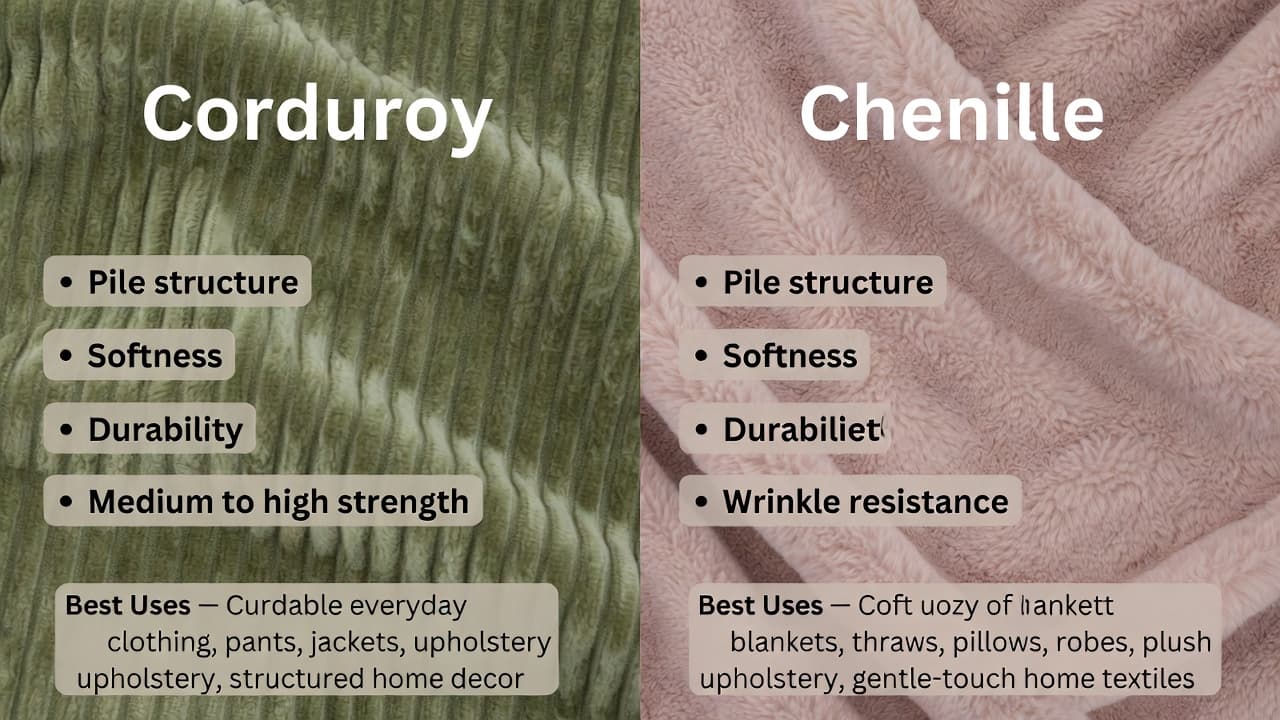
Corduroy is a woven fabric characterized by raised parallel ridges (wales) formed by cut pile weft threads. The ridges are crisp, regular, and narrow, creating a distinct ribbed texture. Corduroy is typically made from cotton or cotton blends.

Key Characteristics of Corduroy

  • Crisp, clear textured lines with regular wale spacing
  • Soft and smooth surface
  • Even distribution of pile for consistent heat retention
  • Durable for everyday wear
  • Less resistant to tearing than some woven fabrics
  • Commonly used for autumn and winter coats, pants, hats, and casual clothing
  • Also suitable for crafts, dolls, and accessories

What Is Chenille?

Chenille is a pile fabric made from chenille yarn—a yarn constructed by twisting short fibers around a core thread. The surface has a dense, fluffy, velvety texture with uneven distribution of pile. Chenille can be made from cotton, acrylic, polyester, or blends.

Key Characteristics of Chenille

  • Prominent, dense, fluffy surface
  • Softer and thicker to the touch than corduroy
  • Excellent drape for upholstery and curtains
  • Good water absorption and warmth
  • Velvet-like hand feel with plush texture
  • Commonly used for curtains, sofa covers, carpets, and home textiles
  • Popular for blankets, pillows, and decorative accessories

Corduroy vs Chenille: Understanding the Core Difference

The main difference is fabric structure:

  • Corduroy = woven fabric with cut-pile ridges (wales)
  • Chenille = pile fabric made from chenille yarn with twisted fibers

Corduroy offers structured, crisp texture; chenille offers soft, plush texture.


Key Differences Between Corduroy and Chenille

1. Appearance

Aspect Corduroy Chenille
Surface Crisp, regular ridges Dense, fluffy, uneven pile
Lines Narrow, long wales No distinct ridges
Visual Clean, tailored Soft, luxurious

2. Texture & Feel

  • Corduroy: Soft, smooth, even; structured feel
  • Chenille: Thicker, softer, more plush; velvet-like

3. Durability & Strength

  • Corduroy: Durable for clothing; can tear under stress
  • Chenille: Softer; may shed or pill if low quality; better for low-abrasion uses like upholstery

4. Best Uses

  • Corduroy: Coats, pants, hats, jackets, crafts
  • Chenille: Curtains, sofa covers, carpets, blankets, pillows, home decor

Which Is Better: Corduroy or Chenille?

There is no single winner—the better choice depends on your project.

Choose Corduroy If You Want:

  • Structured, tailored clothing
  • Crisp, classic texture
  • Durable outerwear or pants
  • Craft projects requiring defined lines

Choose Chenille If You Want:

  • Soft, plush home textiles
  • Curtains or upholstery with good drape
  • Cozy blankets and pillows
  • Luxurious, velvet-like feel

Care Tips for Corduroy and Chenille

  • Corduroy: Machine wash cool; tumble dry low; avoid high heat to prevent shrinkage
  • Chenille: Check label; many are machine washable; gentle cycle recommended; air dry to preserve pile

Final Thoughts

Corduroy and chenille serve different purposes. Corduroy excels in structured clothing and crisp texture; chenille excels in soft home textiles and plush comfort. Understanding their structure and best uses helps you choose the right fabric for clothing, upholstery, or crafts.


Frequently Asked Questions

What is corduroy made of?

Corduroy is typically made from cotton or cotton blends, woven with cut-pile weft threads that form raised ridges (wales).

What is chenille made of?

Chenille yarn is made by twisting short fibers around a core thread. Chenille fabric can be cotton, acrylic, polyester, or blends.

Can I use chenille for clothing?

Yes. Chenille is used for sweaters, cardigans, and cozy garments. It is also widely used for home textiles like blankets and upholstery.

Is corduroy good for winter?

Yes. Corduroy retains heat well due to its dense, even pile structure, making it suitable for autumn and winter coats and pants.


This article is part of our fabric knowledge series, offering practical insights into textile structures, yarn types, and fabric performance for buyers, designers, and makers.

Diesen Artikel teilen

TwitterLinkedInFacebookEmail