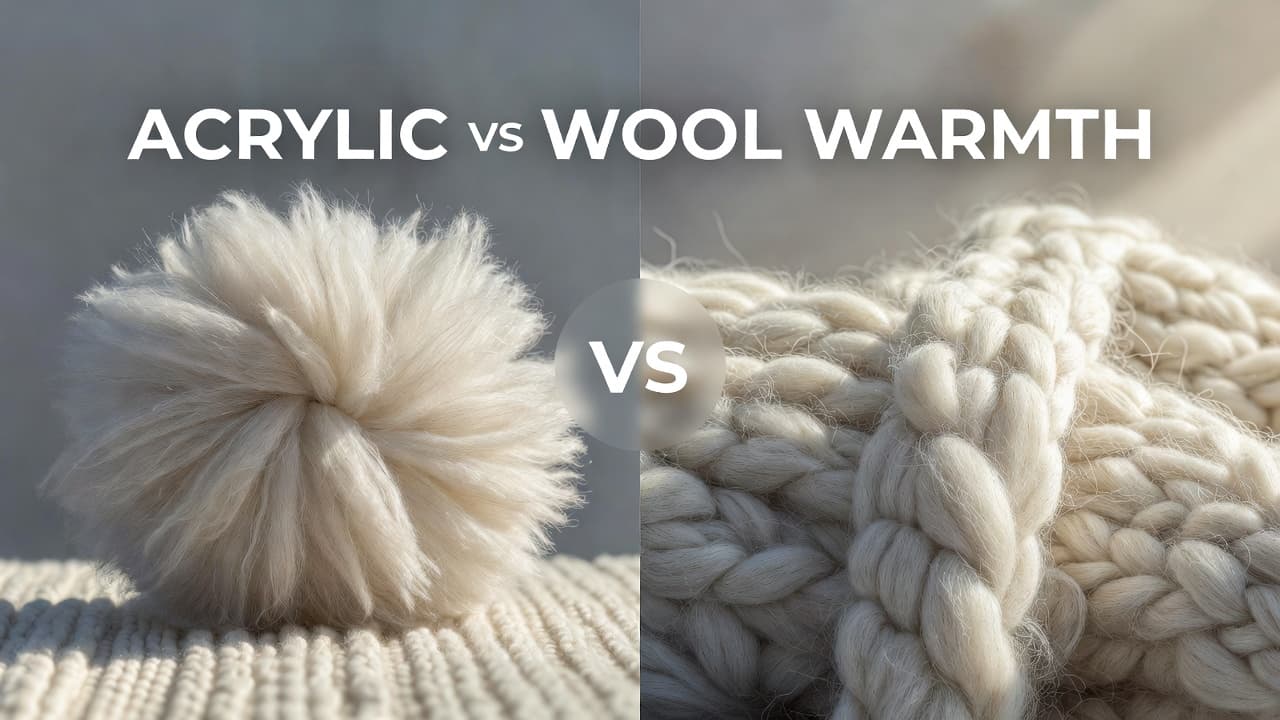

Acryl und Wolle werden beide für Winterkleidung verwendet, unterscheiden sich aber in Wärmeeffizienz, Feuchtigkeitsmanagement und Pflege. Wolle bietet im Allgemeinen bessere Wärme pro Gewicht und Feuchtigkeitstransport; Acryl ist günstig und pflegeleicht.
In diesem Leitfaden vergleichen wir Wärme, Komfort und beste Verwendungen, damit Sie die richtige Faser für Winterkleidung wählen können.
Acryl ist eine synthetische Faser aus Polymermaterialien. Sie ist günstig, maschinenwaschbar und in vielen Farben erhältlich. Acryl spendet Wärme, aber sein Wärme-Gewichts-Verhältnis ist niedriger als bei Wolle, und es transportiert Feuchtigkeit nicht gut.
Wolle ist eine Naturfaser von Schafen. Sie isoliert gut, transportiert Feuchtigkeit und behält Wärme auch bei Nässe. Wolle hat ein höheres Wärme-Gewichts-Verhältnis als Acryl — mehr Wärme bei weniger Volumen.
Acryl kann Wärme spenden, aber Wolle ist pro Gewichtseinheit effizienter. Dickere Acryl kann warm wirken, aber Wolle liefert mehr Isolierung bei weniger Volumen. Wolle transportiert auch Schweiß und reduziert Klammerigkeit; Acryl neigt dazu, Feuchtigkeit festzuhalten, was unangenehm sein kann.
| Aspekt | Acryl | Wolle |
|---|---|---|
| Wärme pro Gewicht | Niedriger | Höher |
| Feuchtigkeitsmanagement | Schlecht (hält Schweiß) | Gut (transportiert Feuchtigkeit) |
| Wärme wenn nass | Reduziert | Erhalten |
| Volumen für gleiche Wärme | Mehr | Weniger |
Acryl ist bei gleichem Gewicht nicht ganz so warm wie Wolle und fehlt Feuchtigkeitstransport. Für extreme Kälte oder aktive Nutzung ist Wolle die bessere Wahl. Für budgetfreundliche, pflegeleichte Winterkleidung ist Acryl eine vernünftige Option. Wählen Sie nach Klima, Aktivitätsniveau und Budget.
Ja. Acryl spendet Wärme, besonders in dickeren Stärken. Für sehr kaltes oder aktives Tragen ist Wolle effizienter und komfortabler.
Acryl transportiert keine Feuchtigkeit. Schweiß bleibt eingeschlossen, was feucht und unangenehm wirken kann. Wolle transportiert Feuchtigkeit von der Haut weg.
Superwash-Wolle kann maschinenwaschbar sein. Nicht-Superwash-Wolle erfordert typischerweise Handwäsche, um Verfilzung zu vermeiden.
Ja. Acryl ist im Allgemeinen günstiger als Wolle, besonders Premium-Wolle wie Merino.
Dieser Artikel ist Teil unserer Faserwissensserie mit praktischen Einblicken in Wärme, Feuchtigkeitsmanagement und Faserauswahl für Winterkleidung.