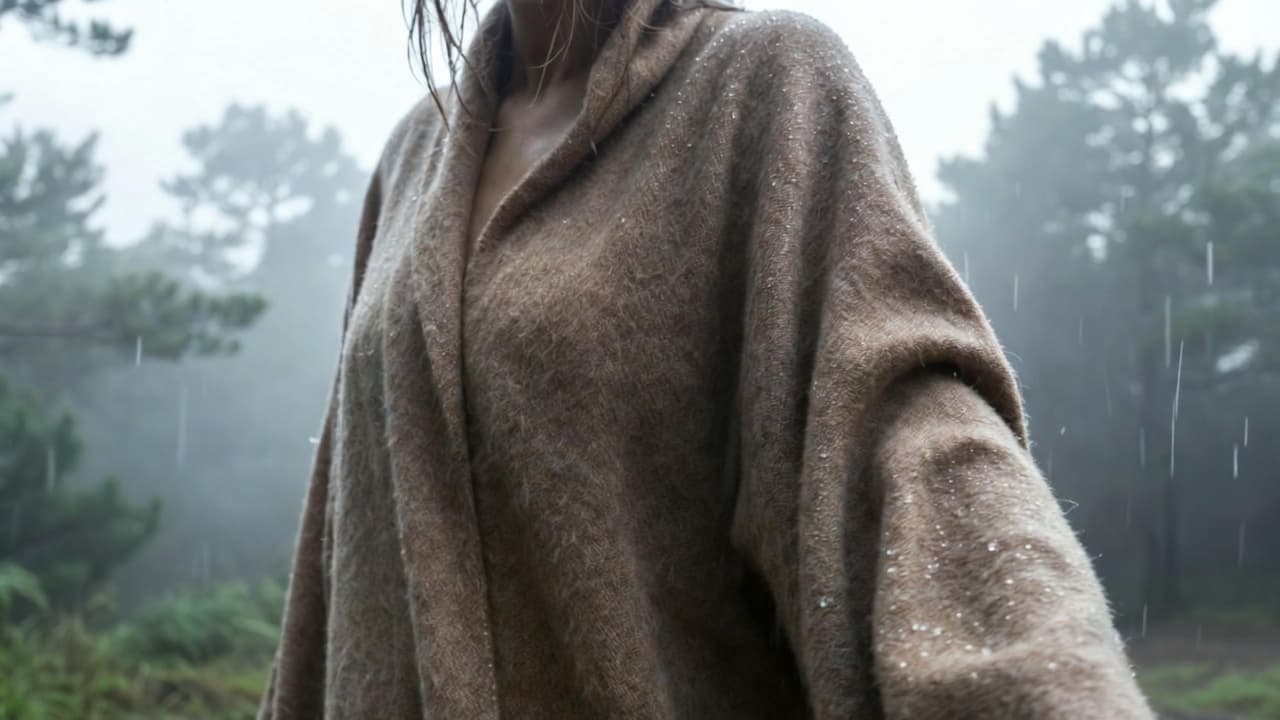

Nej, 100% ull är inte helt vattentät. Ull har en viss naturlig vattenavvisning, till stor del tack vare lanolin-beläggningen på fibrerna, så den kan tåla lätt regn eller snö. Under kraftigt eller långvarigt regn kommer ull så småningom att mättas. Du kan förbättra prestandan i vått väder genom att behandla ull (t.ex. vax, vattenavvisande finish), använda ullblandningar med syntetiska material eller lagra ull under ett vattentätt ytterlager.
I den här guiden förklarar vi hur ull beter sig med vatten och praktiska sätt att använda ull i våta förhållanden.
Ull är inte helt vattentät. Den kan avvisa vatten i viss utsträckning tack vare lanolin (en naturlig beläggning på fiberytan) och fiberstruktur. Det innebär att lätt regn eller snö kan pärla eller absorberas långsamt. Vid kraftigt eller långvarigt regn kommer ull att blöta igenom och kan bli tung och långsam att torka. Alltså: vattenavvisande vid lätt fukt, inte vattentät vid skyfall.
Behandla ull med en vattentätnings- eller vattenavvisande produkt, såsom:
Dessa kan förbättra vattenavvisningen och göra ull mer lämplig för utomhus bruk. Följ produktens instruktioner och applicera om vid behov.
Ull blandad med syntetiska fibrer (t.ex. nylon, polyester) kan vara mer vattenavvisande eller torka snabbare samtidigt som den erbjuder värme och andningsbarhet. Blandningar är vanliga i outdoor- och performance-kläder.
Använd ull som bas- eller mellanlager och lägg till ett vattentätt ytterlager (jacka, skal). Det håller dig varm och torr medan du använder ullens isolering och fuktstyrning nära huden eller i mellanlagret.
Ull förblir ett bra material för utomhusaktiviteter även om det inte är helt vattentät. Det är varmt, andningsbart och fukttransporterande, vilket hjälper vid vandring, camping och svala, fuktiga förhållanden. Med behandling, blandningar eller lager kan ull vara en del av ett effektivt vått väder-system.
| Fråga | Svar |
|---|---|
| Är 100% ull vattentät? | Nej. Tål lätt fukt; mättas vid kraftigt regn. |
| Varför motstår ull vatten? | Lanolin och fiberstruktur ger viss vattenavvisning. |
| Hur förbättra? | Behandla (vax, DWR), använd ull/syntet-blandningar eller lagra under ett vattentätt skal. |
100% ull är inte vattentät men har naturlig vattenavvisning som hjälper vid lätt regn eller snö. Vid kraftigt regn: behandla ull, välj blandningar eller lagra ull under ett vattentätt ytterlager för att hålla dig torr medan du fortfarande drar nytta av ullens värme och andningsbarhet.
Ja. Ull har naturligt vattenmotstånd från lanolin och fiberstruktur. Den kan tåla lätt regn eller snö men blöter igenom vid kraftigt eller långvarigt regn.
Använd vattenavvisande behandlingar (vax, silikon, DWR), ull/syntet-blandningar eller lagra ull under en vattentät jacka eller skal.
Ja, vid lätt regn kan ull räcka. Vid kraftigt regn, kombinera ull med ett vattentätt ytterlager eller behandlad/blandad ull för bättre skydd.
Den här artikeln ingår i vår garnkunskapsserie med praktiska insikter om ullegenskaper och utomhusbruk.