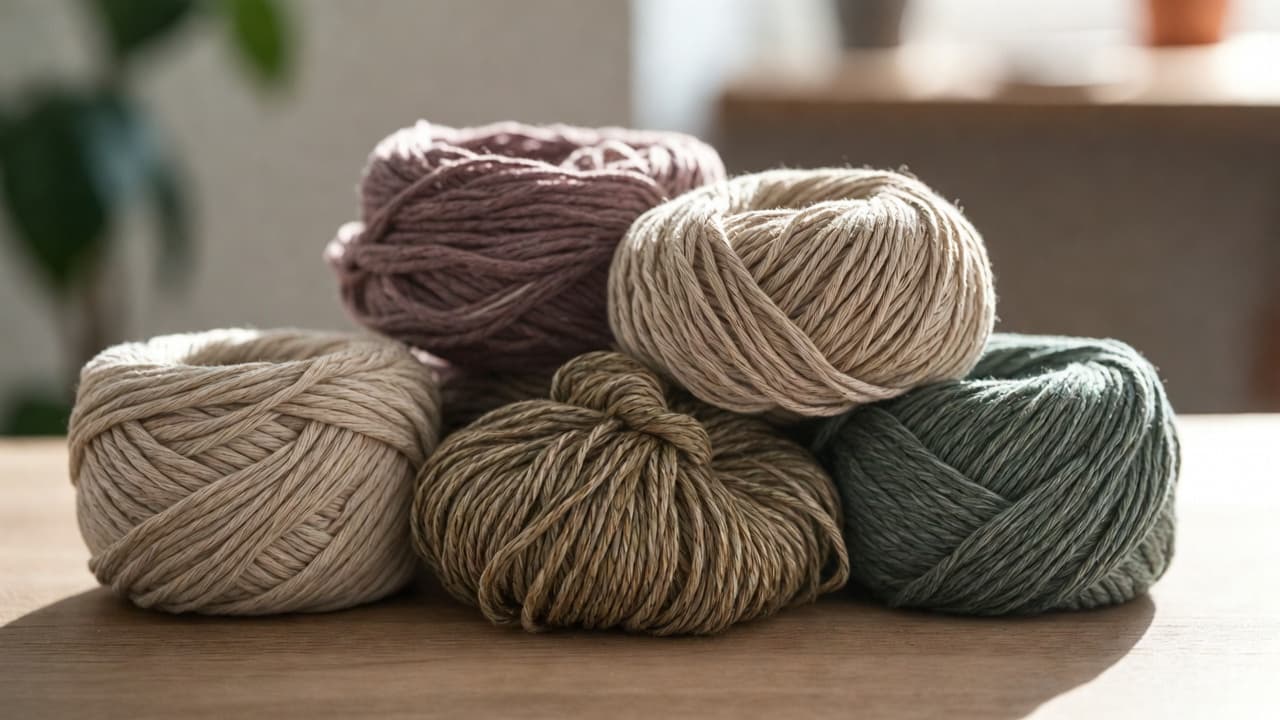

Återvunnen bomullsgarn tillverkas av textilrester och överskott, vilket minskar avfall och resursanvändning. Om det är «bra» beror på dina prioriteringar: hållbarhet och kostnad vs jämn textur och kvalitet.
I denna guide täcker vi fördelar, nackdelar och när återvunnen bomullsgarn ska användas.
Återvunnen bomullsgarn produceras från post-industriell eller post-konsument bomull — rester, utskärningar och begagnade textilier — som makuleras och respinnas till nytt garn. Det minskar deponiavfall och använder mindre vatten och energi än produktion av ny bomull.
| Aspekt | Återvunnen bomull | Ny bomull |
|---|---|---|
| Miljöpåverkan | Lägre | Högre |
| Kostnad | Ofta lägre | Ofta högre |
| Textur | Kan vara ojämn | Mer jämn |
| Mjukhet | Kan vara lägre | Typiskt högre |
| Färgval | Begränsat, unikt | Brett utbud |
| Tillgänglighet | Begränsad | Brett |
Återvunnen bomullsgarn är bra för hållbarhet och kostnad, men kan ha ojämn textur och begränsad tillgänglighet. För miljövänliga och budgetprojekt är det ett solidt val. För precist, högkvalitativt arbete kan ny bomull vara bättre. Välj baserat på projektbehov och prioriteringar.
Återvunnen bomull kan vara mindre mjuk på grund av kortare fibrer. Kvaliteten varierar beroende på märke och process.
Återvunnen bomull kan noppa mer än högkvalitativ ny bomull på grund av kortare fibrer. Kvaliteten varierar.
Kolla miljövänliga garnmärken, hobbybutiker med hållbara linjer och onlineåterförsäljare. Tillgängligheten växer men är fortfarande begränsad jämfört med ny bomull.
Ja, om garnet uppfyller säkerhetsstandarder. Kontrollera certifieringar och etiketter. Se till att det är mjukt nog för känslig hud.
Denna artikel är en del av vår garnkunskapsserie med praktiska insikter om hållbara fiberalternativ och projektval.