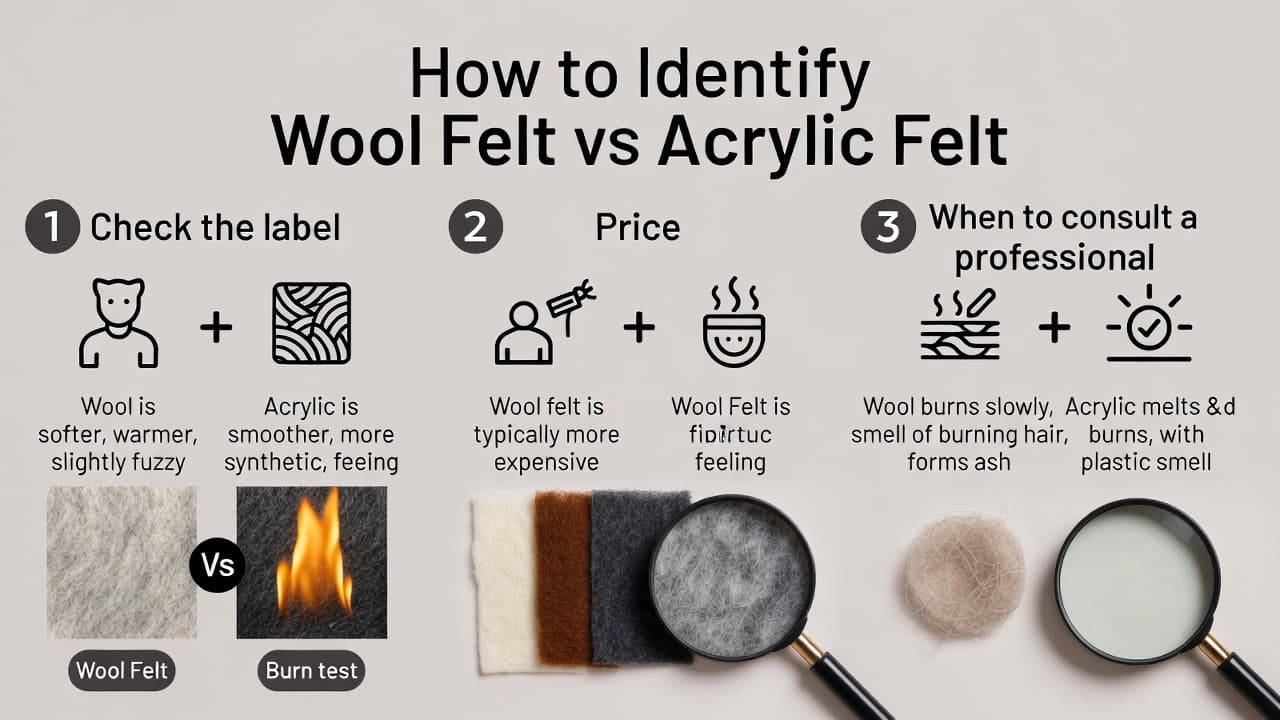

Filt är ett hållbart, isolerande tyg som används i kläder, accessoarer och heminredning. All filt är inte likadan — ullfilt och akrylfilt skiljer sig i textur, hållbarhet och skötsel. Att veta hur man skiljer dem åt hjälper dig välja rätt filt till ditt projekt.
I den här guiden går vi igenom fem metoder för att identifiera ull vs akrylfilt: etiketter, textur, pris, bränntest och när du bör konsultera en expert.
Ullfilt är ett ovävt tyg gjort av naturliga ullfibrer som har mattats samman med värme, fukt och tryck. Ullfilt är mjukt, luddigt och har en distinkt textur. Det är generellt mer hållbart och isolerande än akrylfilt men kostar mer.
Akrylfilt är gjort av syntetiska akrylfibrer. Det känns slätt och jämnt, ofta med en lätt glansig yta. Akrylfilt är mer prisvärt men generellt mindre hållbart och mindre isolerande än ullfilt.
Många filtprodukter har etiketter med fiberinnehåll. Leta efter «ull», «100 % ull» eller «akryl», «syntetisk». Om etiketten saknas eller är otydlig, använd metoderna nedan.
| Ullfilt | Akrylfilt |
|---|---|
| Mjuk, luddig | Slät, jämn |
| Enskilda fibrer synliga | Jämnare yta |
| Naturligt, matt utseende | Lätt glansig |
Ullfilt är vanligtvis dyrare än akrylfilt. Mycket låga priser tyder ofta på syntetiska material.
Varning: Använd endast i en kontrollerad, säker miljö med skyddsutrustning. Använd ett litet prov och pincett.
| Beteende | Ullfilt | Akrylfilt |
|---|---|---|
| När lågan tas bort | Slocknar av sig själv | Fortsätter brinna |
| Lukt | Brinnande hår | Kemisk, plastlik |
Om du är osäker kan en textil-expert utföra tester för att fastställa fiberinnehåll och kvalitet.
Att identifiera ull vs akrylfilt bygger på etiketter, textur, pris och brännbeteende. Ullfilt erbjuder hållbarhet och isolering; akrylfilt erbjuder prisvärdhet och enkel skötsel. Välj utifrån ditt projekts behov och budget.
Ullfilt är generellt mer hållbart och isolerande. Akrylfilt är mer prisvärt och lättare att sköta. Det bästa valet beror på ditt projekt och din budget.
Ullfilt kan krympa eller filtats ytterligare i varmt vatten. Handtvätta i svalt vatten med milt tvättmedel, eller kemtvätta. Kontrollera skötselinstruktioner.
Akrylfilt kan noppa eller släppa fibrer vid friktion. Ullfilt kan också noppa med tiden. Kvalitet och användning påverkar noppor.
Ull är relativt flamhämmande och slocknar av sig själv. Akryl smälter och kan fortsätta brinna. Håll båda borta från öppen låga.
Den här artikeln ingår i vår serie om textilkunskap och erbjuder praktiska insikter om filttyper, fiberidentifiering och textilval för hantverkare och skapare.