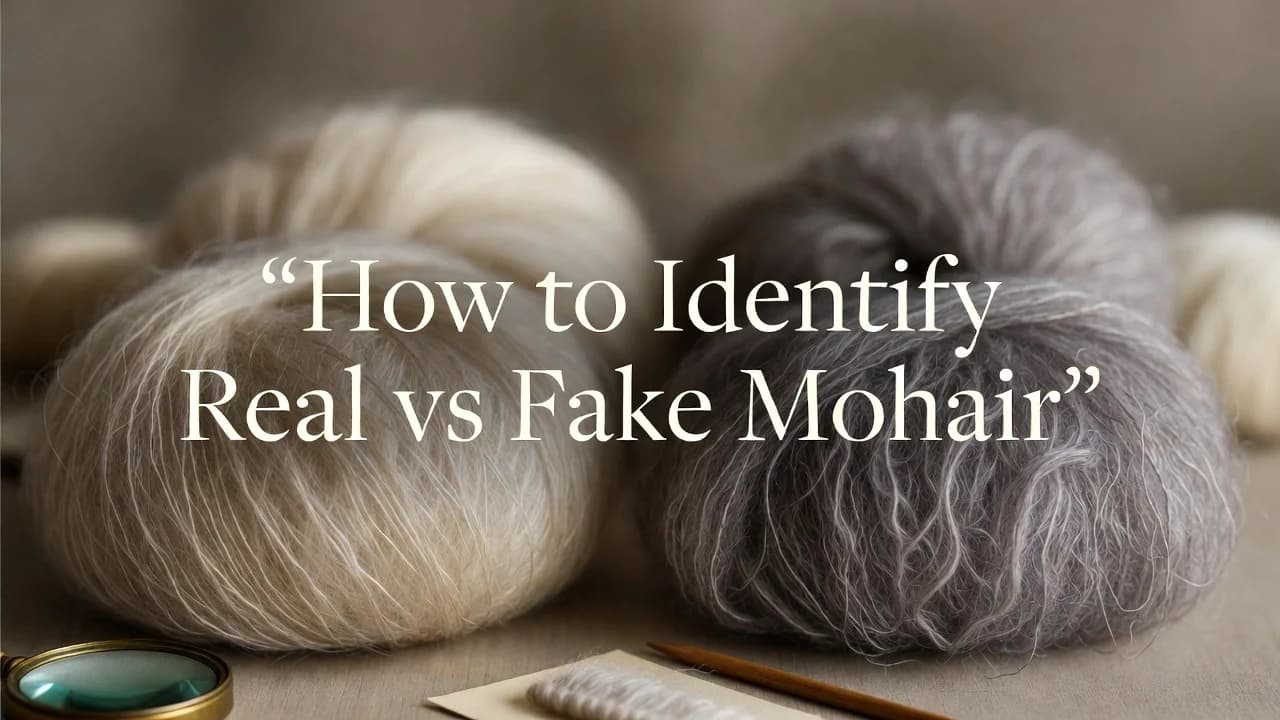
Mohair betraktas allmänt som en lyxfiber från djur, uppskattad för glans, mjukhet, elasticitet och värme. På grund av sitt höga värde är marknaden full av falskt mohairgarn, oftast av akryl eller andra kemiska fibrer som visuellt imiterar äkta mohair.
För stickare, virkare, designers och köpare är det viktigt att veta hur man skiljer äkta från falsk mohair. I den här guiden går vi igenom de mest tillförlitliga, professionella metoderna—baserade på fiberbeteende, taktil upplevelse, hållbarhet och fysiska tester.
Äkta mohair är en naturlig djurfiber från ullen på angoraget. Till skillnad från ull är mohairfibrer slätare, längre och starkare, vilket ger garnet dess karakteristiska glans och luftiga halo.
Falsk mohair görs typiskt av akryl eller blandade kemiska fibrer, bearbetade för att efterlikna mohairs fluffiga utseende. Visuellt liknande vid första anblicken, men prestanda och livslängd är betydligt sämre.
De mest effektiva identifieringsmetoderna, använda av proffs inom textilinköp och garnproduktion.
Proffstips: Äkta mohair har en jämn halo; falsk ser mer «hårig» än fluffig ut.
⚠️ Utför endast detta test med lämpliga säkerhetsåtgärder.
Ett av de mest avgörande testen för naturliga vs syntetiska fibrer.
| Egenskap | Äkta mohair | Falsk mohair |
|---|---|---|
| Fiberkälla | Angoraget | Akryl / kemisk fiber |
| Fiberlängd | Lång och rak | Kort och krullig |
| Elasticitet | Hög | Låg |
| Handkänsla | Mjuk, fluffig, elastisk | Torr, stel, plastig |
| Glans | Naturlig, silkeslik | Matt eller konstgjord |
| Pilling | Minimal | Kraftig |
| Brännlukt | Brännande hår | Kemisk / plast |
Att välja äkta mohairgarn handlar inte bara om lyx—det påverkar direkt:
För high-end stickning, virkning, vävning och mode levererar autentisk mohair prestanda som syntetik inte kan efterlikna.
Falsk mohair kan verka lockande till lägre pris, men kommer till kort i hållbarhet, komfort och långsiktigt värde. Genom att lära sig skilja äkta från falsk mohair—via fiberstruktur, elasticitet, glans, brännbeteende och slitstyrka—kan du fatta säkra, informerade beslut vid garninköp.
Äkta mohair är inte bara mjuk—den lever av elasticitet, glans och djup. När du väl arbetat med autentisk mohair blir skillnaden omisskännlig.
Den här guiden fokuserar på professionella mohair-identifieringsmetoder inom garninköp och textiltillverkning. För fler expertinsikter, utforska våra djupgående garnmaterialguider och fiberjämförelser.