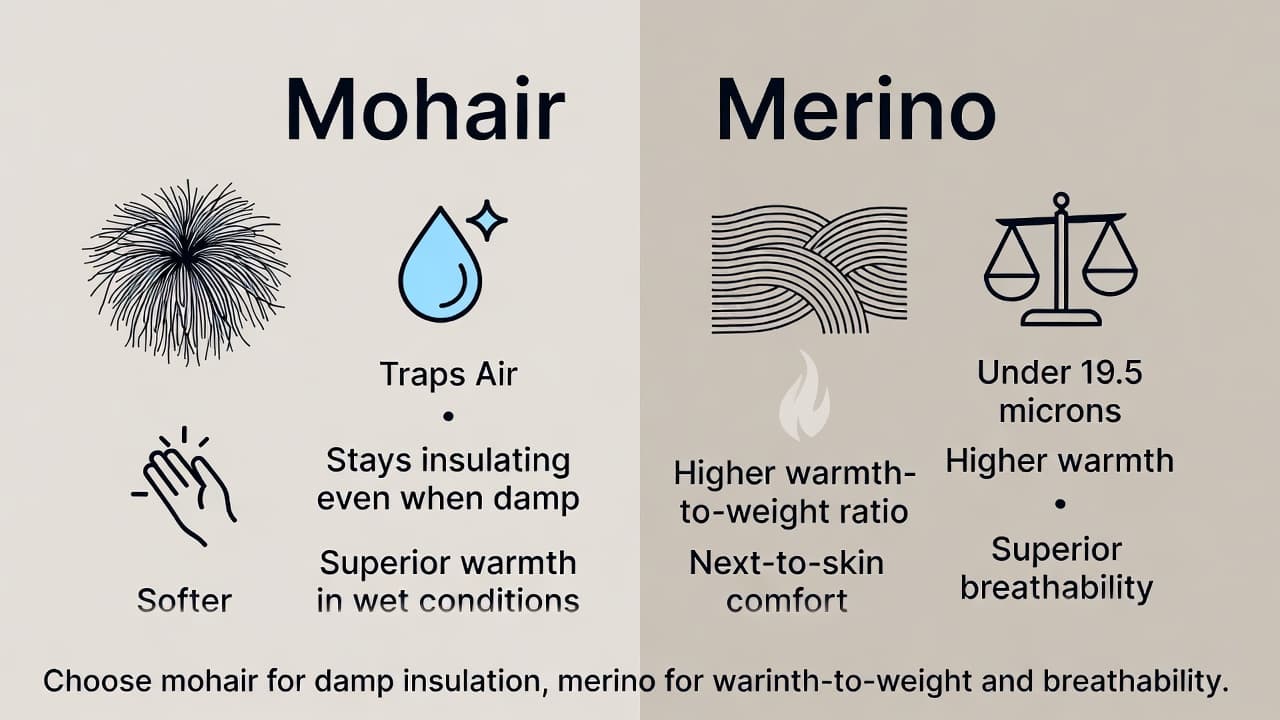

Мохер (от ангорской козы) и меринос (от овцы меринос) используются для тёплой зимней одежды. Тепло здесь — способность материала удерживать тепло и изолировать; зависит от толщины, удержания воздуха и поведения во влажности. Мохер часто кажется теплее в толстых влажных слоях; меринос даёт больше тепла на вес и лучшую воздухопроницаемость.
В этом руководстве мы сравниваем мохер vs меринос по теплу и подсказываем, что выбрать.
Мохер — волокно ангорской козы. Имеет блеск, мягкость и часто полую сердцевину, удерживающую воздух. Обычно толще и плотнее мериноса и эффективно удерживает тепло. Мохер также устойчивее к влаге, чем меринос, и продолжает изолировать даже во влажном состоянии.
Шерсть мериноса от овец меринос, известна тонким волокном и хорошей изоляцией. Имеет более высокое соотношение тепла к весу, чем мохер: при том же весе меринос удерживает больше тепла. Меринос также более воздухопроницаем и отводит влагу, регулирует температуру тела и снижает перегрев.
«Теплее» зависит от того, как вы используете волокно:
| Фактор | Мохер | Меринос |
|---|---|---|
| Удержание воздуха | Полая сердцевина; хорошо удерживает воздух | Хорошо, но другая структура |
| Толщина / плотность | Часто толще, плотнее | Часто тоньше, легче |
| Тепло на вес | Ниже | Выше |
| Во влажных условиях | Продолжает изолировать | Может терять объём мокрым |
| Воздухопроницаемость | Ниже | Выше |
| Регуляция | Меньше | Лучше (меньше перегрева) |
Итого: мохер может казаться теплее в толстых, влажных или очень холодных условиях; меринос часто теплее на унцию и лучше для слоёв и активного использования, где важна воздухопроницаемость.
Смешение мохера и мериноса распространено: объём и влажная изоляция мохера с мягкостью и регуляцией мериноса.
Мохер и меринос отлично подходят для зимы; ни один не «теплее» универсально. Мохер превосходит в толстых, влажных, холодных условиях с полой сердцевиной; меринос даёт больше тепла на вес и лучшую воздухопроницаемость. Выбор зависит от изделия, слоёв и приоритета — максимальная изоляция vs комфорт в движении.
Зависит от ситуации. Мохер часто толще и хорошо держит тепло во влажности. Меринос имеет более высокое соотношение тепла к весу и более воздухопроницаем — теплее на унцию и комфортнее при активности.
Мохер лучше сохраняет изоляцию во влажности благодаря структуре и влагостойкости. Меринос отводит влагу, но может терять объём мокрым.
Да. Смеси мохера и мериноса распространены и сочетают объём и влажную изоляцию мохера с мягкостью и воздухопроницаемостью мериноса.
Эта статья — часть нашей серии о тканях с практическими сведениями о типах шерсти, тепле и выборе для зимней одежды и вязания.