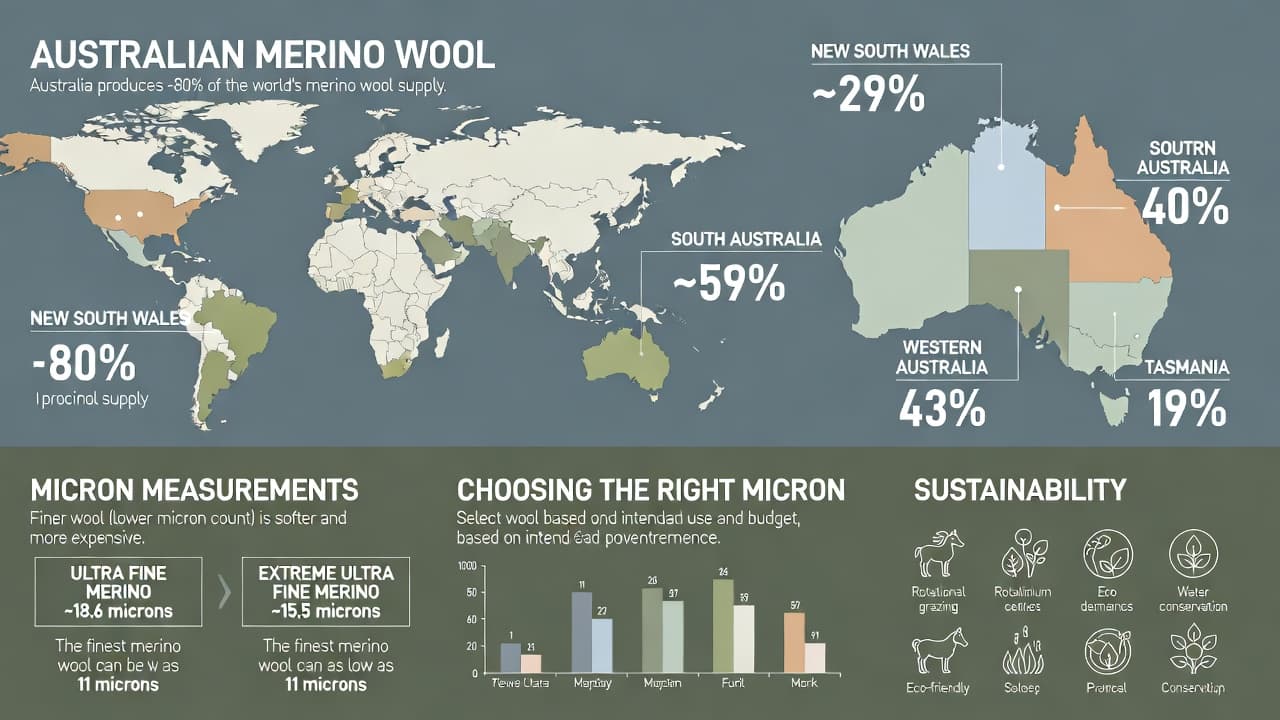

Мериносовая шерсть классифицируется по микрону — диаметру волокна в микрометрах (µm). Чем ниже микрон, тем тоньше и мягче шерсть. Меринос 18 µm и меньше относится к сверхтонкому; самый низкий микрон мериноса может быть около 11 µm, часто называемый экстремально сверхтонким. Сверхтонкий и экстремально сверхтонкий — очень мягкие и шелковистые, но дороже и деликатнее; меринос с более высоким микроном (например, выше 20 µm) грубее, прочнее и практичнее для повседневной или интенсивной носки.
В этом руководстве объясняем, какой самый низкий микрон у мериноса, как микрон влияет на качество и как выбирать по назначению и бюджету.
Микрон (µm) — это средний диаметр шерстяного волокна. Он напрямую влияет на мягкость, колючесть и характеристики: ниже микрон = тоньше и мягче; выше микрон = грубее и прочнее. Меринос — одна из самых тонких овечьих шерстей, поэтому часто маркируется по микрону для качества и цены.
Самый низкий микрон мериноса — около 11 µm, продаётся как экстремально сверхтонкий меринос. На практике:
Таким образом, минимум на рынке — в диапазоне ~11 µm (экстремально сверхтонкий); 18 µm и меньше — стандартный сверхтонкий диапазон.
| Диапазон микронов | Классификация | Типичное применение |
|---|---|---|
| ~11 µm | Экстремально сверхтонкий | Роскошное термобельё, премиальный трикотаж |
| ≤18 µm | Сверхтонкий | Мягкая одежда, активный отдых, у кожи |
| ~19–20 µm | Fine | Повседневные свитеры, универсально |
| >20 µm | Средний / грубее | Толстые свитеры, пледы, износостойкая носка |
Бренды могут использовать разные градации или маркировки; проверяйте описания продуктов и отзывы на фактический микрон или заявления «сверхтонкий».
Самый низкий микрон мериноса — около 11 µm (экстремально сверхтонкий); 18 µm и меньше — сверхтонкий, очень мягкий и премиальный. Ниже микрон означает мягче и роскошнее, но дороже и деликатнее; выше микрон — грубее, прочнее и лучше для повседневной или интенсивной носки. Выбирайте по назначению, комфорту и бюджету.
Микрон — это диаметр волокна в микрометрах. Ниже = тоньше и мягче; выше = грубее и прочнее.
Да. 18 µm относится к сверхтонкому диапазону — очень мягкий и подходит у кожи и для качественной одежды.
Сверхтонкая шерсть получается от отобранных мериносовых овец и меньших объёмов стрижки; обработка и контроль качества дороже, поэтому цена выше, чем у стандартного мериноса.
Эта статья — часть нашей серии о пряже с практическими сведениями о сортах мериносовой шерсти и микронах для вязальщиц и outdoor-одежды.