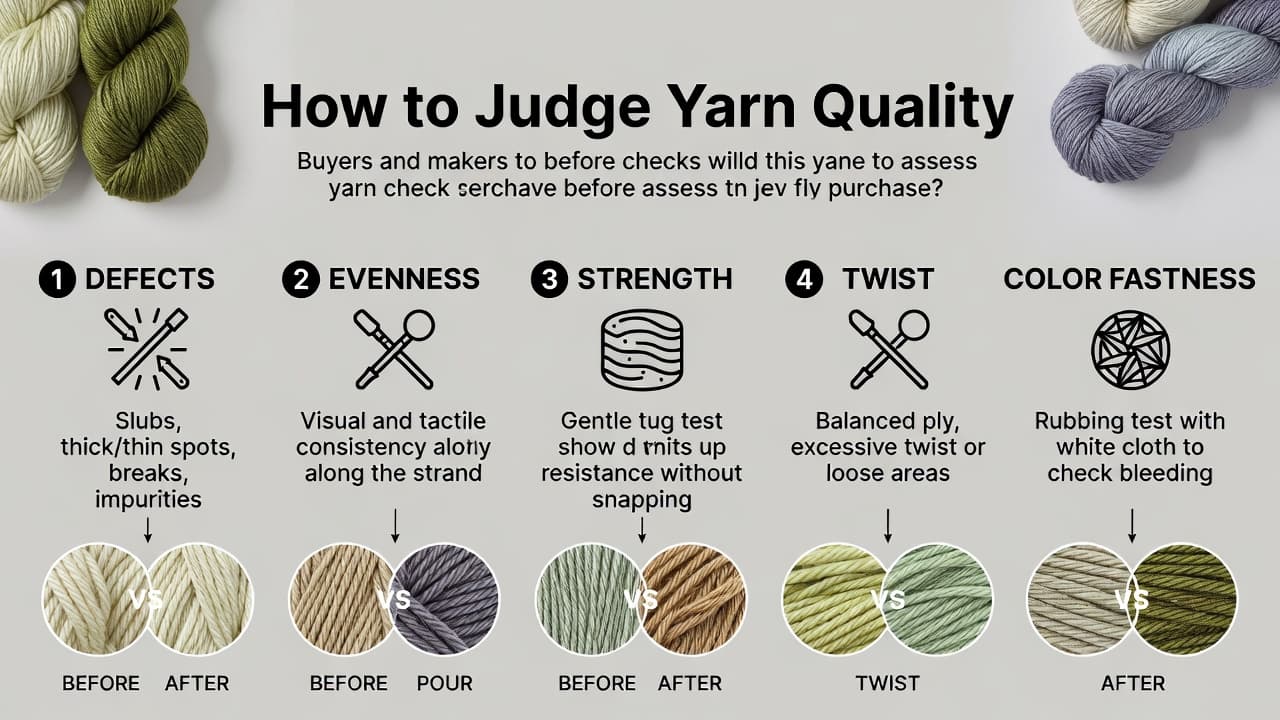

Оценить качество пряжи без лабораторного оборудования можно по пяти ключевым показателям: дефекты, равномерность, прочность, крутка и устойчивость окраски. Эти проверки помогают оценить пряжу перед покупкой или использованием в проекте.
В этом руководстве мы объясняем каждый показатель и простые тесты, которые можно выполнить.
Что проверять: Примеси, масляные пятна, ржавые пятна, комки, волокна другого цвета, непы (мелкие узелки).
Как: Осмотрите поверхность пряжи. Дефекты влияют на внешний вид и гладкость. Дефектомер измеряет это формально; визуально ищите чистую, однородную пряжу.
Что проверять: Постоянна ли толщина пряжи по длине (нет толстых/тонких мест).
Как: Вытяните отрезок пряжи и понаблюдайте. Неравномерная пряжа может давать мутное или полосатое окрашивание и неровное полотно. Пряжа одного номера теоретически должна быть однородной.
Что проверять: Достаточна ли разрывная прочность пряжи.
Как: Крепко потяните пряжу. Она должна казаться прочной и не рваться. Слабая пряжа приводит к обрывам при ткачестве или вязании. Формальные испытания используют машину для прочности одиночной нити (прочность на разрыв в cN/tex).
Что проверять: Подходит ли крутка — не слишком высокая и не слишком низкая.
Как: Крутка влияет на прочность и ткачество. Слишком высокая: полотно может стать жёстким, образуются узелки. Слишком низкая: больше обрывов, ниже производительность, больше узелков в полотне. Круткомер измеряет формально; на ощупь пряжа должна быть сбалансированной.
Что проверять: Устойчива ли окрашенная пряжа к выцветанию при стирке, трении, свете и т.д.
Как: Отрежьте короткий отрезок, помешайте в тёплой воде с небольшим количеством моющего средства и понаблюдайте. Выцветание или закрашивание указывают на плохую устойчивость. Формальные испытания включают стирку, свет, трение и другие факторы.
| Шаг | Проверка | Пройдено/Не пройдено |
|---|---|---|
| 1 | Поверхность: нет примесей, пятен, непов | |
| 2 | Равномерность: постоянная толщина | |
| 3 | Прочность: не рвётся при натяжении | |
| 4 | Пробное ткачество: легко в работе, хорошее качество полотна | |
| 5 | Устойчивость окраски: минимальное выцветание в водном тесте |
Дефекты, равномерность, прочность, крутка и устойчивость окраски — пять основных показателей качества пряжи. Простые визуальные и ручные проверки помогают оценить пряжу перед покупкой или использованием. Для критичных применений рекомендуется профессиональное тестирование.
Неправильное прядение, неоднородное сырьё или колебания процесса могут давать толстые/тонкие места и неравномерную пряжу.
Крутка — спираль, наносимая на волокна при прядении. Она придаёт пряже прочность. Слишком большая или малая крутка влияет на качество полотна.
Формальные испытания включают устойчивость к стирке, свету, трению и другие. Простой домашний тест — замочить пряжу в тёплой мыльной воде и проверить выцветание или закрашивание.
Непы — мелкие узелки или скопления волокон, видимые как дефекты на поверхности пряжи. Они могут влиять на внешний вид и гладкость полотна.
Эта статья — часть нашей серии текстильных знаний с практическими сведениями о качестве, инспекции и выборе пряжи для покупателей и производителей.