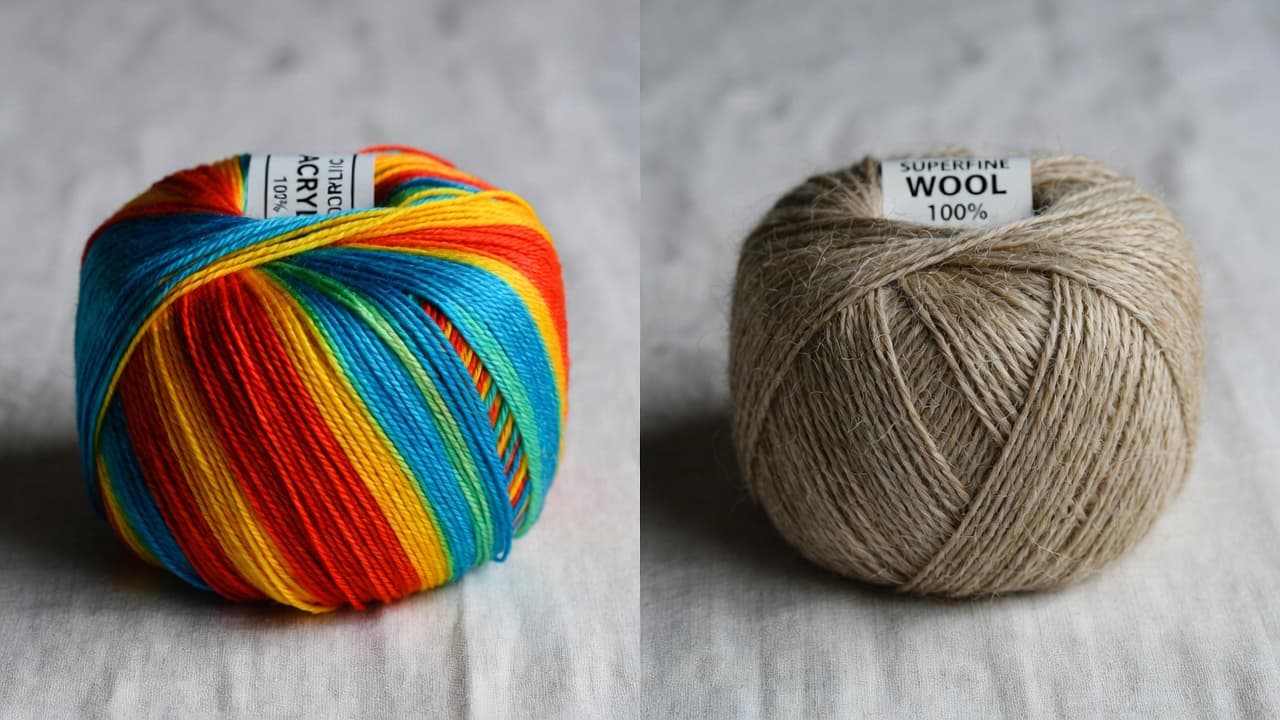

O fio acrílico é frequentemente mais popular do que a lã entre quem tricota e faz crochet, apesar das vantagens da lã em calor e respirabilidade. As principais razões são preço, variedade de cores, fácil cuidado e acessibilidade. Compreender estes fatores ajuda a decidir quando o acrílico faz sentido e quando a lã vale o custo extra.
Neste guia abordamos seis razões pelas quais o acrílico é mais popular e quando escolher lã em alternativa.
O acrílico é tipicamente mais barato do que a lã. Pesos e metragens semelhantes custam menos, tornando o acrílico uma escolha económica para projetos grandes, presentes e principiantes.
O acrílico tinge facilmente em cores brilhantes e vibrantes. É mais fácil encontrar uma vasta gama de tons em acrílico do que em lã. A lã tem cores naturais (castanhos, cinzentos) mas pode ser mais difícil de tingir em tons específicos. O acrílico também mantém bem a cor, com menos desbotamento ou sangramento.
As peças em acrílico são laváveis na máquina e seguras para secadora. A lã geralmente requer lavagem à mão ou ciclo lã, e muitas vezes secagem plana. Para presentes ou uso diário, o fácil cuidado do acrílico é uma grande vantagem.
As alergias ao acrílico são raras. As alergias à lã ou lanolina são mais comuns. Quem acha a lã comichão tolera frequentemente melhor o acrílico. Para vegetarianos, o acrílico evita fibras de origem animal.
O acrílico está amplamente disponível em lojas de artesanato, online e em muitas cores e espessuras. A lã, especialmente tipos premium como merino, pode ser mais difícil de encontrar e mais cara.
O acrílico pode imitar lã, algodão e outras fibras. É usado para camisolas, mantas, amigurumi e mais. A sua versatilidade torna-o uma escolha habitual para muitos projetos.
| Aspeto | Acrílico | Lã |
|---|---|---|
| Preço | Mais baixo | Mais alto |
| Cores | Ampla, vibrantes | Naturais + tingidas |
| Cuidado | Máquina, secadora | Muitas vezes lavagem à mão |
| Calor quando molhado | Diminui | Mantém-se |
| Respirabilidade | Menor | Maior |
| Alergias | Raras | Mais comuns |
| Sustentabilidade | Base petrolífera | Natural |
O acrílico é popular pelo baixo custo, cores vibrantes, fácil cuidado e acessibilidade. A lã oferece melhor calor, respirabilidade e sustentabilidade. Escolha acrílico para orçamento e conveniência; lã para desempenho e benefícios de fibras naturais.
O acrílico é mais acessível e fácil de cuidar. A lã é mais quente, respirável e sustentável. O «melhor» depende das suas prioridades.
Sim. Alergias ao acrílico são raras. Muitas pessoas que reagem à lã ou lanolina podem usar acrílico sem problemas.
Sim. O acrílico pode libertar microplásticos na lavagem. A lã e outras fibras naturais não.
A lã vem de ovelhas e requer mais processamento. O acrílico é de origem petrolífera e produzido em escala, o que mantém os custos baixos.
Este artigo faz parte da nossa série de conhecimento sobre fios, com informações práticas sobre escolha de fibras, cuidado e seleção de projetos para tricotadores e crocheteiros.