
Sullivans International
Produtos
FioTricô e Crochê
Sobre nós
Perfil da Empresa
Fabricante de fios
OEM e fornecimento em volume
Blog
Mais Vendidos da AmazonInsights sobre fios
Notícias
Últimas atualizações
Contacte-nos
sales@sullivansintl.com@sullivansintl
© 2026 Sullivans International (China) Co., Ltd.
Todos os direitos reservados.
Início/Blog/Insights sobre fios/What Is AB Yarn? Structural Characteristics and Solutions for AB Yarn Breakage
Cover Image for What Is AB Yarn? Structural Characteristics and Solutions for AB Yarn Breakage

What Is AB Yarn? Structural Characteristics and Solutions for AB Yarn Breakage

Sullivans International
January 27, 2026•5 min read
Looking for bulk supply or OEM yarn?Learn more about our manufacturing capabilities →

AB yarn—more formally known as Sirospun yarn—is a composite spinning yarn widely used in modern textile manufacturing. By combining two rovings into a single yarn through a special spinning method, AB yarn delivers many of the benefits of ply yarn while maintaining the efficiency of single-yarn production.

In this guide, we’ll take a professional, production-oriented look at what AB yarn is, its structural characteristics, typical material combinations, and—critically—how to deal with AB yarn breakage during spinning.


What Is AB Yarn?

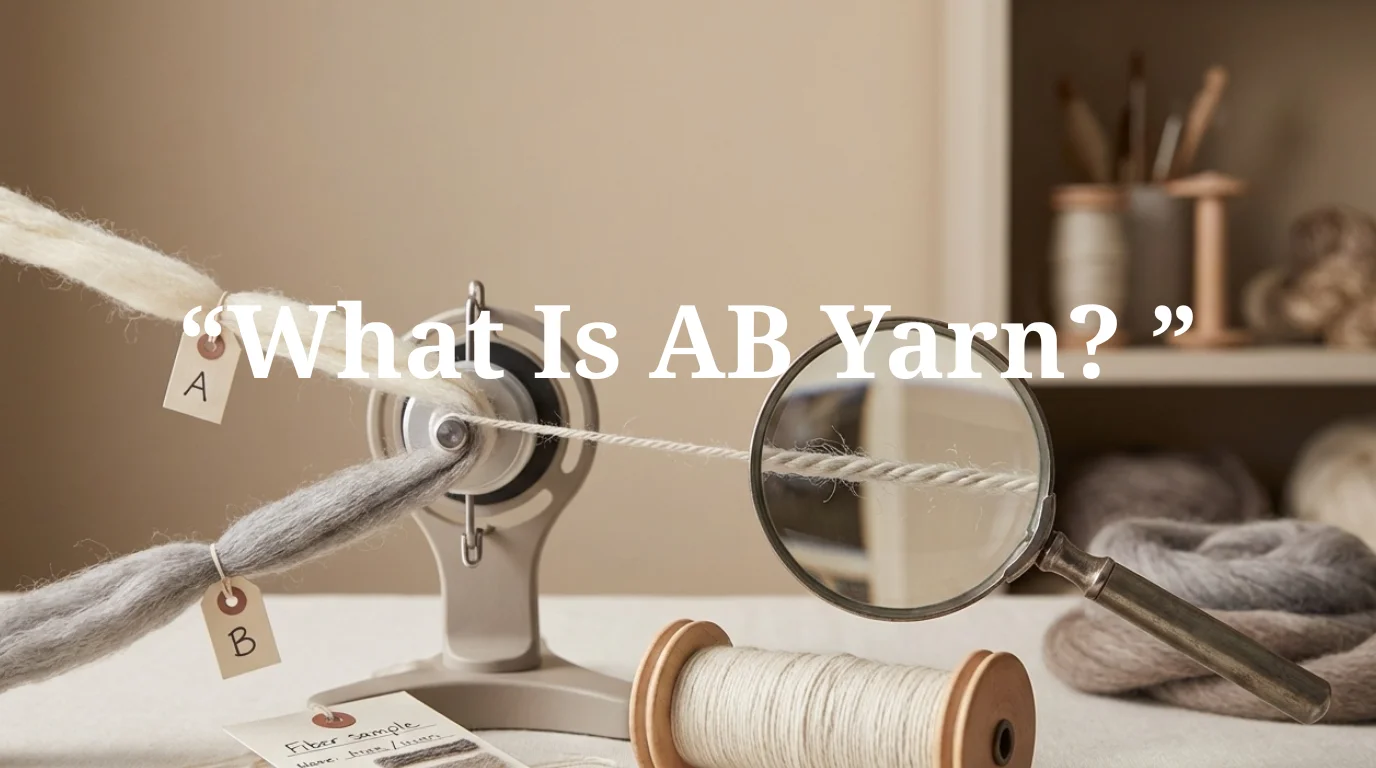
AB yarn refers to a yarn spun from two separate rovings (A and B) that are drafted and twisted together into one finished yarn. Because two rovings are involved, it is commonly called AB yarn in China.

In international terminology, this process is known as Sirospun or Siro spinning, and the resulting yarn is called Sirospun yarn.

Why “AB”?

  • A yarn + B yarn are fed simultaneously
  • Each roving is drafted independently
  • Twist is transferred before final convergence
  • The final yarn behaves similarly to a two-ply yarn, but is technically a single yarn

This technology was originally developed for wool spinning, but today it is widely applied in cotton spinning, polyester blends, and viscose blends.


AB Colored Yarn and AB Doubling Yarn

AB yarn can also appear in color-differentiated forms, which are common in decorative and fashion textiles.

AB Colored Yarn

  • Only one of the two rovings is dyed
  • After spinning, the yarn shows dual-color visual effects
  • Creates subtle mélange or heather-like appearance
  • Widely used in knitwear, sweaters, and fashion fabrics

AB Doubling Yarn

  • Formed by doubling two yarns of different colors
  • Unlike AB colored yarn, this is a post-spinning combination
  • Often used where color contrast is the main design feature

How Siro Spinning Works (AB Yarn Formation)

Siro spinning—also known as parallel twist spinning—follows this process:

  1. Two rovings are fed into the spinning frame with a controlled lateral distance
  2. Each roving is drafted independently
  3. After leaving the front roller, each fiber strand receives a small amount of pre-twist
  4. The two strands converge and are twisted together
  5. The finished yarn is wound onto the bobbin

👉 In simple terms: two rovings are spun into one yarn, creating a structure similar to ply yarn but produced in a single spinning operation.


Structural Characteristics of AB Yarn

1. Compact Structure and Low Hairiness

Because both strands are twisted synchronously in the same direction, surface fibers are tightly bound:

  • Neat fiber arrangement
  • Significantly reduced hairiness
  • Improved pilling resistance
  • Clean yarn appearance

2. Strength Comparable to Ply Yarn

AB yarn exhibits:

  • Higher tensile strength than conventional single yarn
  • Better load distribution between two strands
  • Suitable replacement for plied yarn in many applications

3. Soft Hand Feel and Smooth Fabric Surface

Compared with traditional ply yarn fabrics:

  • Sirospun fabrics feel softer and smoother
  • Less stiffness caused by reverse twisting
  • Excellent drape and comfort

4. Wide Application Range

Compact siro spinning yarns can be used for:

  • Woven fabrics
  • Knitted fabrics
  • High-count, high-density textiles
  • Lightweight fabrics that previously required ply yarn

Typical AB Yarn Material Combinations

Some of the most common AB yarn blends include:

  • TC / AB yarn Polyester + Cotton AB yarn Combines durability with natural comfort

  • TR / AB yarn Polyester + Viscose AB yarn Offers softness, drape, and dimensional stability

These blends are widely used in shirting, suiting, knitwear, and functional fabrics.


AB Yarn Breakage: Causes and Practical Solutions

The Core Problem

Because AB yarn consists of two separate drafted strands, a unique failure mode can occur:

  • One strand breaks
  • The other strand continues running
  • Spinning tension remains temporarily stable
  • Result: wrong count yarn, uneven structure, or hidden defects

This is one of the most critical quality risks in siro spinning.


How to Deal With AB Yarn Breakage

✅ Use a Siro Spinning Single-Yarn Breakage Device

To ensure stable quality, modern siro spinning lines are equipped with a single-yarn breakage protection device, which:

  • Detects breakage of one strand
  • Automatically breaks the remaining strand
  • Prevents false normal spinning
  • Eliminates wrong-count yarn formation

✅ Optimize Spinning Tension

  • Ensure both rovings experience balanced drafting tension
  • Avoid excessive roving distance that increases instability

✅ Improve Roving Quality Consistency

  • Uniform roving count
  • Stable fiber length distribution
  • Controlled moisture content

✅ Regular Equipment Calibration

  • Roller pressure alignment
  • Drafting zone cleanliness
  • Twist transmission consistency

Why AB Yarn Matters in Modern Textile Manufacturing

AB yarn (Sirospun yarn) bridges the gap between single yarn efficiency and ply yarn performance. It enables manufacturers to:

  • Reduce production steps
  • Improve yarn appearance
  • Achieve lighter, thinner fabrics
  • Maintain strength and wear resistance

This is why AB yarn has become a strategic yarn solution in both traditional and high-end textile markets.


Final Thoughts

AB yarn is not just a yarn type—it’s a spinning philosophy. By intelligently combining two rovings into a single, compact structure, Sirospun yarn delivers strength, smoothness, and efficiency in one package.

When paired with proper breakage control systems and process optimization, AB yarn becomes a reliable, high-performance solution for woven and knitted fabrics alike.

For manufacturers aiming to replace ply yarn, reduce hairiness, or enhance fabric quality without increasing complexity, AB yarn remains one of the most effective spinning technologies available today.


This article provides a professional overview of AB yarn (Sirospun yarn), including structural characteristics, material blends, and industrial solutions for yarn breakage. For more insights into yarn technologies and textile manufacturing, explore our Yarn Insights series.

Partilhar este artigo

TwitterLinkedInFacebookEmail