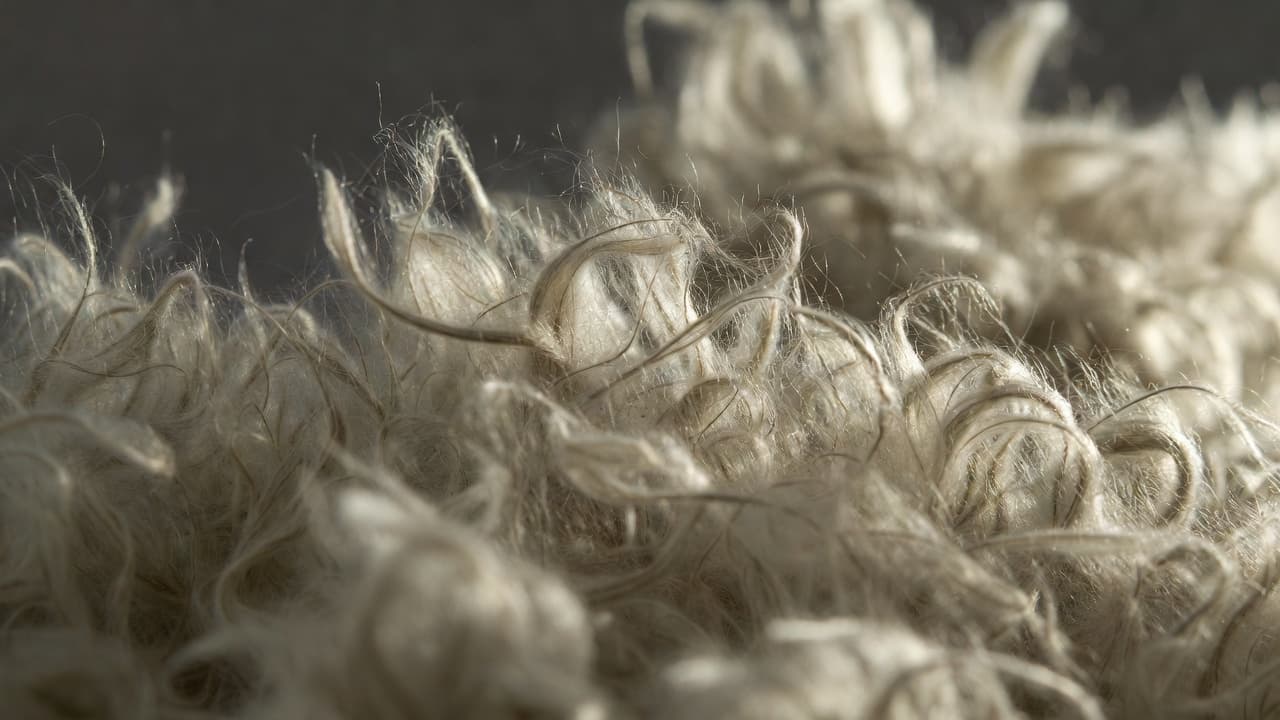

Moher to włókno naturalne z kozy angorskiej (nie z królika angorskiego). Znany jest z puszystej, puchatej faktury i jedwabistego połysku. Moher jest puszysty dzięki kształtowi włókna, strukturze kutykuli, obróbce i genetyce kozy angorskiej — czynnikom, które sprawiają, że włókna się unoszą i tworzą miękką, puszystą powierzchnię.
Ten przewodnik wyjaśnia dlaczego moher jest taki puszysty i co to oznacza dla wyglądu i zachowania.
Moher to włos z kozy angorskiej, rasy pierwotnie z Turcji. Włókno jest długie, gładkie, zwężające się i błyszczące. W przeciwieństwie do wełny owczej moher ma minimalną falistość i gładsżą powierzchnię, co wpływa na połysk i charakterystyczną puszystą rękę, gdy kutykule się unoszą.
| Cecha | Moher |
|---|---|
| Źródło | Koza angorska |
| Kształt włókna | Długie, gładkie, zwężające się |
| Powierzchnia | Kutykule mogą się unosić → puszystość |
| Połysk | Wysoki (gładki, odbijający) |
| Typowe zastosowanie | Swetry, szaliki, luksusowa dzianina |
Moher jest taki puszysty dzięki długiej, gładkiej strukturze włókna, delikatnym kutykulom, które się unoszą, obróbce (np. gorące pranie) poluzowującej kutykule oraz genetyce kozy angorskiej, która daje naturalnie puszyste, izolujące włókno. Razem dają moherowi jego charakterystyczną puszystą fakturę i jedwabisty połysk.
Moher pochodzi od kozy angorskiej. Włókno z królika angorskiego zwykle nazywa się angorą (lub wełną angorską), nie moherem.
Moher ma gładsze, mniej faliste włókna i kutykule, które się unoszą, dając puszystą, błyszczącą rękę. Wełna owcza jest bardziej falista i może być bardziej zbita oraz czasem bardziej szorstka.
Obróbka i użytkowanie wpływają na puszystość. Delikatne pranie, mała agitacja i unikanie agresywnych chemikaliów pomagają zachować włókno. Inherentnej puszystości moheru nie da się usunąć bez zmiany samego włókna.
Ten artykuł jest częścią naszej serii wiedzy o przędzy, oferującej praktyczne informacje o włóknach luksusowych i moherze dla dziergaczy i szydełkowaczy.