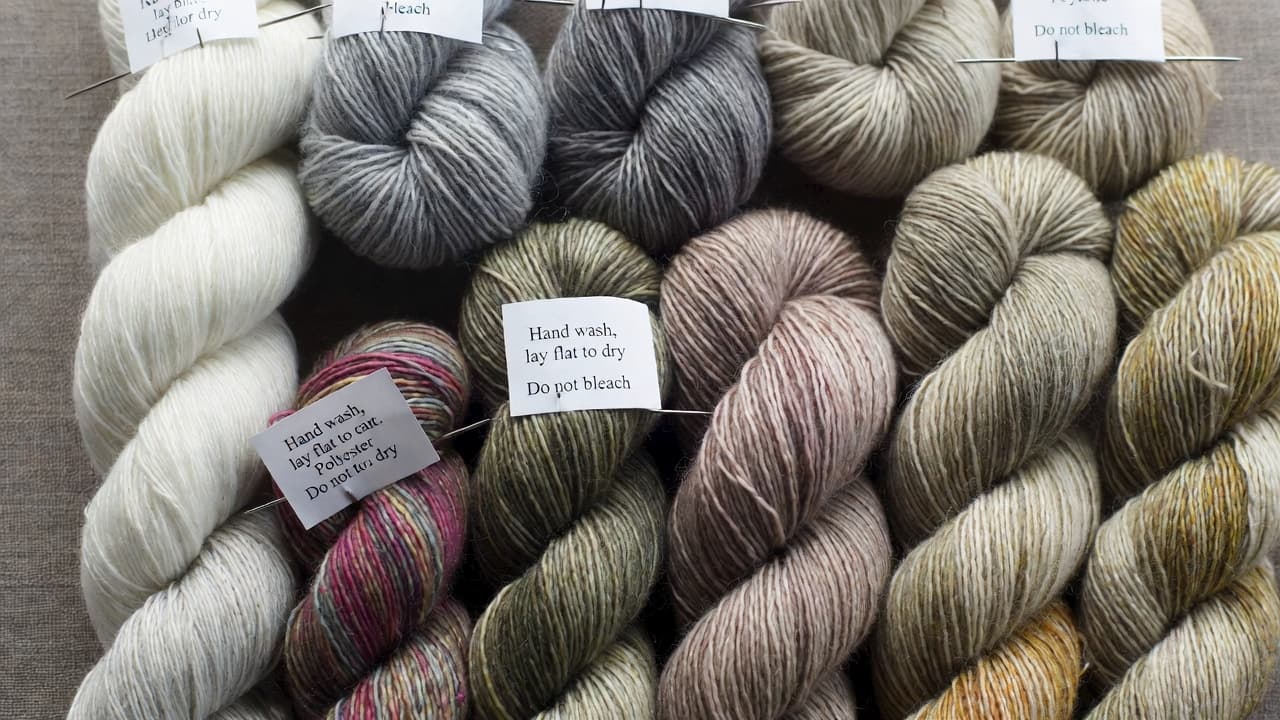

Mieszanka wełny to przędza lub tkanina, w której wełna jest łączona z jednym lub więcej innymi włóknami—np. kaszmir, poliester, spandex, akryl lub królik. Mieszanie może poprawić ciepło, miękkość, elastyczność, łatwość pielęgnacji lub koszt, ale mieszanki wełny mogą mechacić się, kurczyć lub filcować, jeśli nie są właściwie pielęgnowane.
W tym przewodniku wyjaśniamy, czym jest mieszanka wełny, popularne typy, zalety i wady oraz jak ją pielęgnować.
Mieszanka wełny oznacza, że wełna jest mieszana z innymi włóknami podczas przędzenia lub produkcji tkaniny. Popularni partnerzy: akryl, kaszmir, poliester, spandex i królik. Proporcja (np. 70 % wełny / 30 % akrylu) i typy włókien określają chwyt, ciepło, trwałość i wymagania pielęgnacyjne.
| Mieszanka | Typowe korzyści |
|---|---|
| Wełna + akryl | Miększa, bardziej przystępna; dobra forma po szczotkowaniu/obróbce mokrej; farbowanie w jednym kąpielu (podobne pH) |
| Wełna + kaszmir | Miększy, bardziej luksusowy chwyt |
| Wełna + poliester | Bardziej trwała, mniejsze kurczenie, łatwiejsza pielęgnacja |
| Wełna + spandex | Rozciągliwość, lepsze dopasowanie i odzyskiwanie formy |
| Wełna + królik | Miększy, bardziej puszysty chwyt |
| Aspekt | Mieszanka wełny | Czysta wełna |
|---|---|---|
| Miękkość | Często miększa (z akrylem, kaszmirem itd.) | Może być szorstsza |
| Koszt | Często niższy (z syntetykami) | Często wyższy |
| Pielęgnacja | Różna; niektóre mieszanki łatwiejsze | Często pranie ręczne, suszenie na płasko |
| Mechacenie | Może mechacić się bardziej | Zależy od jakości |
| Kurczenie/filcowanie | Możliwe (zawartość wełny) | Możliwe |
Mieszanka wełny to wełna połączona z innymi włóknami (np. akryl, kaszmir, poliester, spandex, królik). Oferuje ciepło, miękkość i często lepszy stosunek jakości do ceny lub łatwiejszą pielęgnację, ale może mechacić się i kurczyć przy złym obchodzeniu. Pielęgnuj jak wełnę: delikatny detergent, chłodna woda, bez wykręcania, suszenie na płasko—aby odzież z mieszanki wełny służyła długo.
Mieszanka wełny to wełna zmieszana z innymi włóknami, takimi jak akryl, kaszmir, poliester, spandex lub królik. Etykieta (np. 70 % wełny, 30 % akrylu) pokazuje skład.
Tak. Mieszanki wełny mogą być ciepłe, miękkie i trwałe. Wełna–akryl jest powszechna do swetrów; wełna–kaszmir do dzianin luksusowych. Postępuj zgodnie z instrukcjami pielęgnacji, aby uniknąć kurczenia i mechacenia.
Tylko jeśli etykieta na to pozwala. Wiele mieszanek wymaga zimnej wody, delikatnego programu i suszenia na płasko. Używaj detergentu do wełny i unikaj wysokiej temperatury oraz agitacji, aby zapobiec kurczeniu i filcowaniu.
Ten artykuł jest częścią naszej serii o włóknach, oferującej praktyczne informacje o mieszankach wełny i typach włókien dla dziewiarzy i użytkowników tkanin.