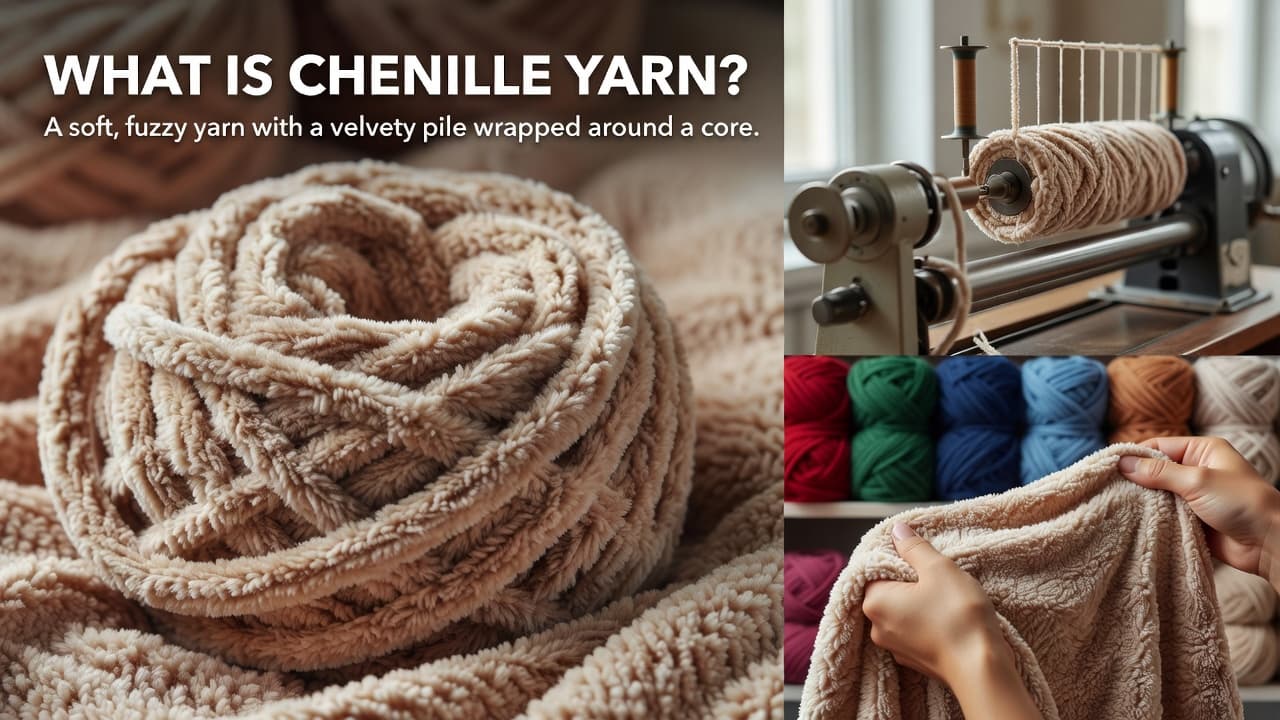

Przędza chenille to włókno fantazyjne o aksamitnej, puszystej fakturze, tworzone przez skręcanie krótkich włókien wokół rdzenia. Jest szeroko stosowana w tekstyliach domowych, tapicerce i rękodziele ze względu na miękki chwyt i efekt dekoracyjny.
W tym przewodniku wyjaśniamy, czym jest przędza chenille, jak jest produkowana, popularne materiały i najlepsze zastosowania.
Przędza chenille to włókno włosowe (pile), wytwarzane przez skręcanie krótkich włókien lub filamentów wokół nici rdzeniowej. Rdzeń zwykle składa się z dwóch nici, z włóknami włosa lub chenille «piórkowymi» pomiędzy nimi i skręconymi razem. Ta struktura tworzy miękką, gęstą, aksamitną powierzchnię przypominającą welur.
Przędza chenille powstaje przez:
Długość i gęstość włosa różnią się w zależności od producenta, wpływając na grubość i miękkość. Chenille bawełniana jest powszechna w produktach tuftowanych; grubość włosa waha się od cienkiej do grubej w zależności od przędzy i procesu.
Chenille może być wytwarzana z:
| Materiał | Cechy | Powszechne zastosowania |
|---|---|---|
| Bawełna | Miękka, chłonna, naturalna | Koce, tapicerka, tekstylia domowe |
| Akryl | Przystępna cena, łatwa pielęgnacja | Koce, rękodzieło, produkty budżetowe |
| Poliester | Trwały, odporny | Tapicerka, strefy dużego ruchu |
| Mieszanki | Łączy właściwości | Różne zastosowania domowe i rękodzielnicze |
Chenille bawełniana jest szeroko stosowana w tuftowanych kocach, poduszkach i tapicerce ze względu na miękkość i chłonność.
Przędza chenille to dekoracyjne, puszyste włókno wytwarzane przez skręcanie krótkich włókien wokół rdzenia. Oferuje miękki chwyt, dobry spływ i ciepło, co czyni ją popularnym wyborem do tekstyliów domowych, tapicerki i przytulnego rękodzieła. Chenille bawełniana jest powszechna w jakościowych produktach domowych; akryl i poliester oferują przystępną cenę i trwałość.
Przędza chenille powstaje przez skręcanie krótkich włókien (bawełna, akryl, poliester lub mieszanki) wokół nici rdzeniowej. Włos tworzy aksamitną, puszystą fakturę.
Tak. Chenille jest popularna do koców ze względu na miękkość, ciepło i puszystą fakturę. Chenille chunky szybko się robi na przytulne narzuty.
Przędza chenille ma krótkie włókna skręcone wokół rdzenia. Przędza welurowa jest produkowana na specjalnym krośnie z powierzchnią włosową. Obie są miękkie; chenille jest zwykle bardziej elastyczna i puszysta.
Tak, wiele produktów chenille można prać w pralce. Delikatny program i suszenie na powietrzu lub suszarka w niskiej temperaturze. Zawsze sprawdź etykietę pielęgnacji.
Ten artykuł jest częścią naszej serii o włóknach, oferującej praktyczne informacje o typach, strukturach i zastosowaniach dla tekstyliów domowych i rękodzieła.