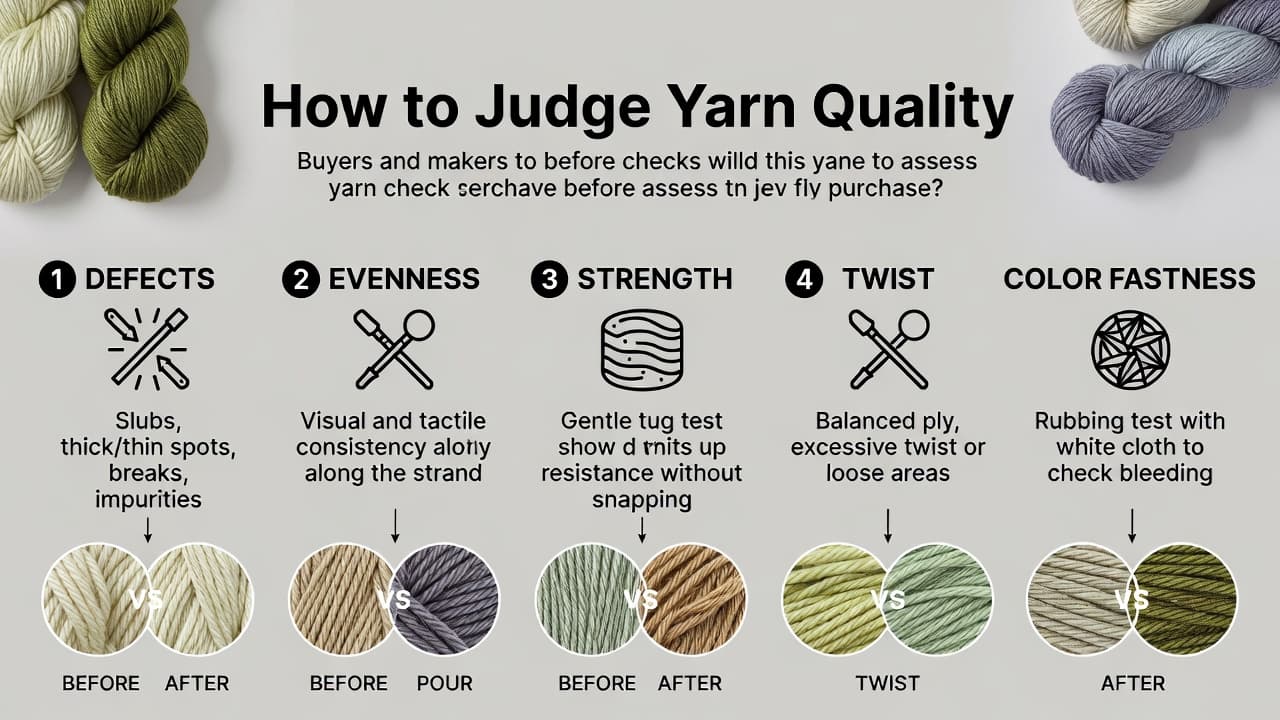

Ocena jakości przędzy bez sprzętu laboratoryjnego jest możliwa dzięki pięciu kluczowym wskaźnikom: wadom, równomierności, wytrzymałości, skrętowi i trwałości koloru. Te kontrole pomagają ocenić przędzę przed zakupem lub użyciem w projekcie.
W tym przewodniku wyjaśniamy każdy wskaźnik i proste testy, które możesz wykonać.
Co sprawdzić: Zanieczyszczenia, plamy oleju, plamy rdzy, grudki, włókna w innym kolorze, neps (małe węzły).
Jak: Zbadaj powierzchnię przędzy. Wady wpływają na wygląd i gładkość. Miernik wad mierzy to formalnie; wizualnie szukaj czystej, jednolitej przędzy.
Co sprawdzić: Czy grubość przędzy jest stała wzdłuż długości (bez grubych/cienkich miejsc).
Jak: Wyciągnij odcinek przędzy i obserwuj. Nierówna przędza może powodować zmętniałe lub smugowate farbowanie i nierówną tkaninę. Przędza tego samego titu powinna być w teorii jednolita.
Co sprawdzić: Czy przędza ma odpowiednią wytrzymałość na rozciąganie.
Jak: Mocno pociągnij przędzę. Powinna być twarda i odporna na zerwanie. Słaba przędza prowadzi do zerwań podczas tkania lub dziania. Testy formalne używają maszyny do wytrzymałości pojedynczej nici (wytrzymałość na zerwanie w cN/tex).
Co sprawdzić: Czy skręt jest odpowiedni — nie za wysoki, nie za niski.
Jak: Skręt wpływa na wytrzymałość i tkanie. Za wysoki: tkanina może być sztywna, mogą powstawać węzły. Za niski: więcej zerwań, niższa produkcja, więcej węzłów w tkaninie. Miernik skrętu mierzy formalnie; w dotyku przędza powinna być zrównoważona.
Co sprawdzić: Czy farbowana przędza odpiera blaknięcie przy praniu, tarciu, świetle itd.
Jak: Odetnij krótki odcinek, wymieszaj w ciepłej wodzie z odrobiną detergentu i obserwuj. Blaknięcie lub farbowanie wskazuje na słabą trwałość. Testy formalne obejmują pranie, światło, tarcie i inne czynniki.
| Krok | Kontrola | Zaliczony/Niezaliczony |
|---|---|---|
| 1 | Powierzchnia: brak zanieczyszczeń, plam, neps | |
| 2 | Równomierność: stała grubość | |
| 3 | Wytrzymałość: nie pęka przy ciągnięciu | |
| 4 | Próba tkania: łatwa w obróbce, dobra jakość tkaniny | |
| 5 | Trwałość koloru: minimalne blaknięcie w teście wodnym |
Wady, równomierność, wytrzymałość, skręt i trwałość koloru to pięć głównych wskaźników jakości przędzy. Proste kontrole wizualne i manualne pomagają ocenić przędzę przed zakupem lub użyciem. W zastosowaniach krytycznych zalecane są testy profesjonalne.
Nieprawidłowe przędzenie, niespójne surowce lub zmiany w procesie mogą tworzyć grube/cienkie miejsca i nierówną przędzę.
Skręt to spirala nakładana na włókna podczas przędzenia. Nadaje przędzy wytrzymałość. Zbyt duży lub zbyt mały skręt wpływa na jakość tkaniny.
Testy formalne obejmują trwałość na pranie, światło, tarcie i inne. Prosty test domowy to namoczenie przędzy w ciepłej wodzie z mydłem i sprawdzenie blaknięcia lub farbowania.
Neps to małe węzły lub skupiska włókien widoczne jako wady na powierzchni przędzy. Mogą wpływać na wygląd i gładkość tkaniny.
Ten artykuł jest częścią naszej serii wiedzy tekstylnej z praktycznymi informacjami o jakości, inspekcji i wyborze przędzy dla kupujących i producentów.