Ull kommer fra mange dyr—sauer, alpakka, kasjmirgeiter, angorageiter, kaniner, yak og mer. Hver type har ulike egenskaper: mykhet, varme, glans og nopping. Denne guiden dekker de viktigste ulltypene og deres typiske bruksområder i tekstiler.
Kilde: Sauer (f.eks. merino fra Australia, New Zealand, Sør-Afrika)
Egenskaper: God varme, absorpsjon og elasticitet. Kvalitet og pris varierer etter rase. Merino er blant den fineste og mykeste.
Bruk: Gensere, sokker, tepper, high-end tekstiler. Oseania produserer omtrent 40 % av verdens ull.
Kilde: Alpakka (Sør-Amerika)
Egenskaper: Veldig myk, varm og stadig mer populær. Ofte dyrere enn sauull. Lange, glatte fibre.
Bruk: Luksusplagg, tepper, tilbehør. Ofte blandet med andre fibre for pris og ytelse.
Kilde: Angorageit (Sør-Afrika, Tyrkia, Argentina)
Egenskaper: Lange, silkeaktige fibre med glatt overflate og naturlig glans. Motstår nopping og filting bedre enn mange ulltyper. Ofte blandet for å redusere nopping i andre fibre.
Bruk: Høykvalitetsstoffer, gensere, luksustekstiler. Fibren har en karakteristisk glans.
Kilde: Kasjmirgeit (Kina, Mongolia, Iran, Sentral-Asia)
Egenskaper: Veldig fin, myk underull. Luksusfiber med høyt varme-til-vekt-forhold. Dyr på grunn av begrenset tilbud og bearbeiding.
Bruk: Gensere, skjerf, premium tilbehør.
Kilde: Angorakanin
Egenskaper: Veldig myk, lang, varm. Glatt overflate—fibre fester dårlig, så ren angora er vanskelig å spinne og kan falle av. Vanligvis blandet med ull eller andre fibre.
Bruk: Blandinger for mykhet og varme. Noen ganger brukt i lavere kvalitet «falsk kasjmir».
Kilde: Yak (Himalaya-regionen)
Egenskaper: Varm, myk og holdbar. Lignende kasjmir i finhet. Mindre vanlig enn sau- eller kasjmirull.
Bruk: Blandinger, luksusstrikk, kaldværutstyr.
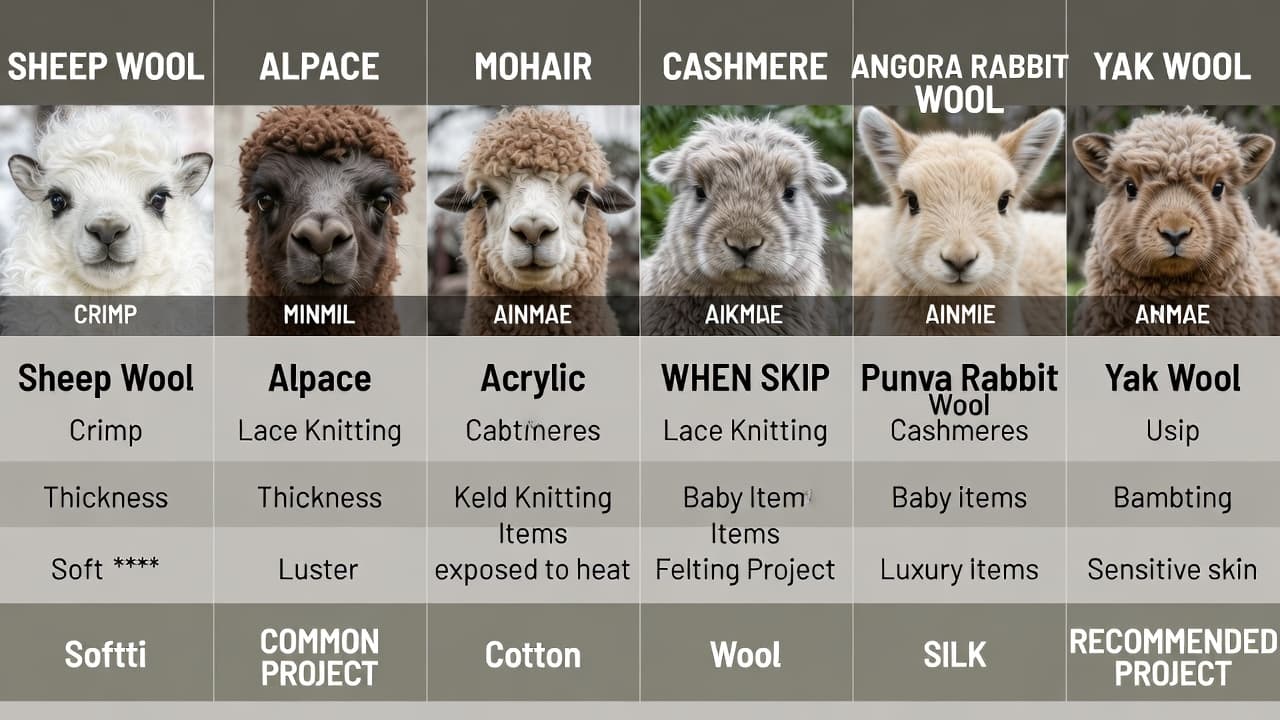
| Type | Kilde | Nøkkelegenskaper | Typisk bruk |
|---|---|---|---|
| Sau/Merino | Sau | Varm, elastisk, allsidig | Gensere, sokker, tepper |
| Alpakka | Alpakka | Myk, varm, premium | Luksusplagg |
| Mohair | Angorageit | Glansende, lite nopping | High-end stoffer |
| Kasjmir | Kasjmirgeit | Fin, luksuriøs | Premium klær |
| Angorakanin | Kanin | Veldig myk, ofte blandet | Blandinger for mykhet |
| Yak | Yak | Varm, holdbar | Blandinger, kaldvær |
Ulltyper omfatter sauull (inkl. merino), alpakka, mohair, kasjmir, angorakanin, yak og andre. Hver har ulik mykhet, varme og bruksområder. Velg ut fra prosjekt, budsjett og ønsket hånd.
Kasjmir og høy kvalitet merino er blant de mykeste. Alpakka og angorakanin er også veldig myke.
Mohair har flate, glatte skjell som overlapper mindre enn sauull, så fibre er mindre tilbøyelige til å filte og noppe.
Ren angora er vanskelig å spinne alene på grunn av glatte fibre med lav samhold. Den blandes vanligvis med ull eller andre fibre.
Australia er en stor produsent, spesielt av merino. New Zealand, Kina og Sør-Afrika produserer også betydelige mengder.
Denne artikkelen er en del av vår ullkunnskapsserie med praktiske innsikter i ulltyper, egenskaper og valg for tekstilprosjekter.