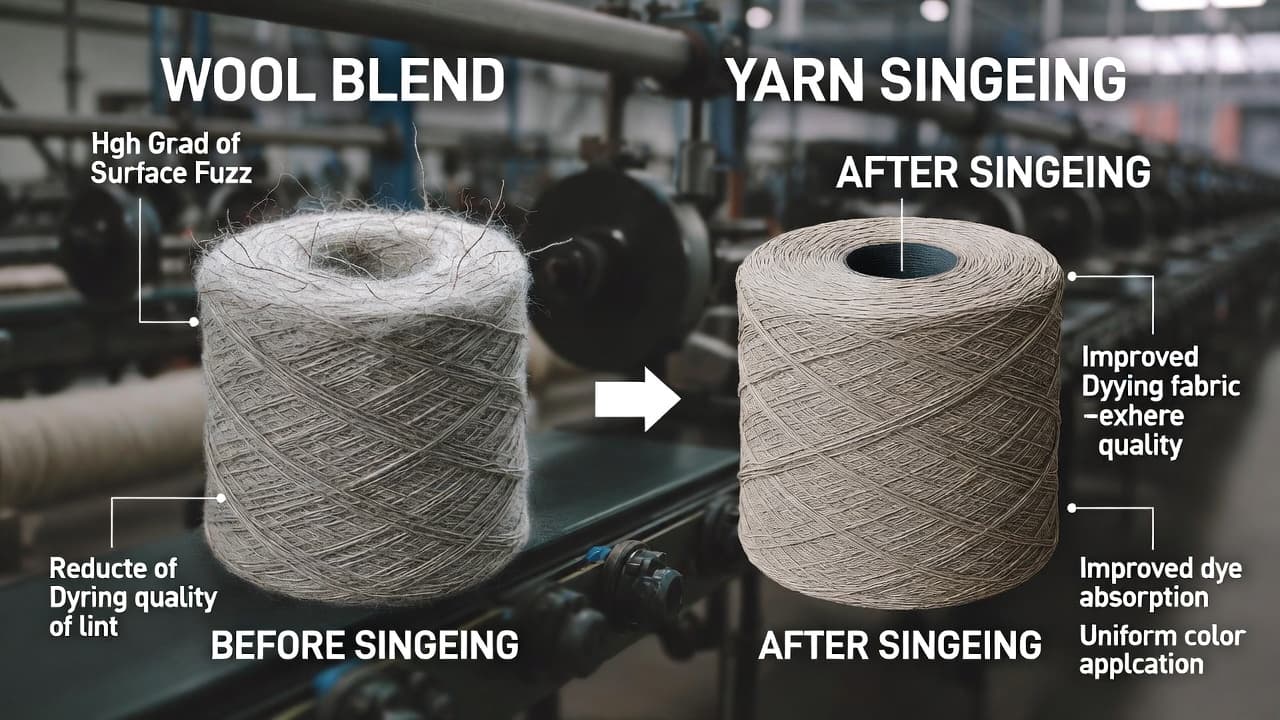

Garnsingning er en tekstil etterbehandlingsprosess som fjerner overflateflus (hårhet) fra garn eller stoff ved å føre det raskt gjennom en flamme eller over en varm metaloverflate. Den brukes for å forbedre fargeopptak, fargeensartethet og stoffkvalitet, spesielt for høykvalitets tekstiler.
I denne guiden forklarer vi hva garnsingning er, hvorfor det brukes og hvordan det gagner det ferdige stoffet.
Garnsingning er prosessen med raskt å føre garn (eller stoff) gjennom en flamme eller over en varm metaloverflate for å brenne av overflateflus (hårhet). Prosessen er kort slik at hovedfibren ikke skades—kun utstående fibre fjernes.
Singning kan brukes på:
Høykvalitets stoffer bruker ofte garnsingning først for et renere, mer ensartet resultat.
Lang overflatehårhet på bomullsgarn fanger støv og urenheter. Singning fjerner dette flus og gjør garnet renere og lettere å behandle.
Overflatehårhet kan forårsake ujevnt fargeopptak og redusert fargeklarhet. Singet garn farges mer ensartet og gir lysere, jevnere farger.
Hårhet kan føre til fargeutslag og striper (flowering) under farging. Singning skaper en glattere overflate for mer ensartet fargepåføring.
Stoffer vevd av singet garn er finere, delikatere og lettere å farge enn fra usinget garn. Resultatet er en høyere kvalitets finish for premium tekstiler.
| Aspekt | Garnsingning | Stoffsingning |
|---|---|---|
| Når | Før veving/strikking | Etter veving |
| Anvendelse | Enkelt garn | Vevd stoff |
| Typisk bruk | Høykvalitets stoffer | Generelle tekstiler |
| Resultat | Renere garn, bedre farging | Glattere stoffoverflate |
Garnsingning er et forberedelsestrinn som fjerner overflateflus for å forbedre farging, fargeensartethet og stoffkvalitet. Det er spesielt viktig for høykvalitets stoffer som krever en ren, jevn finish. Forståelse av singning hjelper med å sette pris på hvordan tekstilbehandling påvirker sluttproduktet.
Singning er prosessen med å brenne av overflateflus (hårhet) fra garn eller stoff med flamme eller varm metaloverflate. Det forbedrer farging og stoffkvalitet.
Bomullsgarn singes for å fjerne hårhet, redusere støv, forbedre fargeensartethet og -klarhet, og produsere finere, renere stoff.
Utført korrekt fjerner singning kun overflateflus. Hovedfibren skades ikke fordi eksponeringen er kort og kontrollert.
Nei. Singning er vanlig for høykvalitets bomull og blandinger. Noen stoffer hopper over singning avhengig av ønsket finish og kostnad.
Denne artikkelen er en del av vår tekstilkunnskapsserie med praktisk innsikt i garnbehandling, etterbehandling og stoffkvalitet for kjøpere og produsenter.