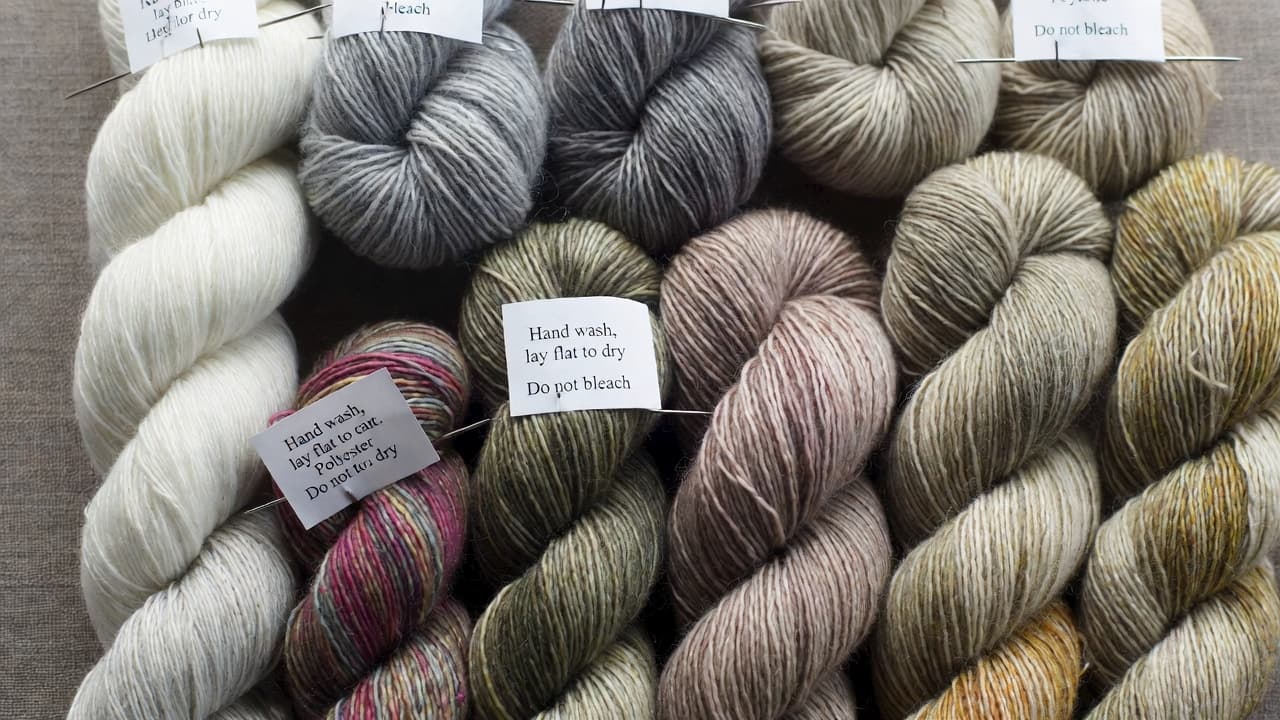

Ullblanding er garn eller stoff der ull kombineres med en eller flere andre fibre—f.eks. kasjmir, polyester, spandex, akryl eller kanin. Blanding kan forbedre varme, mykhet, elastisitet, pleie eller kostnad, men ullblandinger kan pille, krympe eller filtre hvis de ikke pleies riktig.
I denne guiden forklarer vi hva ullblanding er, vanlige typer, fordeler og ulemper, og hvordan pleie det.
Ullblanding betyr at ull blandes med andre fibre under spinning eller stoffkonstruksjon. Vanlige partnere: akryl, kasjmir, polyester, spandex og kanin. Forholdet (f.eks. 70 % ull / 30 % akryl) og fibertyper bestemmer hånd, varme, holdbarhet og pleiebehov.
| Blanding | Typiske fordeler |
|---|---|
| Ull + akryl | Mykere, mer prisgunstig; god form etter børsting/våt behandling; én-badsfarging mulig (lignende pH) |
| Ull + kasjmir | Mykere, mer luksuriøs hånd |
| Ull + polyester | Mer holdbar, mindre krymping, enklere pleie |
| Ull + spandex | Strekk, bedre passform og tilbakefjæring |
| Ull + kanin | Mykere, fluffier hånd |
| Aspekt | Ullblanding | Ren ull |
|---|---|---|
| Mykhet | Ofte mykere (med akryl, kasjmir osv.) | Kan være grovere |
| Kostnad | Ofte lavere (med syntetisk) | Ofte høyere |
| Pleie | Varierer; noen blandinger enklere | Ofte håndvask, flattørk |
| Pilling | Kan pille mer | Avhenger av kvalitet |
| Krymping/filtring | Mulig (ullinnhold) | Mulig |
Ullblanding er ull kombinert med andre fibre (f.eks. akryl, kasjmir, polyester, spandex, kanin). Det tilbyr varme, mykhet og ofte bedre verdi eller enklere pleie, men kan pille og krympe hvis det håndteres feil. Pleie det som ull: mildt vaskemiddel, kjølig vann, ingen vridning, flattørk—så ullblandingsplagg varer lenge.
Ullblanding er ull blandet med andre fibre som akryl, kasjmir, polyester, spandex eller kanin. Etiketten (f.eks. 70 % ull, 30 % akryl) viser blandingen.
Ja. Ullblandinger kan være varme, myke og holdbare. Ull–akryl er vanlig for gensere; ull–kasjmir for luksus strik. Følg pleieanvisninger for å unngå krymping og pilling.
Bare hvis etiketten sier det. Mange ullblandinger trenger kaldt vann, skåneprogram og flattørk. Bruk ullvaskemiddel og unngå høy varme og friksjon for å forhindre krymping og filtring.
Denne artikkelen er en del av vår garnkunnskapsserie med praktisk innsikt i ullblandinger og fibertyper for strikkere og stoffbrukere.