Merinoull og vanlig ull kommer begge fra sauer, men skiller seg i fiberfinhet, mykhet, varme og pris. Merino er kjent for finere fibre og mykere følelse; vanlig ull er tykkere og ofte rimeligere.
I denne guiden sammenligner vi fiberdiameter, tekstur, pleie og verdi, slik at du kan velge riktig ull til gensere og plagg.
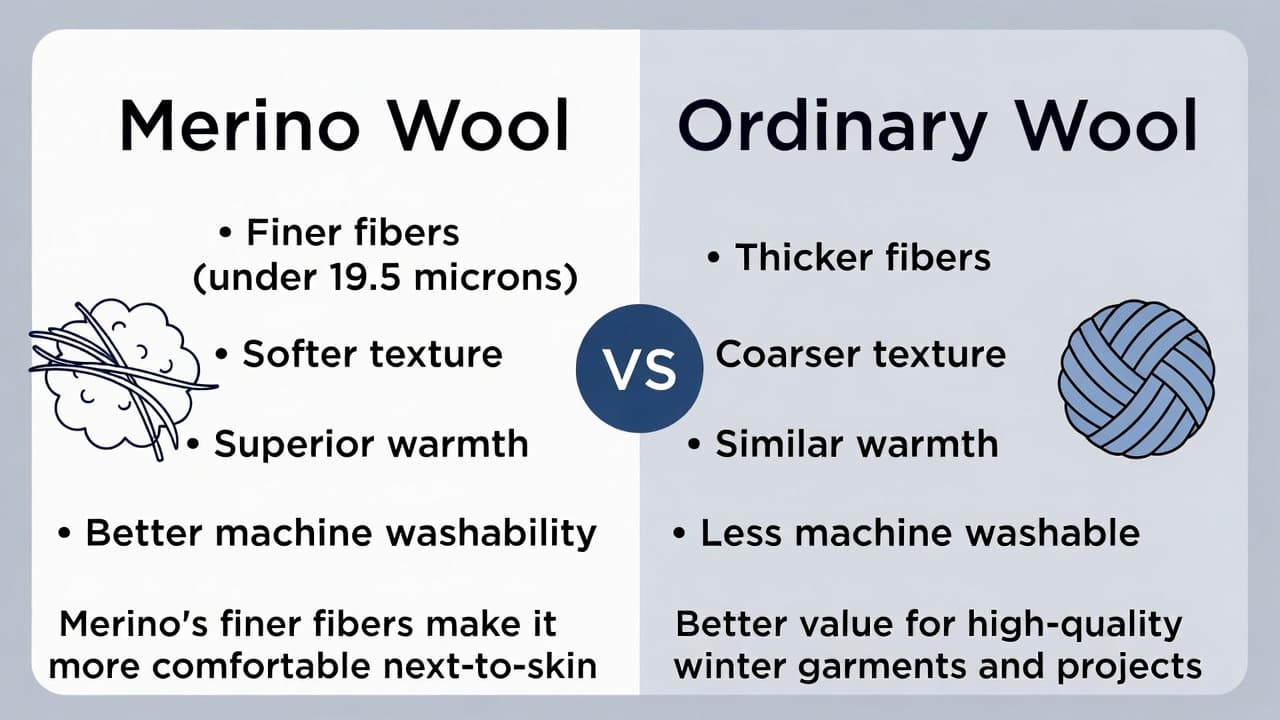
Merinoull kommer fra merinosauer, en rase oppdrettet over hele verden. Australsk merino regnes ofte som høyest kvalitet. Merinofibre er ekstremt fine, typisk under 19,5 mikron i diameter. Den fineste merinoen kan være under 11,7 mikron — blant de fineste av alle ulltyper.
Vanlig ull refererer til standard sauull fra ikke-merino raser. Fibrene er tykkere (typisk over 25 mikron) og mindre fine enn merino. Vanlig ull er rimeligere, men kan føles kløende mot huden.
| Aspekt | Merinoull | Vanlig ull |
|---|---|---|
| Typisk diameter | Under 19,5 mikron | 25+ mikron |
| Fineste kvalitet | Under 11,7 mikron | N/A |
| Varme per vekt | Høyere | Lavere |
Jo finere fiberen, jo mykere og varmere ullen.
Merinoull tilbyr finere fibre, mykere følelse og bedre varme enn vanlig ull. Vanlig ull er rimeligere og egnet for ytterlag. Australsk merino er ettertraktet for kvalitet; når du har prøvd det, er komfortforskjellen ofte tydelig.
Merinofibre er finere (under 19,5 mikron), bøyer seg lettere og føles mykere mot huden. Tykkere vanlig ull kan føles skarp.
Superwash merino kan maskinvaskes. Sjekk etiketten. Ikke-superwash merino krever typisk håndvask.
Australsk merino regnes ofte blant høyest kvalitet på grunn av avl, klima og behandlingsstandarder.
Ullfinhet måles i mikron (µm) — fiberens diameter. Lavere mikron = finere, mykere ull.
Denne artikkelen er en del av vår ullkunnskapsserie med praktisk innsikt i fibertyper, kvalitet og valg for strikkere og plaggprodusenter.