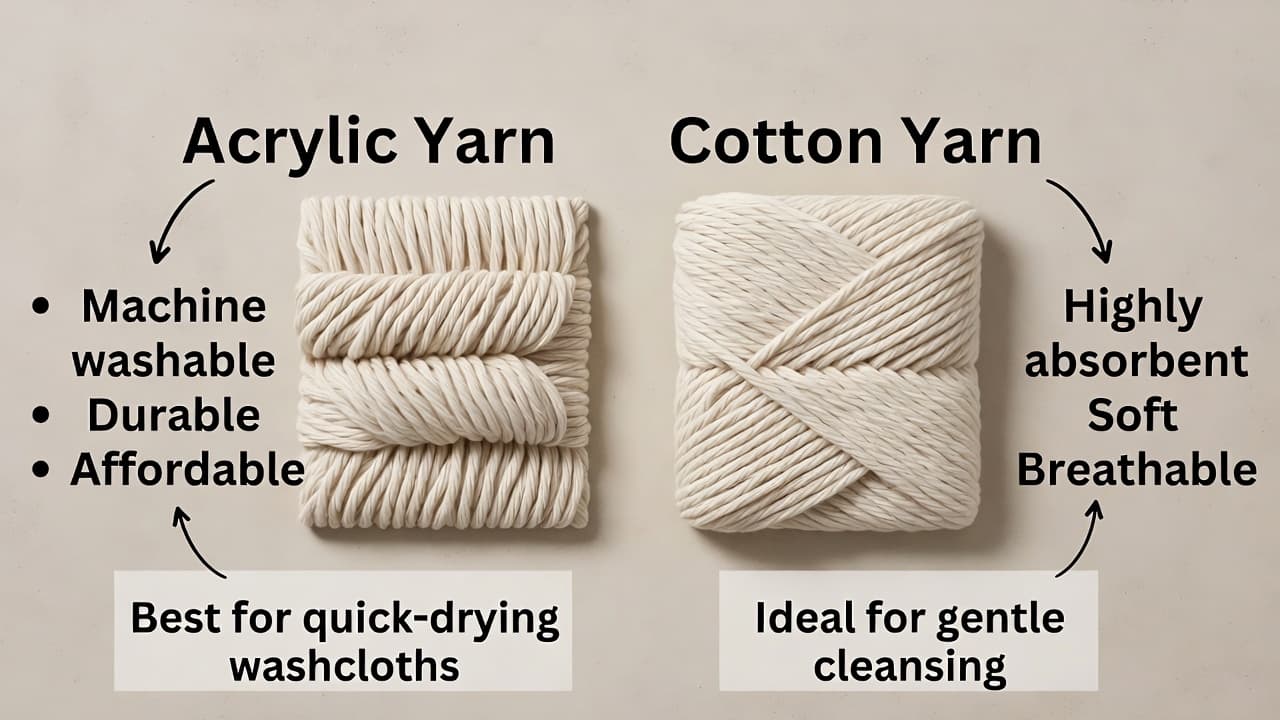

Ja — du kan bruke akrylgarn til vaskekluter. Akryl er maskinvaskbart, holdbart, rimelig og motstår krymping, så det passer til hyppig brukte kluter som vaskes ofte. Hovedkompromisset er absorpsjon: akryl absorberer ikke vann like godt som bomull, så for tørking eller maksimal absorpsjon er bomull vanligvis bedre.
I denne guiden dekker vi når akryl fungerer til vaskekluter, fordeler og ulemper, og når du velger bomull i stedet.
Ja. Akrylgarn er et praktisk valg til vaskekluter når enkel pleie, holdbarhet og kostnad betyr noe. Det er maskinvaskbart og tørketrommel-sikkert (sjekk banderole), motstår krymping og beholder formen, og finnes i mange farger. Til skrubbing og generell bruk fungerer akrylkluter godt; til å absorbere vann (f.eks. tørke hud) er bomull vanligvis bedre.
| Aspekt | Akryl | Bomull |
|---|---|---|
| Absorpsjon | Lavere | Høyere |
| Maskinvask | Enkel | Enkel |
| Holdbarhet | Høy | Høy |
| Pris | Ofte lavere | Ofte høyere |
| Bruk til tørking | Svakere | Bedre |
| Skrubbing | God | God |
Oppsummering: Bruk akryl til skrubbing, enkel pleie og budsjett; bruk bomull når absorpsjon og tørking er prioriteter.
Akrylgarn er egnet til vaskekluter når du vil ha holdbarhet, enkel pleie og rimelig pris. For maksimal absorpsjon og tørking er bomull det bedre valget. Match fiberen til hvordan du vil bruke kluten.
Ja til skrubbing og enkel pleie; akryl er holdbart og maskinvaskbart. Til å absorbere vann (tørking) er bomull bedre.
Akryl absorberer mindre vann enn bomull. Vaskekluter i akryl er bedre til skrubbing enn til tørking.
Ja. Akryl er generelt maskinvaskbart og kan tørkes i tørketrommel (sjekk banderole). Det gjør det praktisk til hyppig bruk.
Denne artikkelen er en del av vår garnkunnskapsserie med praktisk innsikt i garnvalg for husholdnings- og håndverksprosjekter.