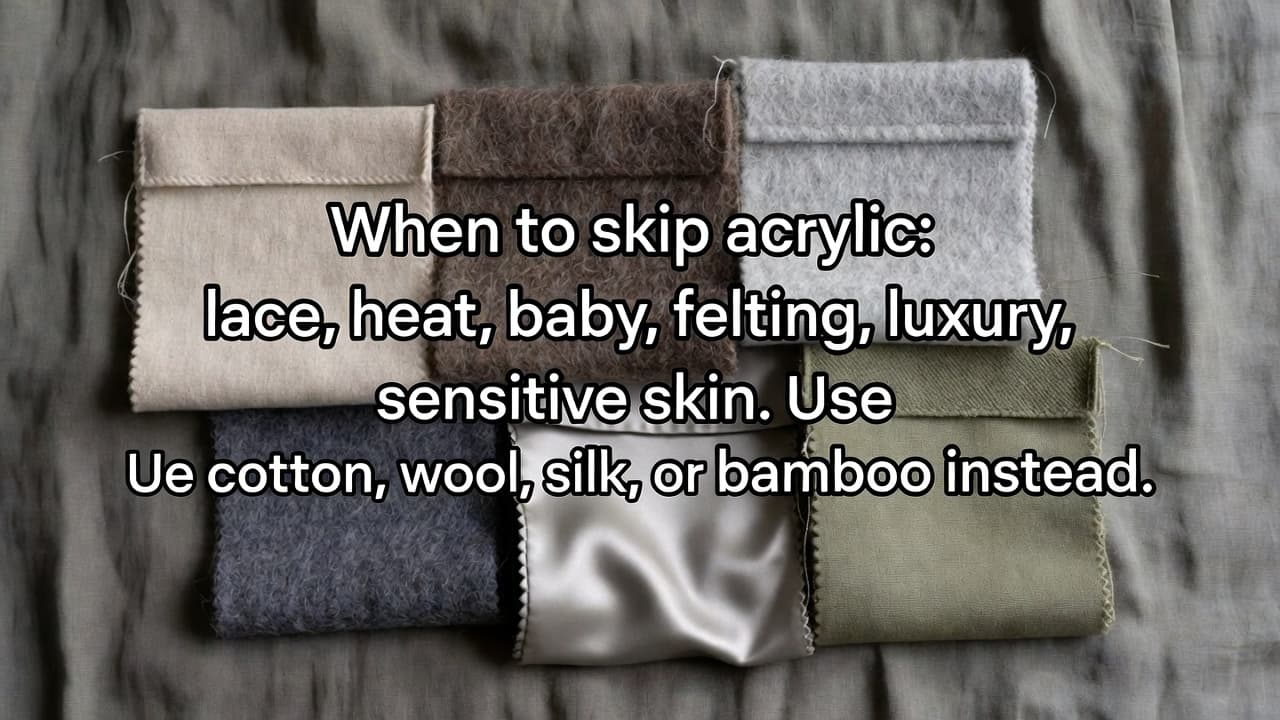

Acrylgaren is betaalbaar, veelzijdig en makkelijk te verzorgen, dus een veelgebruikte keuze voor breiers en haaksters. Er zijn nog steeds situaties waarin acryl beter niet gebruikt wordt: kant, hoge temperaturen, babyartikelen, vilten, high-end-projecten en gevoelige huid. In die gevallen zijn katoen, wol, zijde, bamboe of merino vaak beter.
Deze gids legt uit wanneer je geen acrylgaren gebruikt en wat je in plaats daarvan kiest.
Acrylgaren is garen van synthetische (plastic) vezel. Het is zacht, kleurvast, wasbaar in de machine en budgetvriendelijk. Het vilt niet, smelt bij hoge hitte en heeft vaak een volle, gladde hand die niet ideaal is voor zeer fijn kant of voor vilten.
Waarom: Acryl is vaak vol en dik en mist de fijne, scherpe definitie en natuurlijke glans die veel kantpatronen nodig hebben.
Gebruik in plaats daarvan: Katoen, zijde, wol of mengsels die fijner en gladder zijn voor delicaat kant.
Waarom: Acryl is synthetisch en kan smelten of vervormen bij hoge hitte (bijv. heet fornuis, droger, directe warmte).
Gebruik in plaats daarvan: Katoen, wol, bamboe of andere natuurlijke vezels die hitte beter verdragen voor items bij warmtebronnen (bijv. keuken, warme omgevingen).
Waarom: Sommige baby's kunnen allergieën of huidirritatie krijgen van acryl. Voor veiligheid en comfort worden natuurlijke vezels vaak op de huid verkozen.
Gebruik in plaats daarvan: Katoen, bamboe of merinowol (zacht, ademend, mild).
Waarom: Acryl vilt niet; vilten vereist dierlijke vezels (bijv. wol, alpaca) die vilt en krimpen met hitte en wrijving.
Gebruik in plaats daarvan: Wol of alpaca (en andere vilbare dierlijke vezels).
Waarom: Acryl heeft meestal een minder luxueuze hand en minder duurzaamheid dan premium natuurlijke vezels voor truien, sjaals en sjaals die eruit moeten zien en meegaan als luxestukken.
Gebruik in plaats daarvan: Wol, kasjmier, zijde of mengsels daarvan voor een high-end uiterlijk en gevoel.
Waarom: Acryl kan jeuken of oncomfortabel aanvoelen voor sommigen, vooral bij gevoelige huid.
Gebruik in plaats daarvan: Katoen, bamboe, merino, zijde of alpaca voor zachter huidcontact.
| Situatie | Beter alternatief |
|---|---|
| Kant | Katoen, zijde, wol (fijner, betere definitie) |
| Hoge hitte | Katoen, wol, bamboe |
| Babykleding | Katoen, bamboe, merino |
| Vilten | Wol, alpaca |
| Luxe uiterlijk/gevoel | Wol, kasjmier, zijde |
| Gevoelige huid | Katoen, bamboe, merino, zijde, alpaca |
Acrylgaren is geweldig voor veel projecten, maar vermijd het voor kant, hoge hitte, babyartikelen, vilten, high-end-stukken en gevoelige huid. Katoen, wol, zijde, bamboe of merino kiezen in die gevallen verbetert resultaat, comfort en veiligheid.
Het is mogelijk, maar katoen, bamboe of merino zijn vaak veiliger en zachter voor baby's; sommige zuigelingen reageren op acryl.
Vilten vereist dierlijke vezels met schubben die vergrendelen met hitte en wrijving. Acryl is glad synthetisch en vilt niet.
Het kan sommigen doen jeuken of irritatie geven. Natuurlijke vezels (katoen, merino, bamboe, zijde) zijn meestal beter voor een gevoelige huid.
Dit artikel maakt deel uit van onze garenkennisserie met praktische tips over wanneer breiers en haaksters acryl versus andere vezels kiezen.