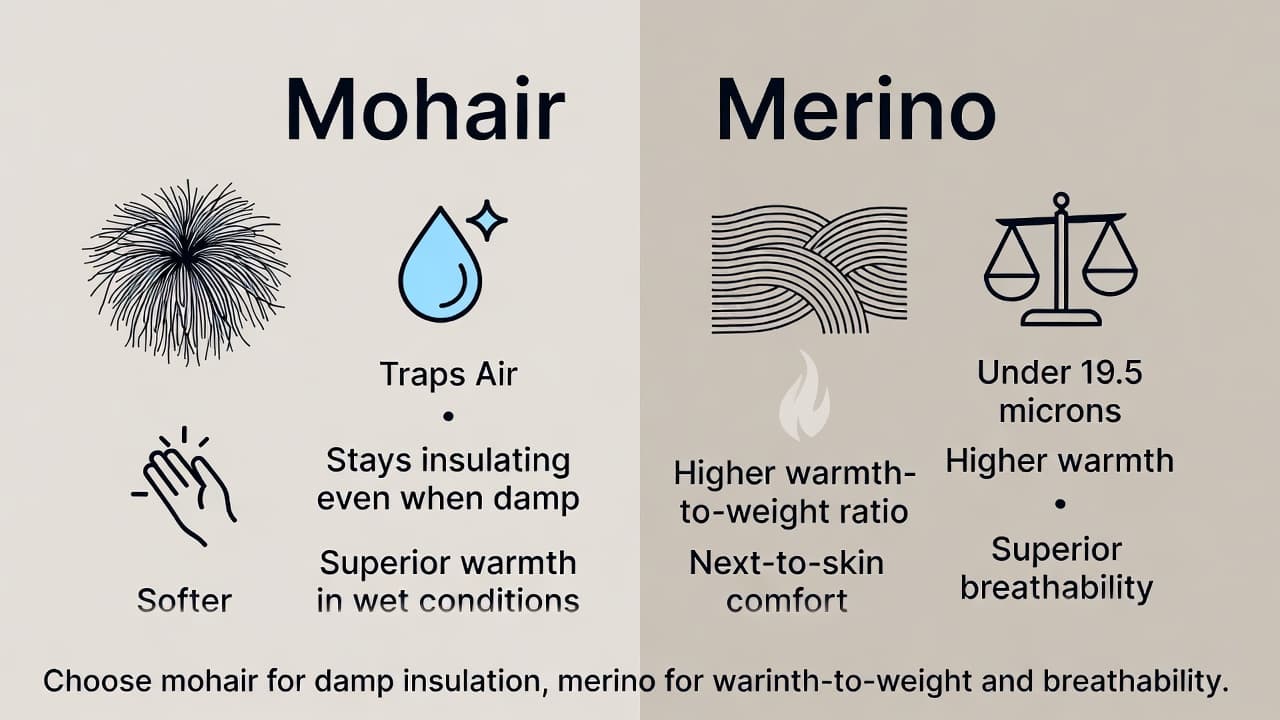

Mohair (van de Angorageit) en merino (van het merinoschaap) worden beide gebruikt voor warme winterkleding. Warmte betekent hier het vermogen van het materiaal om warmte vast te houden en te isoleren; het hangt af van dikte, luchtvasthouding en vochtgedrag. Mohair voelt vaak warmer in dikke, vochtige lagen; merino biedt hogere warmte per gewicht en beter ademend vermogen.
In deze gids vergelijken we mohair vs merino voor warmte en adviseren wat te kiezen.
Mohair is vezel van de Angorageit. Het heeft glans, zachtheid en vaak een holle kern die lucht vasthoudt. Het is typisch dikker en dichter dan merino en kan effectief warmte vasthouden. Mohair is ook vochtbestendiger dan merino en kan blijven isoleren, zelfs wanneer vochtig.
Merinowol komt van merinoschapen en staat bekend om fijne vezel en goede isolatie. Het heeft een hogere warmte-gewicht-verhouding dan mohair: bij gelijk gewicht houdt merino meer warmte vast. Merino is ook ademender en vochtafvoerend, kan lichaamstemperatuur reguleren en oververhitting verminderen.
"Warmer" hangt af van hoe u de vezel gebruikt:
| Factor | Mohair | Merino |
|---|---|---|
| Luchtvasthouding | Holle kern; houdt lucht goed vast | Goed, maar andere structuur |
| Dikte / dichtheid | Vaak dikker, dichter | Vaak fijner, lichter |
| Warmte per gewicht | Lager | Hoger |
| Bij vochtige omstandigheden | Blijft isoleren | Kan volume verliezen wanneer nat |
| Ademend vermogen | Lager | Hoger |
| Regulatie | Minder | Beter (minder oververhitting) |
Dus: mohair kan warmer aanvoelen in dikke, vochtige of zeer koude omstandigheden; merino is vaak warmer per ounce en beter voor lagen en actief gebruik waar ademend vermogen telt.
Mohair en merino mengen is gebruikelijk: mohairs volume en vochtisolatie met merinos zachtheid en regulatie.
Mohair en merino zijn beide uitstekend voor de winter; geen van beide is universeel "warmer". Mohair blinkt uit bij dikke, vochtige, koude omstandigheden met holle kern; merino biedt hogere warmte per gewicht en beter ademend vermogen. Keuze hangt af van kledingstuk, lagen en prioriteit — maximale isolatie vs comfort bij beweging.
Het hangt ervan af. Mohair is vaak dikker en houdt warmte goed vast bij vocht. Merino heeft een hogere warmte-gewicht-verhouding en is ademender — warmer per ounce en comfortabeler bij activiteit.
Mohair houdt isolatie bij vocht beter door structuur en vochtbestendigheid. Merino voert vocht af maar kan volume verliezen wanneer nat.
Ja. Mohair-merino-mengsels zijn gebruikelijk en combineren mohairs volume en vochtisolatie met merinos zachtheid en ademend vermogen.
Dit artikel maakt deel uit van onze stofkennisserie met praktische inzichten in wolsoorten, warmte en selectie voor winterkleding en breien.