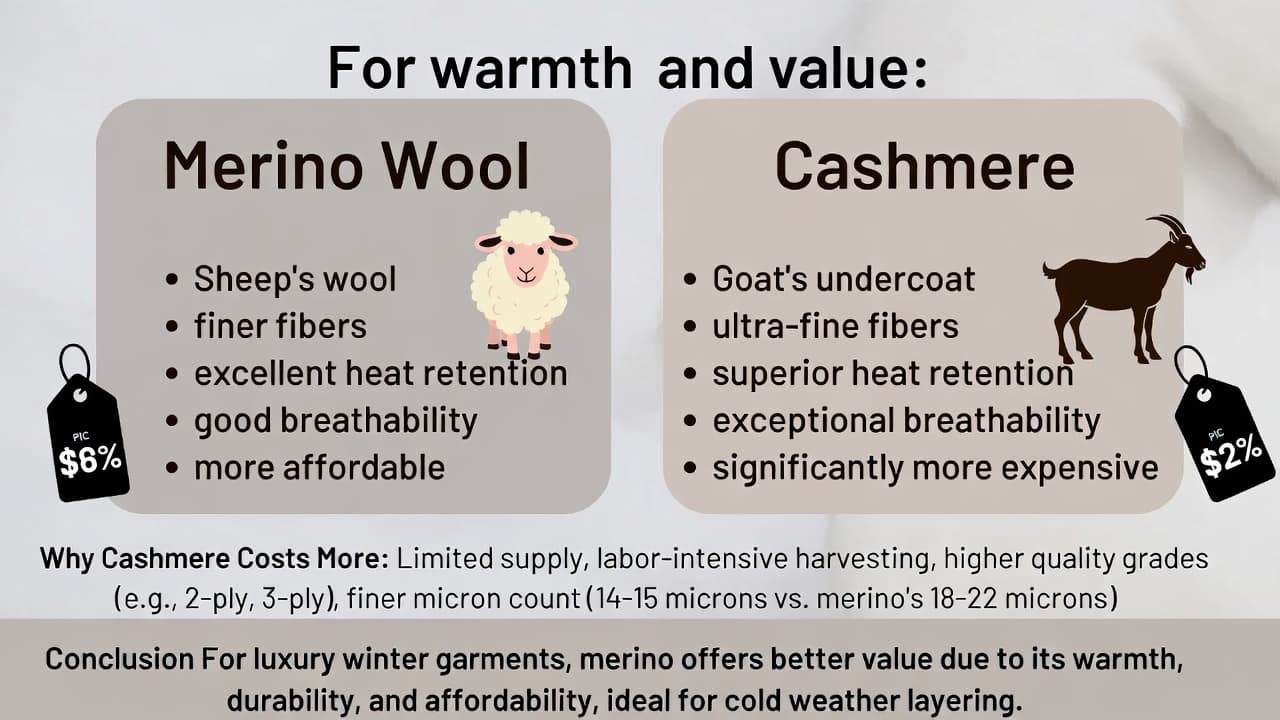

Merinowol en kasjmier zijn beide premium natuurlijke vezels voor winterkleding. Veel mensen vragen: Is merino even warm als kasjmier? Het korte antwoord: Kasjmier is warmer per ounce, maar merino biedt uitstekende warmte plus ademend vermogen en vaak betere waarde.
In deze gids vergelijken we vezelherkomst, warmte, ademend vermogen en beste toepassingen, zodat u het juiste materiaal kunt kiezen.
Kasjmier is een luxe vezel van de zachte onderwol van kasjmiergeiten (Capra hircus laniger). De geiten ontwikkelen in de winter een dichte, fijne onderwol om koude klimaten te overleven. Kasjmiervezels zijn doorgaans 14–19 micron in diameter — fijner dan de meeste wol — en bieden uitzonderlijke warmte met een zacht, licht gevoel.
Merinowol komt van merinoschapen, gefokt voor hun fijne, zachte wol. Merinovezels zijn doorgaans 17–24 micron — fijner dan standaardwol — en bieden warmte, ademend vermogen en vochtbeheer. Merino is breder beschikbaar en over het algemeen betaalbaarder dan kasjmier.
| Aspect | Kasjmier | Merinowol |
|---|---|---|
| Warmte per ounce | Hoger | Iets lager |
| Vezelfijnheid | 14–19 micron | 17–24 micron |
| Ademend vermogen | Goed | Uitstekend |
| Temperatuurregulatie | Warm | Warm + reguleert (minder oververhitting) |
| Vochtbeheer | Goed | Uitstekend |
| Prijs | Hoger | Betaalbaarder |
| Duurzaamheid | Delicaat | Duurzamer |
Samenvatting: Kasjmier is warmer per ounce en voelt luxueuzer. Merino is iets minder warm, maar biedt beter ademend vermogen en temperatuurregulatie — ideaal voor lagen en actief gebruik.
Merino is bij gelijk gewicht niet helemaal zo warm als kasjmier, maar het verschil is klein voor de meeste toepassingen. Merino houdt warmte effectief vast en houdt u warm in koude omstandigheden. Door het ademende vermogen oververhit u binnen minder snel, waardoor merino in veel situaties beter past voor dagelijks gebruik dan kasjmier.
Zowel kasjmier als merino zijn uitstekende keuzes voor winterkleding. Kasjmier biedt iets meer warmte en luxe; merino biedt sterke warmte, ademend vermogen en waarde. Voor de meesten is merino de betere keuze voor dagelijks gebruik, terwijl kasjmier past bij speciale gelegenheden en wie luxe prioriteit geeft.
Kasjmier is iets warmer per ounce door fijnere, dichtere vezels. Merino is nog steeds zeer warm en vaak comfortabeler voor de hele dag door ademend vermogen.
Merino is over het algemeen beter voor lagen omdat het goed ademt en vocht beheert, waardoor oververhitting onder andere lagen afneemt.
Kasjmier komt van de onderwol van kasjmiergeiten, die per dier weinig vezel produceren. Oogst en verwerking zijn arbeidsintensief, wat hogere prijzen oplevert.
Ja. Merino voert vocht af en kan enige isolatie behouden wanneer vochtig, geschikt voor actief gebruik en vochtige omstandigheden.
Dit artikel maakt deel uit van onze stofkennisserie met praktische inzichten in wolsoorten, vezelprestaties en textielkeuze voor kopers en makers.