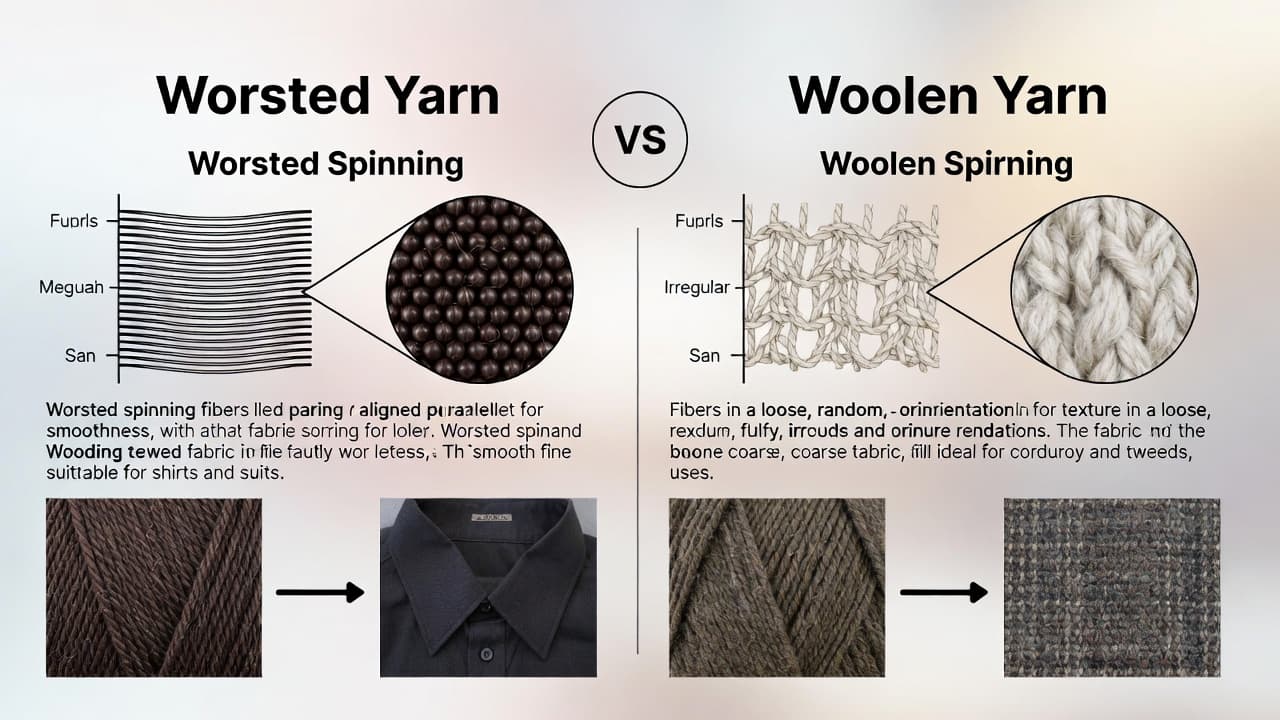

워스티드 실과 울렌 실은 서로 다른 방사 공정으로, 섬유 구조, 촉감, 용도가 다른 실을 만듭니다. 워스티드 실은 더 가늘고 매끄럽고, 울렌 실은 더 거칠고 무겁습니다. 차이를 이해하면 셔츠, 정장, 스포츠웨어, 캐주얼웨어에 맞는 실을 선택할 수 있습니다.
이 가이드에서는 원료, 가공, 특성, 최적 용도를 비교합니다.
워스티드 실은 빗질 방사로 생산됩니다. 면이나 양모를 카드, 빗질, 인발, 방사로 가공하여 짧은 섬유와 불순물을 제거합니다. 결과는 더 길고 평행한 섬유로 균일하고 매끄러운 구조를 이룹니다. 워스티드 실은 고급 원단에 사용됩니다.
울렌 실(거친 실)은 더 거친 원료로 더 단순한 방사를 사용합니다. 충분한 빗질을 거치지 않아 짧은 섬유가 남고 구조는 더 느슨합니다. 울렌 실은 더 무겁고 더 내구성이 있지만 워스티드보다 덜 정제되어 있습니다.
| 항목 | 워스티드 실 | 울렌 실 |
|---|---|---|
| 원료 | 더 가는 면/양모, 빗질 | 더 거친 면/양모 |
| 가공 | 복잡(카드, 빗질, 인발) | 더 단순 |
| 짧은 섬유 | 제거 | 유지 |
| 비용 | 더 높음 | 더 낮음 |
| 항목 | 워스티드 | 울렌 |
|---|---|---|
| 촉감 | 부드럽고, 섬세하고, 광택 | 더 무겁고 단단 |
| 구조 | 균일하고 매끄러움 | 더 느슨하고 덜 균일 |
| 내마모성 | 양호 | 내구적 |
| 최적 용도 | 셔츠, 정장, 넥타이 | 스포츠웨어, 코듀로이 |
워스티드 실은 고급 의류를 위한 더 가늘고 매끄러운 원단을 제공합니다. 울렌 실은 스포츠웨어와 캐주얼웨어를 위한 더 무겁고 내구적인 원단을 제공합니다. 차이는 원료와 가공에 있으며, 원단 품질과 용도에 따라 선택하세요.
워스티드는 더 긴 섬유로 매끄럽고 균일한 실을 만드는 빗질 방사 공정을 뜻합니다. 고품질의 고급 원단에 사용됩니다.
아닙니다. «Worsted»는 (1) 방사 공정(워스티드 vs 울렌) 또는 (2) 실 굵기(worsted weight = #4 Medium)를 의미할 수 있습니다. DK는 다른 굵기(#3 Light)입니다.
울렌 실은 더 무겁고 내구적인 원단이 필요한 스포츠웨어, 코듀로이, 캐주얼 의류에 사용됩니다.
워스티드 실은 더 많은 가공(빗질 등)과 더 가는 원료가 필요하여 울렌 실보다 비용이 높습니다.
이 기사는 제조업체와 메이커를 위한 실 방사, 원단 품질, 선택에 대한 실용적 통찰을 제공하는 섬유 지식 시리즈의 일부입니다.