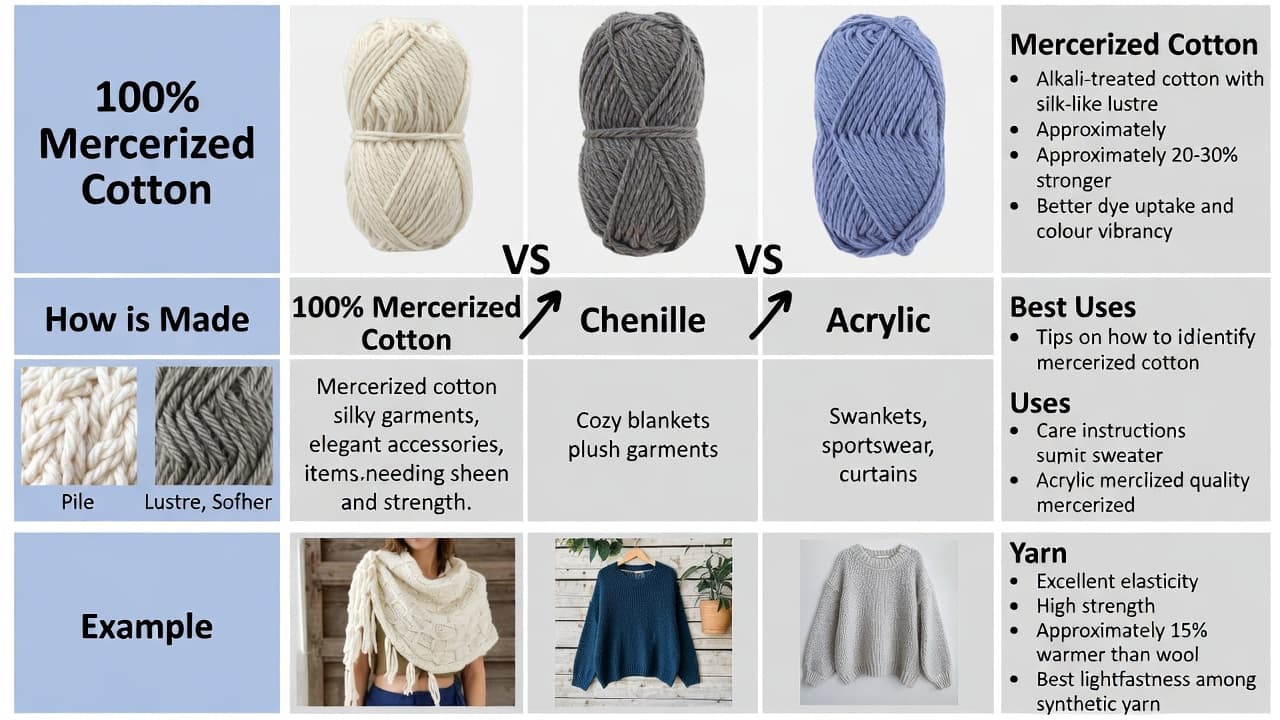

아크릴 실은 폴리아크릴로니트릴(PAN)로 만든 합성 섬유 실입니다. 울과 비슷한 부드러움과 보온성을 가지면서도 울보다 우수한 탄성과 합성 섬유 중 최고의 내광성을 갖추고 있습니다. 니트웨어, 담요, 스포츠웨어, 홈텍스타일 등에 널리 사용됩니다.
이 가이드에서는 아크릴 실이 무엇인지, 주요 특성, 그리고 대표적인 용도를 설명합니다.
아크릴 실은 아크릴 섬유(폴리아크릴로니트릴)로 방적한 실입니다. 아크릴 섬유는 중합, 방사, 연신, 열고정 공정으로 만들어지며, 완성된 섬유는 보풀을 더하기 위해 크림핑된 후 방적용 스테이플로 절단됩니다. 아크릴은 보송보송하고 부드러우며 따뜻해 **"합성 울"**이라고 불리기도 합니다. 보온성은 울보다 약 15% 높으며, 일상용품에서는 울과 혼방되기도 합니다.
아크릴 실은 의류와 홈 분야의 다양한 용도로 사용됩니다.
| 용도 | 특징 |
|---|---|
| 스웨터·니트웨어 | 부드럽고 따뜻하며 울과 혼방되는 경우가 많음 |
| 담요·슬로우 | 볼륨감과 보온성이 우수함 |
| 스포츠웨어·캐주얼 니트 | 손질이 쉽고 색이 바래지 않음 |
| 커튼·방수포 | 내광성이 매우 우수함 |
| 인조 퍼·봉제인형 | 볼륨감 있고 촉감이 부드러움 |
| 양말·모자·목도리 | 저렴하고 튼튼함 |
일반적인 벌키 아크릴 실(예: 820, 826, 832, 842)이 널리 사용됩니다. 솔리드 아크릴 실(비벌키)도 있으며, 원단 밀도와 드레이프가 다릅니다.
아크릴 실은 울과 비슷한 보온성과 부드러움, 뛰어난 내광성과 탄성을 갖춘 다재다능한 합성 섬유입니다. 스웨터, 담요, 스포츠웨어, 홈텍스타일에 적합합니다. 선택은 프로젝트의 종류, 관리 방법, 천연 섬유와 합성 섬유 중 어느 쪽을 선호하는지에 따라 달라집니다.
아크릴 실은 폴리아크릴로니트릴(PAN) 섬유로 만들어집니다. 화학 중합으로 만들어진 섬유는 스테이플과 실로 방적되며, 볼륨과 부드러움을 위해 크림핑되는 경우가 많습니다.
아크릴은 울보다 보온 유지율이 약 15% 높으며, 스웨터와 담요에서 울 대체재나 혼방 소재로 자주 사용됩니다.
네. 아크릴은 일반적으로 세탁기 세탁이 가능하고 관리하기 쉽습니다. 세탁 온도와 건조 방법은 실 라벨을 확인하세요.
벌키 아크릴 실은 섬유의 열탄성을 이용해 보송보송하고 부드러운 실을 만드는 것입니다. 대표적인 유형은 820, 826, 832, 842이며, 촉감과 볼륨이 솔리드(비벌키) 아크릴과 다릅니다.
이 글은 실 지식 시리즈의 일부로, 뜨개질과 코바늘 뜨개질에 유용한 실 종류, 섬유 특성, 활용법에 대한 실용적인 정보를 제공합니다.