Sullivans International
์ œํ’ˆ
๋ฐฉ์‚ฌ๋œจ๊ฐœ์งˆ & ํฌ๋กœ์…ฐ
ํšŒ์‚ฌ ์†Œ๊ฐœ
ํšŒ์‚ฌ ํ”„๋กœํ•„
์›์‚ฌ ์ œ์กฐ์—…์ฒด
OEM ๋ฐ ๋Œ€๋Ÿ‰ ๊ณต๊ธ‰
๋ธ”๋กœ๊ทธ
์•„๋งˆ์กด ๋ฒ ์ŠคํŠธ์…€๋Ÿฌ์›์‚ฌ ์ธ์‚ฌ์ดํŠธ
์†Œ์‹
์ตœ์‹  ์—…๋ฐ์ดํŠธ
๋ฌธ์˜ํ•˜๊ธฐ
sales@sullivansintl.com@sullivansintl
ยฉ 2026 Sullivans International (China) Co., Ltd.
๋ชจ๋“  ๊ถŒ๋ฆฌ ๋ณด์œ .
์ง‘/๋ธ”๋กœ๊ทธ/์›์‚ฌ ์ธ์‚ฌ์ดํŠธ/Merino Wool vs Ordinary Wool: Key Differences Explained
Cover Image for Merino Wool vs Ordinary Wool: Key Differences Explained

Merino Wool vs Ordinary Wool: Key Differences Explained

Sullivans International
March 1, 2026โ€ข3 min read
๋Œ€๋Ÿ‰ ๋˜๋Š” OEM ์›์‚ฌ ๊ณต๊ธ‰์„ ์ฐพ๊ณ  ๊ณ„์‹ ๊ฐ€์š”?์ œ์กฐ ์—ญ๋Ÿ‰ ์ž์„ธํžˆ ๋ณด๊ธฐ โ†’

Merino wool and ordinary wool both come from sheep, but they differ in fiber fineness, softness, warmth, and price. Merino is known for finer fibers and softer feel; ordinary wool is thicker and often more affordable.

In this guide, we compare fiber diameter, texture, care, and value so you can choose the right wool for sweaters and garments.


What Is Merino Wool?

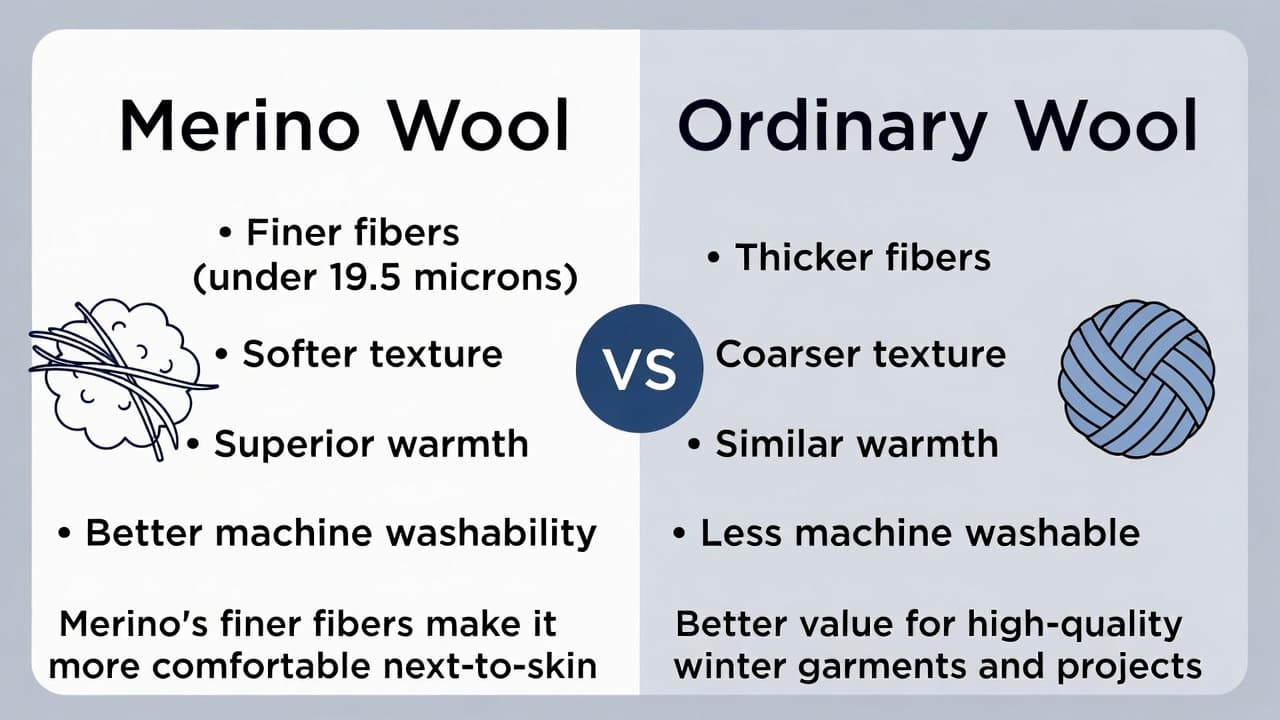
Merino wool comes from merino sheep, a breed raised worldwide. Australian merino is often considered the highest quality. Merino fibers are extremely fine, typically under 19.5 microns in diameter. The finest merino can be under 11.7 micronsโ€”among the finest of all wool types.

Key Characteristics of Merino Wool

  • Fiber diameter: Under 19.5 microns (finest under 11.7)
  • Soft, delicate feel
  • Comfortable next to skinโ€”less itchy
  • Good elasticity and shape retention
  • Machine washable when superwash-treated
  • Higher priceโ€”often several times ordinary wool

What Is Ordinary Wool?

Ordinary wool refers to standard sheep wool from non-merino breeds. Fibers are thicker (typically over 25 microns) and less fine than merino. Ordinary wool is more affordable but can feel itchy when worn next to skin.

Key Characteristics of Ordinary Wool

  • Fiber diameter: Thicker than merino (often 25+ microns)
  • Less softโ€”can feel itchy
  • Less warm per weight than fine merino
  • Lower price
  • May require hand washing (unless superwash)

Merino vs Ordinary Wool: Key Differences

1. Fiber Diameter

Aspect Merino Wool Ordinary Wool
Typical diameter Under 19.5 microns 25+ microns
Finest grade Under 11.7 microns N/A
Warmth per weight Higher Lower

The finer the fiber, the softer and warmer the wool.

2. Texture & Comfort

  • Merino: Soft, delicate, comfortable next to skin; good for base layers
  • Ordinary wool: Can feel itchy; better suited for outer layers or lining

3. Care & Value

  • Merino (superwash): Machine washable; retains wool properties
  • Ordinary wool: Often hand wash or wool cycle; more affordable
  • Merino price: Can be several times higher than ordinary wool

Which Wool Should You Choose?

Choose Merino Wool If You Want:

  • Softness and comfort next to skin
  • Maximum warmth per weight
  • Less itchiness
  • Machine washability (superwash)
  • Premium quality

Choose Ordinary Wool If You Want:

  • Budget-friendly option
  • Outer layers (less skin contact)
  • Traditional wool character
  • Lower cost per project

Final Thoughts

Merino wool offers finer fibers, softer feel, and better warmth than ordinary wool. Ordinary wool is more affordable and suitable for outer layers. Australian merino is prized for quality; once you try it, the difference in comfort is often clear.


Frequently Asked Questions

Why is merino wool less itchy?

Merino fibers are finer (under 19.5 microns), so they bend more easily and feel softer against skin. Thicker ordinary wool can feel scratchy.

Can merino wool be machine washed?

Superwash merino can be machine washed. Check the label. Non-superwash merino typically requires hand washing.

Is Australian merino the best?

Australian merino is often considered among the highest quality due to breeding, climate, and processing standards.

How is wool fineness measured?

Wool fineness is measured in microns (ยตm)โ€”the diameter of the fiber. Lower microns = finer, softer wool.


This article is part of our wool knowledge series, offering practical insights into fiber types, quality, and selection for knitters and garment makers.

์ด ๊ธฐ์‚ฌ ๊ณต์œ ํ•˜๊ธฐ

TwitterLinkedInFacebookEmail