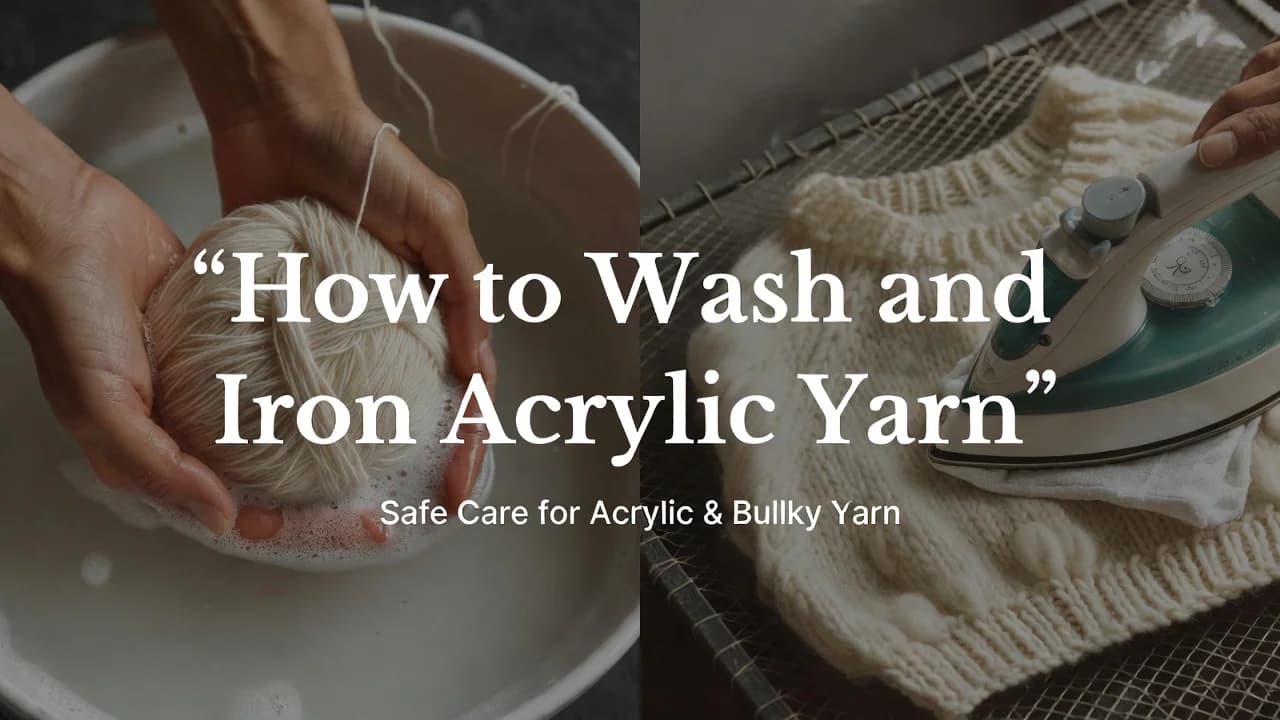

Acrylic yarn and acrylic bulky yarn are widely used in knitting and crocheting thanks to their bright colors, lightweight feel, and excellent shape retention. However, improper washing or ironingโespecially excessive heatโcan permanently damage acrylic fibers and ruin the yarnโs appearance.
This guide provides a professional, production-oriented explanation of how to properly wash, dry, and iron acrylic yarn and acrylic bulky yarn, whether the yarn is loose or already knitted into finished garments.
Acrylic yarn and acrylic bulky yarn should be washed in cool water with mild detergent and never exposed to direct heat or heavy pressure during ironing. Acrylic fibers are thermoplastic and can permanently deform or flatten under high temperatures.
Acrylic yarn is a synthetic fiber yarn made from polyacrylonitrile, commonly used in apparel, knitwear, and home textiles. Acrylic bulky yarn uses thicker fibers or looser spinning to create extra volume, softness, and insulation.
Understanding acrylic fiber behavior explains why special care is required:
Acrylic yarn products can be cleaned using two different approaches, depending on whether the yarn is loose or already knitted into garments.
To restore stretched or uneven acrylic yarn:
โ ๏ธ Important: Acrylic should never be boiled directly, as extreme heat can permanently deform the fibers.
A traditional steaming method can also be used:
Generally, the longer the steaming time, the straighter the yarn becomes. However, overheating must still be avoided.
โ Do not hang garments on hangers
โ๏ธ Lay flat or place in a mesh laundry bag
Hanging wet acrylic garments can cause:
Improper ironing may cause:
Once acrylic fibers collapse, they cannot be restored.
Avoid heat treatment if:
Based on textile production experience, most acrylic yarn damage is caused by excessive heat rather than washing itself. Gentle washing combined with controlled drying and minimal ironing preserves appearance, elasticity, and fabric structure far better than aggressive cleaning methods.
Proper care of acrylic yarn and acrylic bulky yarn depends on respecting the fiberโs thermoplastic nature. Cool water washing, flat drying, and low-temperature ironing with protection are essential to maintaining softness, volume, and durability.
When handled correctly, acrylic yarn garments retain their original appearance and performance for a long time, making them a practical and reliable choice for modern knitwear and textile applications.
This article provides a professional guide to washing and ironing acrylic yarn and acrylic bulky yarn. For more technical insights into yarn care and textile processing, explore our Yarn Insights series.