
Sullivans International
์ œํ’ˆ
๋ฐฉ์‚ฌ๋œจ๊ฐœ์งˆ & ํฌ๋กœ์…ฐ
ํšŒ์‚ฌ ์†Œ๊ฐœ
ํšŒ์‚ฌ ํ”„๋กœํ•„
์›์‚ฌ ์ œ์กฐ์—…์ฒด
OEM ๋ฐ ๋Œ€๋Ÿ‰ ๊ณต๊ธ‰
๋ธ”๋กœ๊ทธ
์•„๋งˆ์กด ๋ฒ ์ŠคํŠธ์…€๋Ÿฌ์›์‚ฌ ์ธ์‚ฌ์ดํŠธ
์†Œ์‹
์ตœ์‹  ์—…๋ฐ์ดํŠธ
๋ฌธ์˜ํ•˜๊ธฐ
sales@sullivansintl.com@sullivansintl
ยฉ 2026 Sullivans International (China) Co., Ltd.
๋ชจ๋“  ๊ถŒ๋ฆฌ ๋ณด์œ .
์ง‘/๋ธ”๋กœ๊ทธ/์›์‚ฌ ์ธ์‚ฌ์ดํŠธ/How to Identify Real vs Fake Mohair: A Professional Guide to Authentic Mohair Yarn
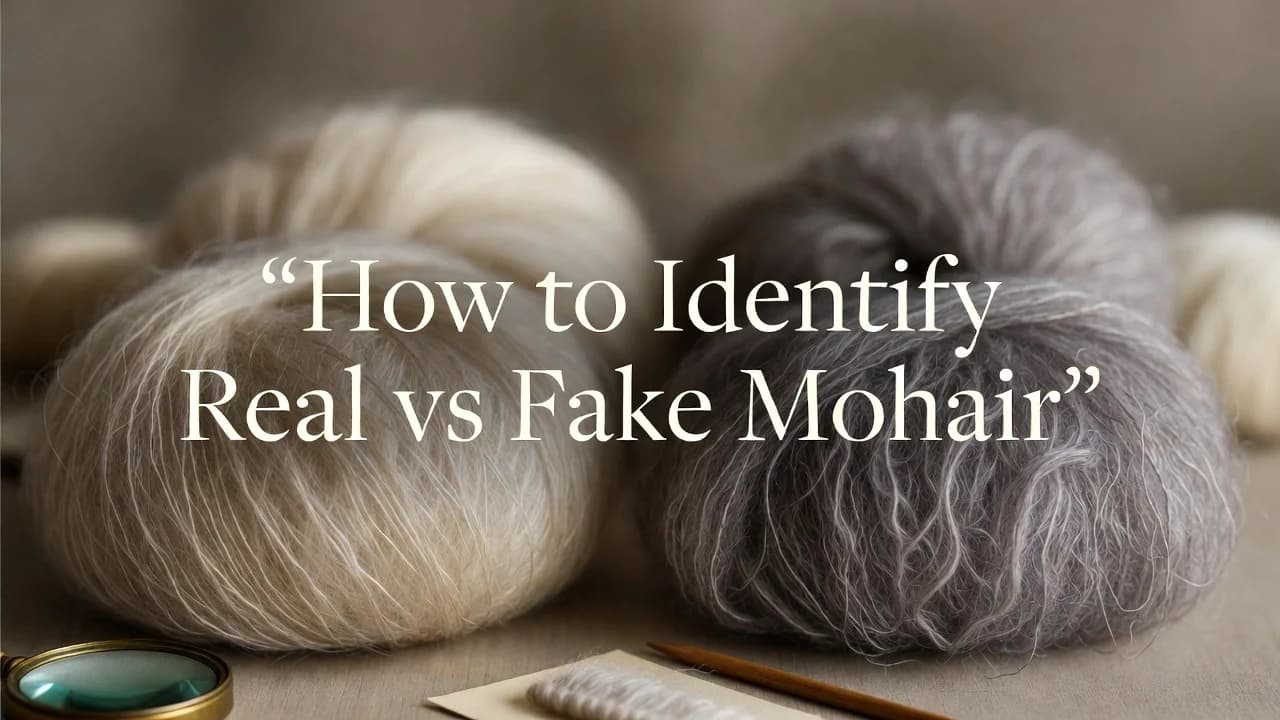
Cover Image for How to Identify Real vs Fake Mohair: A Professional Guide to Authentic Mohair Yarn

How to Identify Real vs Fake Mohair: A Professional Guide to Authentic Mohair Yarn

Sullivans International
January 26, 2026โ€ข5 min read
๋Œ€๋Ÿ‰ ๋˜๋Š” OEM ์›์‚ฌ ๊ณต๊ธ‰์„ ์ฐพ๊ณ  ๊ณ„์‹ ๊ฐ€์š”?์ œ์กฐ ์—ญ๋Ÿ‰ ์ž์„ธํžˆ ๋ณด๊ธฐ โ†’

Mohair is widely regarded as a luxury animal fiber, prized for its luster, softness, resilience, and warmth. However, due to its high value, the market is flooded with fake mohair yarns, most of which are made from acrylic or other chemical fibers designed to visually imitate real mohair.

For knitters, crocheters, designers, and buyers alike, knowing how to identify real vs fake mohair is essential. In this guide, we break down the most reliable, professional methods to distinguish authentic mohair from synthetic imitationsโ€”based on fiber behavior, tactile experience, durability, and physical testing.


What Is Real Mohair?

Real mohair is a natural animal fiber sourced from the fleece of the Angora goat. Unlike wool, mohair fibers are smoother, longer, and stronger, giving the yarn its signature sheen and airy halo.

Key Characteristics of Authentic Mohair

  • Long, straight, and naturally glossy fibers
  • High tensile strength and elasticity
  • Soft, fluffy, and resilient hand feel
  • Excellent shape retention
  • Warm yet breathable
  • Burns with a hair-like odor

What Is Fake Mohair?

Fake mohair is typically made from acrylic or blended chemical fibers, processed using special techniques to simulate the fuzzy appearance of mohair. While visually similar at first glance, its performance and longevity are significantly inferior.

Common Traits of Fake Mohair Yarn

  • Short, curled, or irregular surface fibers
  • Uneven fluff distribution
  • Poor elasticity and recovery
  • Prone to pilling, matting, and flattening
  • Dull or artificial-looking sheen
  • Burns with a sharp chemical or plastic smell

How to Identify Real vs Fake Mohair Yarn

Below are the most effective identification methods, used by professionals in textile sourcing and yarn manufacturing.


1. Fiber Length & Structure

Real Mohair

  • Fibers are long, straight, and smooth
  • The plush appears full and evenly distributed
  • Fibers resist breaking when gently pulled

Fake Mohair

  • Fluff appears short, curled, or uneven
  • Fibers bend easily and feel fragile
  • Long hairs may look abundant but lack density

Professional tip: Real mohair maintains a consistent halo, while fake mohair looks โ€œhairyโ€ rather than fluffy.


2. Hand Feel & Elasticity

Real Mohair

  • Soft but springy, with natural rebound
  • Feels warm, airy, and comfortable against skin
  • Recovers quickly after being squeezed

Fake Mohair

  • Feels dry, stiff, or slightly abrasive
  • Lacks resilience; remains flattened after pressure
  • Often feels cold or plasticky

3. Gloss & Visual Depth

Real Mohair

  • Exhibits a natural silk-like sheen
  • Light reflects softly with depth and variation
  • Looks rich and luxurious under natural light

Fake Mohair

  • Gloss is dull or overly uniform
  • Surface reflection looks flat or artificial
  • Appears lifeless under changing light angles

4. Pilling & Durability Test

Real Mohair

  • Highly resistant to pilling
  • Maintains structure after repeated wear
  • Fibers remain fluffy over time

Fake Mohair

  • Pills easily, especially after friction
  • Fibers clump, tangle, and collapse
  • Loses shape and loft quickly

5. Burn Test (Advanced & Cautious Method)

โš ๏ธ Only perform this test with proper safety precautions.

Real Mohair (Animal Fiber)

  • Burns slowly
  • Smells like burning hair
  • Ash is brittle and crushes into powder

Fake Mohair (Acrylic / Synthetic)

  • Melts or curls rapidly
  • Emits a sharp chemical or plastic odor
  • Forms hard beads instead of ash

This is one of the most definitive tests for identifying natural vs synthetic fibers.


Real Mohair vs Fake Mohair: Quick Comparison

| Feature | Real Mohair | Fake Mohair | |------|-----------|------------| | Fiber Source | Angora Goat | Acrylic / Chemical Fiber | | Fiber Length | Long & straight | Short & curled | | Elasticity | High | Low | | Hand Feel | Soft, fluffy, resilient | Dry, stiff, plasticky | | Gloss | Natural, silky | Dull or artificial | | Pilling | Minimal | Heavy | | Burn Smell | Burning hair | Chemical / plastic |


Why Authentic Mohair Matters

Choosing real mohair yarn isnโ€™t just about luxuryโ€”it directly impacts:

  • Garment lifespan
  • Wearing comfort
  • Thermal performance
  • Environmental sustainability
  • Perceived product value

For high-end knitting, crocheting, weaving, and fashion applications, authentic mohair delivers performance that synthetics cannot replicate.


Final Thoughts

While fake mohair may look appealing at a lower price point, it falls short in durability, comfort, and long-term value. By learning how to identify real vs fake mohairโ€”through fiber structure, elasticity, gloss, burn behavior, and wear resistanceโ€”you can make confident, informed decisions when sourcing yarn.

True mohair isnโ€™t just softโ€”itโ€™s alive with resilience, shine, and depth. Once you work with authentic mohair, the difference becomes unmistakable.


This guide focuses on professional mohair identification methods used in yarn sourcing and textile manufacturing. For more expert insights, explore our in-depth yarn material guides and fiber comparison articles.

์ด ๊ธฐ์‚ฌ ๊ณต์œ ํ•˜๊ธฐ

TwitterLinkedInFacebookEmail