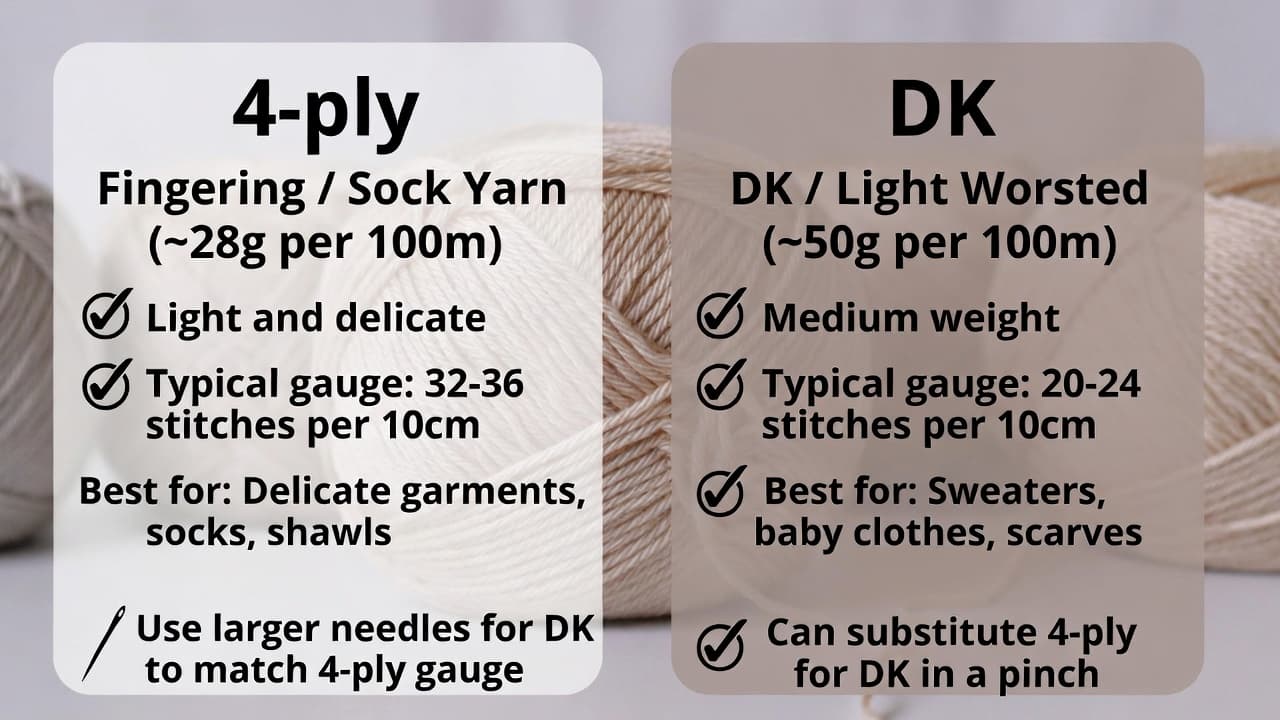

4ply 울과 DK(double knitting) 실은 뜨개질·코바늘뜨기에서 흔한 실 굵기 두 가지입니다. 4ply는 더 가늘고(100m당 약 28g), DK는 더 굵습니다(100m당 약 50g). 4ply로 DK를 대체할 수 있는지는 게이지와 스와치 후 바늘 크기나 패턴을 조정할 의지에 달려 있습니다.
이 가이드에서는 4ply와 DK의 차이, 대체가 가능한 경우, 게이지를 일관되게 유지하는 방법을 설명합니다.
4ply 울은 네 가닥을 꼬아 만든 가는 실입니다. DK보다 가늘고 #2 Fine~#3 Light 범위에 해당합니다. 4ply는 양말, 아기 옷, 레이스, 코 정의가 중요한 경량 의류에 자주 쓰입니다.
DK(double knitting) 실은 #3 Light 카테고리의 경량 실입니다. 4ply보다 약간 굵고(100m당 ~50g) 약간 더 두껍고 느슨한 원단을 만듭니다. DK는 스웨터, 숄, 아기 옷, 액세서리에 쓰입니다.
| 항목 | 4ply | DK |
|---|---|---|
| 100m당 중량 | ~28 g | ~50 g |
| 두께 | 더 가늘음 | 더 굵음 |
| 원단 | 더 조밀, 섬세 | 약간 느슨, 풍성 |
| 일반 용도 | 양말, 레이스, 섬세 | 스웨터, 숄, 일반 |
| 바늘 크기(US) | 2-3 | 5-6 |
많은 경우 가능합니다 — 게이지를 확인하고 조정하면. 대체가 통하는 경우:
중요: 게이지 = 인치당 코·단 수. 바늘 크기를 바꾸지 않고 4ply로 DK를 대체하면 인치당 코가 늘어 더 작고 조밀한 결과가 됩니다. 항상 스와치, 측정, 바늘 크기나 패턴 조정으로 완성 크기를 맞추세요.
4ply와 DK는 굵기가 다릅니다: 4ply는 더 가늘고(~28 g/100 m), DK는 더 굵습니다(~50 g/100 m). 스와치, 게이지 맞추기(보통 더 큰 바늘), 더 가는 원단 수용으로 4ply로 DK를 대체할 수 있습니다. 기대에 맞는 완성을 위해 항상 스와치와 조정을.
아니요. 4ply는 더 가늘고(100m당 ~28 g), DK는 더 굵습니다(~50 g). 게이지와 원단 밀도가 다릅니다.
스와치해서 같은 게이지(보통 바늘 1~2호 키움)면 가능. 더 가는 원단과 아마 더 많은 실을 예상하세요.
게이지(인치당 코 수)가 완성 크기를 결정합니다. 굵기가 바뀌면 게이지도 바뀝니다; 바늘이나 패턴 조정으로 크기와 핏을 유지합니다.
이 글은 뜨개질·코바늘뜨기 애호가를 위한 실 굵기, 대체, 게이지에 대한 실용적 인사이트를 제공하는 실 지식 시리즈의 일부입니다.