
Cotton and wool are two of the most popular yarn fibers, each with distinct properties. Cotton is breathable and ideal for warm weather; wool is warm and insulating for cold weather. Neither is universally "better"โthe right choice depends on your project and climate.
In this guide, we compare cotton vs wool across key dimensions and help you choose the right fiber.
Cotton yarn is a natural fiber from the cotton plant. It is soft, breathable, and easy to care for. Cotton is hypoallergenic and less likely to pill or stretch than some other fibers. It is a top choice for warm-weather projects.
Wool yarn comes from sheep fleece. It is warm, durable, and insulating. Wool retains heat well and is excellent for cold-weather projects. Wool can be felted for dense, textured fabric.
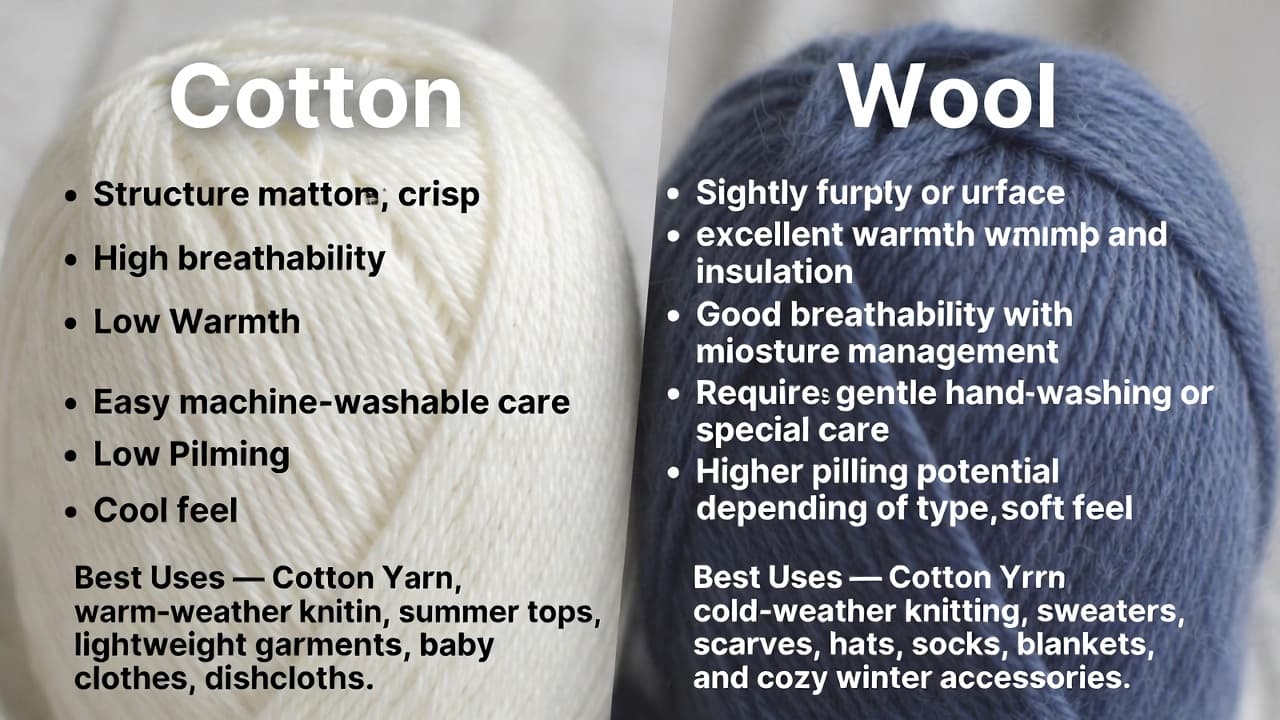
| Aspect | Cotton | Wool |
|---|---|---|
| Season | Warm weather | Cold weather |
| Breathability | High | Moderate |
| Warmth | Light | High |
| Moisture | Absorbs, can feel heavy when wet | Wicks, retains warmth when damp |
| Care | Easy machine wash | Often hand wash (unless superwash) |
| Pilling | Less prone | Can pill |
| Stretch | Holds shape | Elastic, bounces back |
| Felting | No | Yes |
There is no single winnerโit depends on project and climate.
Cotton excels in breathability and warm-weather use; wool excels in warmth and cold-weather use. Both have unique benefits. Choose based on season, project type, and care preferences.
Yes. Cotton works well for lightweight sweaters and warm-weather cardigans. It has less elasticity than wool, so choose patterns designed for cotton.
Superwash wool can be machine washed. Non-superwash wool typically requires hand washing to avoid felting.
Cotton is often more hypoallergenic. Some people are sensitive to wool or lanolin. Cotton is a safe choice for sensitive skin.
Cotton has less elasticity than wool. It can stretch when wet but typically regains shape when dried flat. Wool bounces back more readily.
This article is part of our yarn knowledge series, offering practical insights into fiber types, season suitability, and project selection for knitters and crocheters.