
Sullivans International
์ œํ’ˆ
๋ฐฉ์‚ฌ๋œจ๊ฐœ์งˆ & ํฌ๋กœ์…ฐ
ํšŒ์‚ฌ ์†Œ๊ฐœ
ํšŒ์‚ฌ ํ”„๋กœํ•„
์›์‚ฌ ์ œ์กฐ์—…์ฒด
OEM ๋ฐ ๋Œ€๋Ÿ‰ ๊ณต๊ธ‰
๋ธ”๋กœ๊ทธ
์•„๋งˆ์กด ๋ฒ ์ŠคํŠธ์…€๋Ÿฌ์›์‚ฌ ์ธ์‚ฌ์ดํŠธ
์†Œ์‹
์ตœ์‹  ์—…๋ฐ์ดํŠธ
๋ฌธ์˜ํ•˜๊ธฐ
sales@sullivansintl.com@sullivansintl
ยฉ 2026 Sullivans International (China) Co., Ltd.
๋ชจ๋“  ๊ถŒ๋ฆฌ ๋ณด์œ .
์ง‘/๋ธ”๋กœ๊ทธ/์›์‚ฌ ์ธ์‚ฌ์ดํŠธ/Combed Cotton vs Carded Cotton Yarn: Key Differences
Cover Image for Combed Cotton vs Carded Cotton Yarn: Key Differences

Combed Cotton vs Carded Cotton Yarn: Key Differences

Sullivans International
March 1, 2026โ€ข3 min read
๋Œ€๋Ÿ‰ ๋˜๋Š” OEM ์›์‚ฌ ๊ณต๊ธ‰์„ ์ฐพ๊ณ  ๊ณ„์‹ ๊ฐ€์š”?์ œ์กฐ ์—ญ๋Ÿ‰ ์ž์„ธํžˆ ๋ณด๊ธฐ โ†’

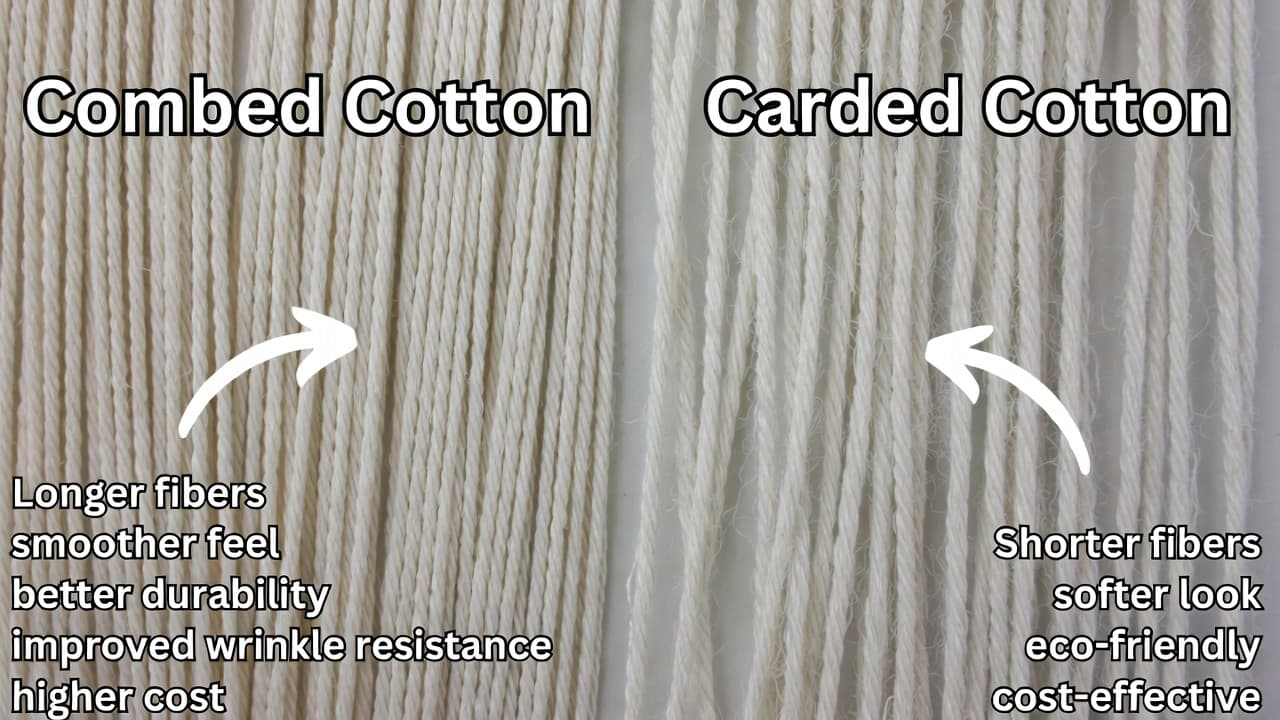
Combed and carded cotton are different processing methods that produce yarns with different fiber length, strength, fineness, and cost. Combed cotton is higher quality and more expensive; carded cotton is simpler and more affordable.

In this guide, we explain how to distinguish combed vs carded cotton and when to use each.


What Is Combed Cotton?

Combed cotton is made by repeatedly combing raw cotton to remove shorter, finer fibers and keep longer, finer fibers. The result is longer, stronger, finer yarn suitable for high-end textiles.

Key Characteristics of Combed Cotton

  • Longer fiber length
  • Higher fiber strength
  • Finer fiber
  • Higher costโ€”more processing
  • Best for high-end knitwear, fine fabrics, premium textiles

What Is Carded Cotton?

Carded cotton uses simpler processing๏ฟฝ?one carding* to mix fibers of similar length and thickness, then stretching and humidifying before spinning. The process is faster and cheaper, but the yarn is lower in quality than combed.

Key Characteristics of Carded Cotton

  • Shorter fiber length
  • Lower fiber strength
  • Coarser fiber
  • Lower cost
  • Best for general cotton spinning, everyday knitwear, budget textiles

Combed vs Carded Cotton: Key Differences

Aspect Combed Cotton Carded Cotton
Fiber length Longer Shorter
Fiber strength Higher Lower
Fiber fineness Finer Coarser
Processing Repeated combing Single carding
Cost Higher Lower
Quality Higher Lower
Best for High-end textiles General use

Advantages and Disadvantages

Combed Cotton

  • Pros: Long fibers, high strength, fine quality, suitable for premium fabrics
  • Cons: Higher processing cost, higher price

Carded Cotton

  • Pros: Simpler process, lower cost, affordable finished products
  • Cons: Shorter fibers, lower quality, narrower application range

Which Should You Choose?

Choose Combed Cotton If You Want:

  • High-quality yarn and fabric
  • Fine, smooth finish
  • Premium knitwear or textiles
  • Budget allows for higher cost

Choose Carded Cotton If You Want:

  • Lower cost
  • General-purpose yarn
  • Everyday knitwear
  • Cost-sensitive production

Final Thoughts

Combed cotton offers longer fibers, higher strength, and finer quality for high-end textiles. Carded cotton offers simpler processing and lower cost for general use. Choose based on quality requirements and budget.


Frequently Asked Questions

How can you tell combed from carded cotton?

Combed cotton is typically smoother, finer, and stronger. Carded cotton may feel coarser and less uniform. Labels or supplier information can confirm.

Is combed cotton better than carded?

For quality and durability, yes. For cost and general use, carded can be sufficient.

What is combed cotton used for?

Combed cotton is used for high-end shirts, fine knitwear, premium bedding, and other quality textiles.

Why is combed cotton more expensive?

Combed cotton requires more processing (repeated combing) to remove short fibers, which increases production cost.


This article is part of our textile knowledge series, offering practical insights into cotton processing, quality, and selection for makers and manufacturers.

์ด ๊ธฐ์‚ฌ ๊ณต์œ ํ•˜๊ธฐ

TwitterLinkedInFacebookEmail