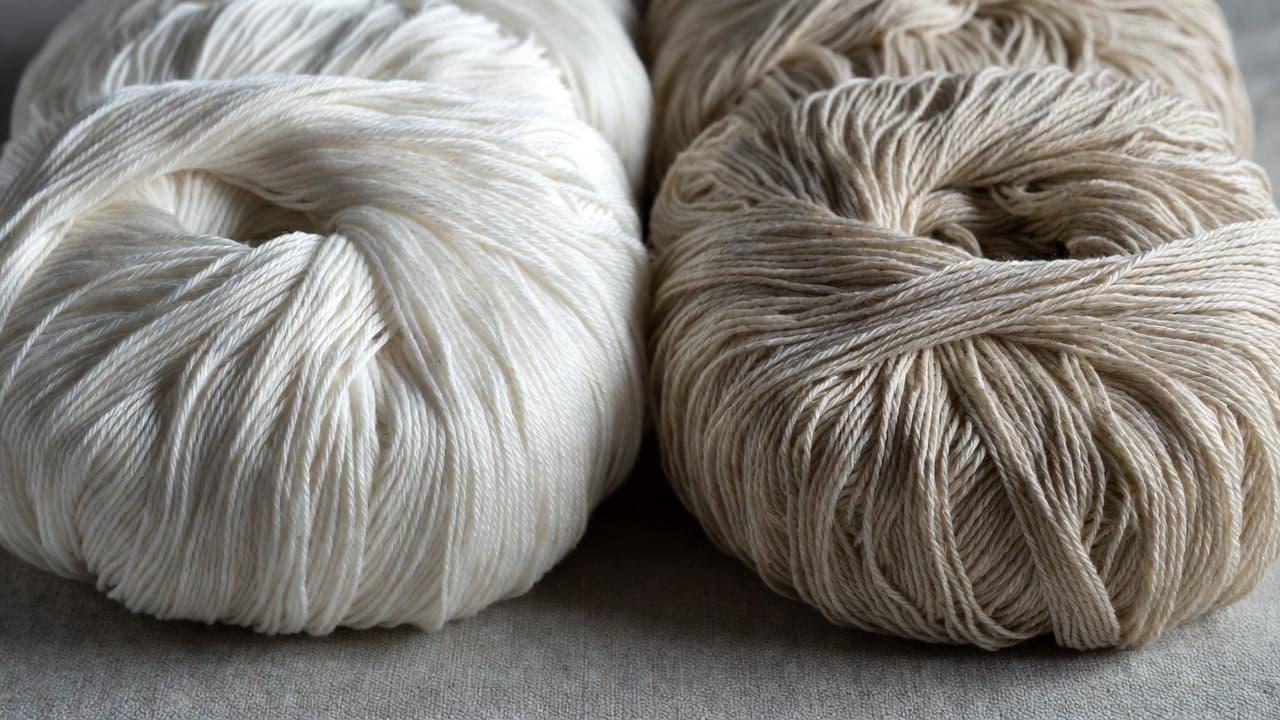

Combed cotton yarn is cotton that has been combed to remove short fibers and align long ones; the result is longer, neater fibers and better hand, durability, and wrinkle resistance. Pure cotton yarn is cotton processed by standard textile methods๏ฟฝ?soft*, absorbent, and warm, often with lower environmental input (fewer fertilizers/pesticides) than some conventional cotton. In fineness and durability, combed cotton usually outperforms pure cotton; for eco and cost, pure cotton can be the better choice.
In this guide, we compare combed cotton vs pure cotton yarn and when to choose each.
Combed cotton yarn is cotton yarn made from combed cottonโfibers that have been combed to remove short staples and impurities and to align long fibers. The result is longer, more uniform staple, which gives smoother, softer hand, better strength, and improved wrinkle resistance. Items made from combed cotton yarn are typically softer, more comfortable, and more wear-resistant, and are suited to higher-quality garments and home textiles.
Pure cotton yarn is yarn made from cotton as the raw material and standard textile processing (carded, not necessarily combed). It has softness, good moisture absorption, and good warmth. Pure cotton is often more environmentally friendly where growing uses fewer fertilizers and pesticides. In fineness and durability, it is generally below combed cotton; combed cotton has longer fiber length, finer hand, and better durability and wrinkle resistance.
| Aspect | Combed cotton | Pure cotton |
|---|---|---|
| Processing | Combed (short fibers removed) | Standard (carded) processing |
| Fiber length | Longer, more even | Shorter, more variation |
| Hand / fineness | Finer, smoother | Softer but less refined |
| Durability | Higher | Lower |
| Wrinkle resistance | Better | Lower |
| Eco / cost | Often more processing | Often more eco-friendly, cost-effective |
Final choice depends on project requirements, budget, and sustainability priorities.
Combed cotton offers better hand, durability, and wrinkle resistance than pure cotton because of its longer, neater fibers. Pure cotton is soft, absorbent, and often more eco-friendly and affordable. Use combed for quality-focused projects; use pure cotton for eco and cost-focused ones.
Combed cotton is combed to remove short fibers and align long ones, giving longer, more even staple, finer hand, and better durability. Pure cotton is standard cotton (often carded only); it is soft and absorbent but less refined than combed.
For fineness, durability, and wrinkle resistance, combed cotton is generally better. For eco-friendliness and cost, pure cotton can be the better choice depending on sourcing and processing.
For higher-quality garments that need smooth hand and durability, combed cotton is usually better. For casual, eco, or budget projects, pure cotton is a good option.
This article is part of our yarn knowledge series, offering practical insights into cotton types and selection for knitters and crocheters.