Sullivans International
제품
방사뜨개질 & 크로셰
회사 소개
회사 프로필
원사 제조업체
OEM 및 대량 공급
블로그
아마존 베스트셀러원사 인사이트
소식
최신 업데이트
문의하기
sales@sullivansintl.com@sullivansintl
© 2026 Sullivans International (China) Co., Ltd.
모든 권리 보유.
집/블로그/원사 인사이트/What Is the Best Grade of Merino Wool? Micron Guide & Uses
Cover Image for What Is the Best Grade of Merino Wool? Micron Guide & Uses

What Is the Best Grade of Merino Wool? Micron Guide & Uses

Sullivans International
March 1, 2026•4 min read
대량 또는 OEM 원사 공급을 찾고 계신가요?제조 역량 자세히 보기 →

The best grade of merino wool for a project depends on micron count (fiber diameter), staple length, and use. Merino grades are typically defined by micron: ultra fine (12–15μ) is the finest and softest; strong (20–23μ) is the most durable and least soft. Most knitting and crochet merino yarn is in the super fine to fine range (15–18.5μ), balancing softness, durability, and price.

In this guide, we explain merino wool grades, how to choose, and best uses for each range.


What Determines Merino Wool Grade?

Merino wool quality depends on:

  • Fiber diameter (micron count): The main grading factor. One micron (μm) = one-millionth of a meter. Lower micron = finer, softer fiber.
  • Staple length: Longer staples (e.g. over 2.5 in / 6 cm) support stronger, smoother yarn and less pilling.
  • Crimp and elasticity: Merino’s natural crimp affects bounce, insulation, and bulk.
  • Origin and processing: Australia and New Zealand are leading producers; worsted vs woollen spinning changes hand and durability.

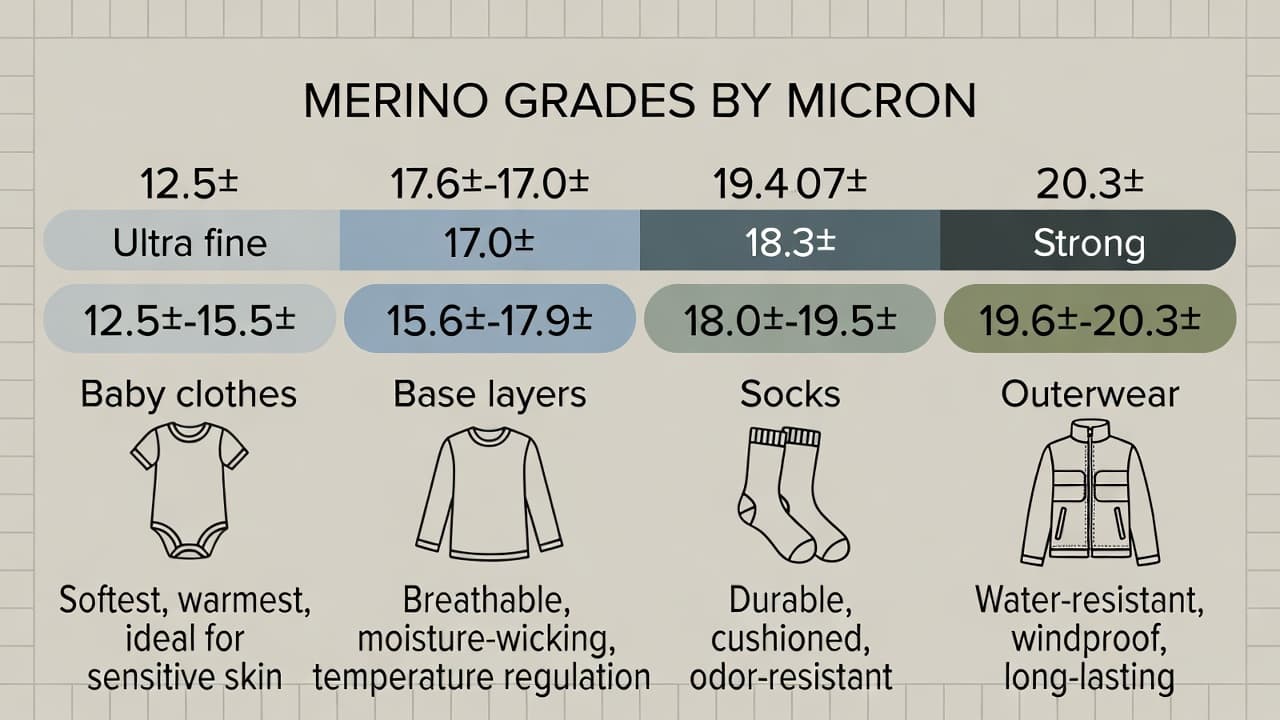
Merino Wool Grade Scale (by Micron)

Grade Micron range Softness Typical use
Ultra fine 12–15μ Finest; comparable to cashmere Baby wear, luxury next-to-skin
Super fine 15–17.5μ Exceptionally soft Next-to-skin, high-end knitting
Fine 17.6–18.5μ Soft + durable Most knitting/crochet projects
Medium 18.6–20μ Durable, still soft Outerwear, structured garments
Strong 20–23μ Least soft, most durable Rugs, upholstery, outer layers

Most commercially available merino knitting yarn falls in super fine to fine (15–18.5μ)—a practical balance of softness, durability, and price.


Best Merino Grade by Use

Next-to-Skin (Underwear, Base Layers, Baby)

  • Ultra fine (12–15μ) or super fine (15–17.5μ).
  • Maximum softness and minimal itch.

Everyday Knitwear (Sweaters, Scarves, Hats)

  • Super fine to fine (15–18.5μ).
  • Good stitch definition and durability.

Socks and High-Wear Items

  • Fine to medium (17.6–20μ), often blended with nylon for strength and wear resistance.

Outerwear and Structured Garments

  • Medium (18.6–20μ).
  • Better shape retention and often more affordable.

How to Identify High-Quality Merino Yarn

  • Micron on the label: Reputable brands state the grade or micron range.
  • Staple length: "Extra long staple" suggests stronger, smoother yarn.
  • Origin: Australian or New Zealand merino is commonly used for premium yarns.
  • Processing: Worsted-spun for smoother yarn; woollen for loftier yarn.
  • Certifications: e.g. ZQ Merino, Responsible Wool Standard (RWS).

Price Ranges (Approximate, per 100g)

  • Ultra fine (12–15μ): $40+
  • Super fine (15–17.5μ): $25–40
  • Fine (17.6–18.5μ): $18–30
  • Medium (18.6–20μ): $12–20

Prices vary by brand, origin, and processing.


Final Thoughts

The best grade of merino wool depends on use: ultra fine to super fine for next-to-skin and baby; super fine to fine for most knitting and crochet; fine to medium for socks and outerwear. 15–18.5μ is the sweet spot for softness, durability, and value for most projects.


Frequently Asked Questions

What micron is best for merino wool?

For next-to-skin and baby, 12–17.5μ (ultra fine to super fine). For general knitting and crochet, 15–18.5μ (super fine to fine) is the most common and versatile.

What is the difference between super fine and fine merino?

Super fine (15–17.5μ) is softer and often used for next-to-skin and luxury items. Fine (17.6–18.5μ) is slightly more durable and widely used for sweaters, scarves, and hats.

Where does the best merino wool come from?

Australia and New Zealand are leading producers of premium merino. South America and South Africa also produce high-quality merino with consistent characteristics.


This article is part of our yarn knowledge series, offering practical insights into merino grades, micron counts, and project selection.

이 기사 공유하기

TwitterLinkedInFacebookEmail