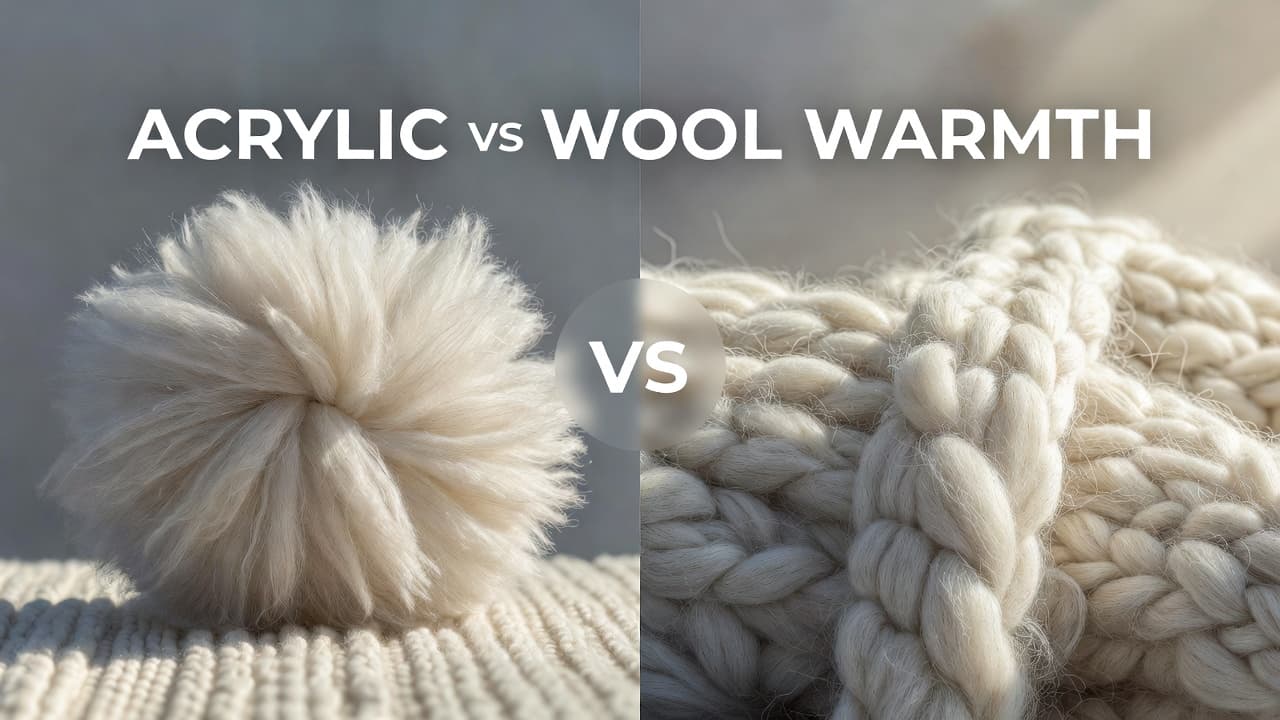

Acrylic and wool are both used for winter clothing, but they differ in warmth efficiency, moisture management, and care. Wool generally offers better warmth per weight and moisture-wicking; acrylic is affordable and easy to care for.
In this guide, we compare warmth, comfort, and best uses so you can choose the right fiber for winter wear.
Acrylic is a synthetic fiber made from polymer materials. It is affordable, easy to machine wash, and available in many colors. Acrylic provides warmth, but its warmth-to-weight ratio is lower than wool, and it does not wick moisture well.
Wool is a natural fiber from sheep. It insulates well, wicks moisture, and retains warmth even when damp. Wool has a higher warmth-to-weight ratio than acrylicโmore warmth for less bulk.
Acrylic can provide warmth, but wool is more efficient per unit weight. Thicker acrylic can feel warm, but wool delivers more insulation with less bulk. Wool also wicks sweat and reduces clamminess; acrylic tends to trap moisture, which can feel uncomfortable.
| Aspect | Acrylic | Wool |
|---|---|---|
| Warmth per weight | Lower | Higher |
| Moisture management | Poor (traps sweat) | Good (wicks moisture) |
| Warmth when wet | Reduces | Retains |
| Bulk for same warmth | More | Less |
Acrylic is not quite as warm as wool when comparing equal weights, and it lacks moisture-wicking. For extreme cold or active wear, wool is the better choice. For budget-friendly, easy-care winter wear, acrylic is a reasonable option. Choose based on climate, activity level, and budget.
Yes. Acrylic provides warmth, especially in thicker gauges. For very cold or active use, wool is more efficient and comfortable.
Acrylic does not wick moisture. Sweat stays trapped, which can feel damp and uncomfortable. Wool wicks moisture away from the skin.
Superwash wool can be machine washed. Non-superwash wool typically requires hand washing to avoid felting.
Yes. Acrylic is generally more affordable than wool, especially premium wool like merino.
This article is part of our fiber knowledge series, offering practical insights into warmth, moisture management, and fiber selection for winter clothing.