Sullivans International
製品
糸編み物とかぎ針編み
私たちについて
会社概要
糸メーカー
OEM・大口供給
ブログ
アマゾンのベストセラー糸の基礎知識
ニュース
最新のアップデート
お問い合わせ
sales@sullivansintl.com@sullivansintl
© 2026 Sullivans International (China) Co., Ltd.
無断転載を禁じます。
ホーム/ブログ/糸の基礎知識/Worsted Yarn vs Woolen Yarn: Key Differences Explained
Cover Image for Worsted Yarn vs Woolen Yarn: Key Differences Explained

Worsted Yarn vs Woolen Yarn: Key Differences Explained

Sullivans International
March 1, 2026•4 min read
大量・OEM糸をお探しですか?製造能力の詳細を見る →

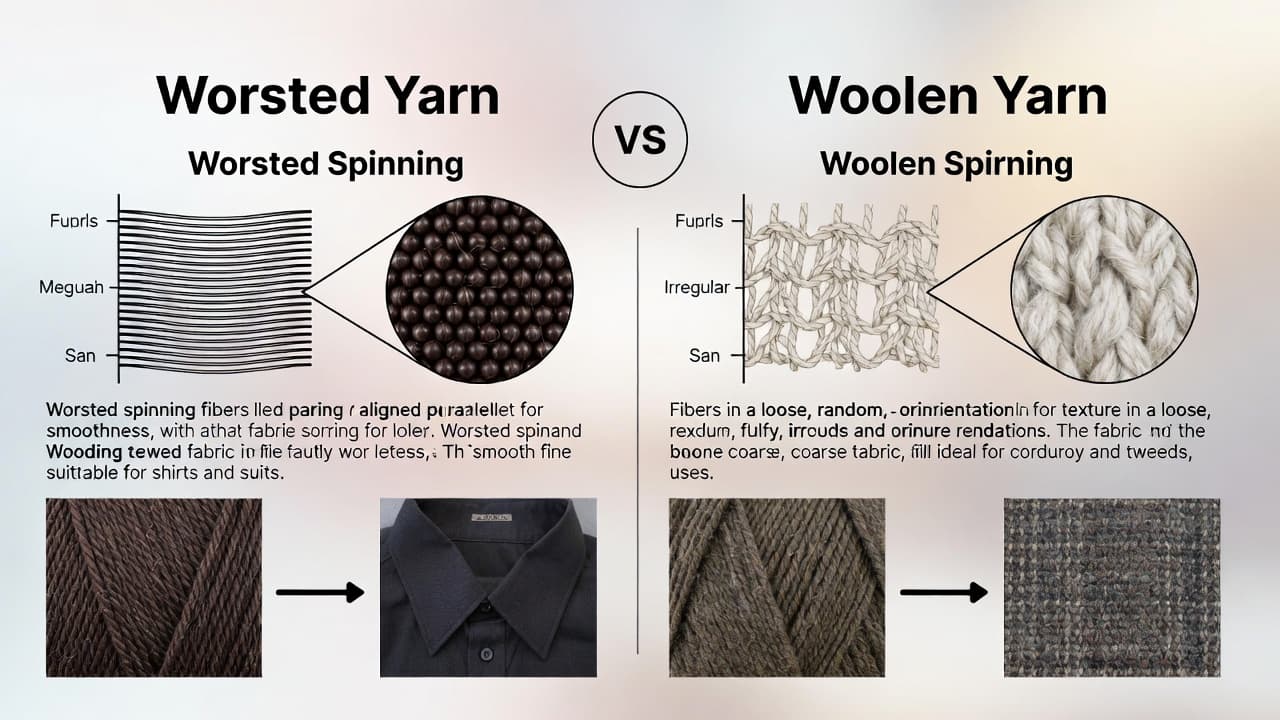
Worsted and woolen yarn are two distinct spinning processes that produce yarns with different fiber structure, feel, and uses. Worsted yarn is finer and smoother; woolen yarn is coarser and heavier. Understanding the difference helps you choose the right yarn for shirts, suits, sportswear, or casual wear.

In this guide, we compare raw materials, processing, characteristics, and best uses.


What Is Worsted Yarn?

Worsted yarn is produced through combed spinning—cotton or wool is processed with carding, combing, drawing, and spinning to remove short fibers and impurities. The result is longer, parallel fibers with a uniform, smooth structure. Worsted yarn is used for high-grade fabrics.

Key Characteristics of Worsted Yarn

  • Longer fibers—short fibers removed by combing
  • Uniform, neat fiber structure
  • Higher fiber strength
  • Smooth, delicate feel
  • Softer, glossier fabric
  • Better wear resistance and washability
  • Best for high-end shirts, suits, ties

What Is Woolen Yarn?

Woolen yarn (or coarse yarn) uses simpler spinning with coarser raw materials. It does not go through extensive combing, so short fibers remain and the structure is looser. Woolen yarn is heavier and more durable but less refined than worsted.

Key Characteristics of Woolen Yarn

  • Shorter fibers—less processing
  • Looser surface—less uniform structure
  • Lower fiber strength
  • Rougher feel
  • Heavier, harder fabric
  • More durable for heavy use
  • Best for sportswear, corduroy, casual wear

Worsted vs Woolen: Key Differences

1. Raw Materials

Aspect Worsted Yarn Woolen Yarn
Raw material Finer cotton/wool, combed Coarser cotton/wool
Processing Complex (carding, combing, drawing) Simpler
Short fibers Removed Retained
Cost Higher Lower

2. Process

  • Worsted: Multiple processes—combing, cutting, drawing, drafting, spinning. Fibers are stretched, refined, and smoothed for uniform structure.
  • Woolen: Simpler spinning. Less processing; surface is looser, structure less uniform.

3. Fabric Characteristics

Aspect Worsted Woolen
Feel Soft, delicate, lustrous Heavier, harder
Structure Uniform, smooth Looser, less uniform
Wear resistance Good Durable
Best uses Shirts, suits, ties Sportswear, corduroy

Which Yarn Should You Choose?

Choose Worsted Yarn If You Want:

  • High-grade, refined fabric
  • Soft, lustrous finish
  • Shirts, suits, ties
  • Better washability and wear resistance

Choose Woolen Yarn If You Want:

  • Heavy-duty, casual fabric
  • Sportswear, corduroy
  • Lower cost
  • Durable everyday wear

Final Thoughts

Worsted yarn offers finer, smoother fabric for high-end clothing. Woolen yarn offers heavier, more durable fabric for sportswear and casual wear. The difference lies in raw materials and processing—choose based on fabric quality and intended use.


Frequently Asked Questions

What does worsted mean in yarn?

Worsted refers to a combed spinning process that produces smooth, uniform yarn with longer fibers. It is used for fine, high-quality fabrics.

Is worsted yarn the same as DK?

No. "Worsted" can mean (1) a spinning process (worsted vs woolen) or (2) a yarn weight (worsted weight = #4 Medium). DK is a different weight (#3 Light).

What is woolen yarn used for?

Woolen yarn is used for sportswear, corduroy, and casual clothing where a heavier, more durable fabric is desired.

Why is worsted yarn more expensive?

Worsted yarn requires more processing (combing, etc.) and finer raw materials, which increases cost compared to woolen yarn.


This article is part of our textile knowledge series, offering practical insights into yarn spinning, fabric quality, and selection for manufacturers and makers.

この記事を共有

TwitterLinkedInFacebookEmail