
Sullivans International
製品
糸編み物とかぎ針編み
私たちについて
会社概要
糸メーカー
OEM・大口供給
ブログ
アマゾンのベストセラー糸の基礎知識
ニュース
最新のアップデート
お問い合わせ
sales@sullivansintl.com@sullivansintl
© 2026 Sullivans International (China) Co., Ltd.
無断転載を禁じます。
ホーム/ブログ/糸の基礎知識/What Is Yarn Singeing? Purpose and Benefits Explained
Cover Image for What Is Yarn Singeing? Purpose and Benefits Explained

What Is Yarn Singeing? Purpose and Benefits Explained

Sullivans International
March 1, 2026•3 min read
大量・OEM糸をお探しですか?製造能力の詳細を見る →

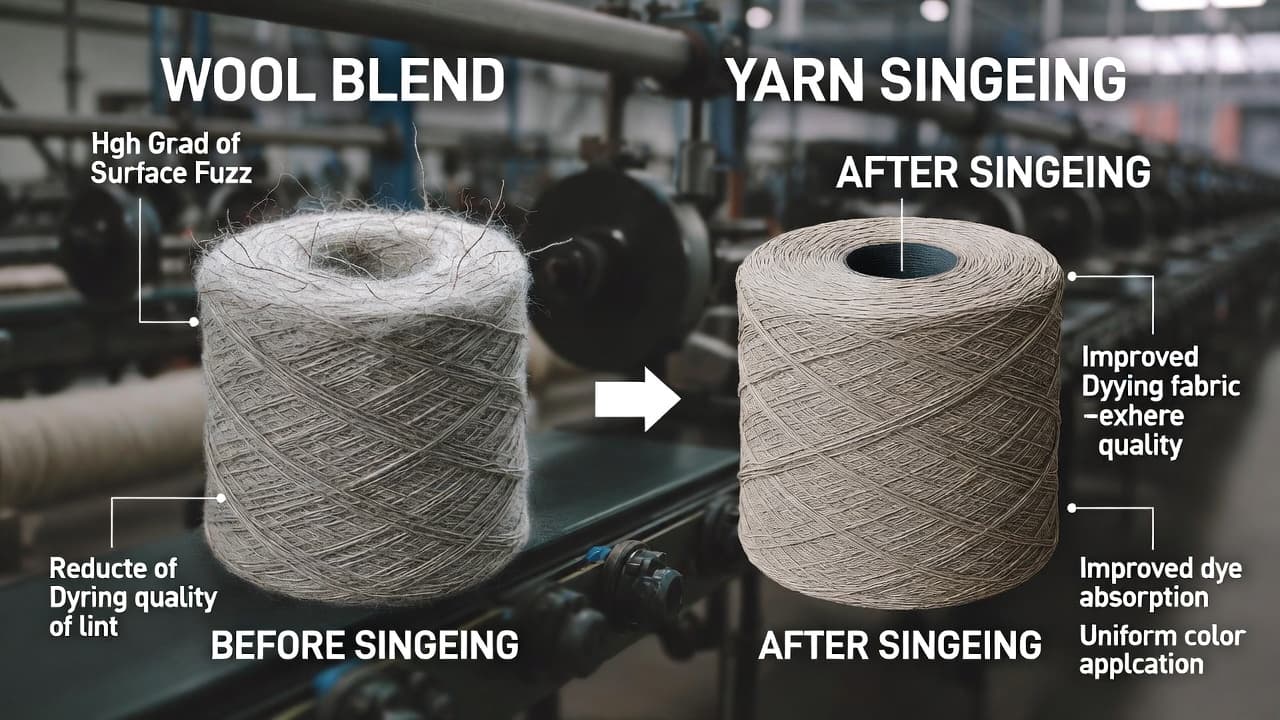
Yarn singeing is a textile finishing process that removes surface fuzz (hairiness) from yarn or fabric by passing it quickly through a flame or over a hot metal surface. It is used to improve dye uptake, color uniformity, and fabric quality, especially for high-grade textiles.

In this guide, we explain what yarn singeing is, why it is used, and how it benefits the final fabric.


What Is Yarn Singeing?

Yarn singeing is the process of quickly passing yarn (or fabric) through a flame or over a hot metal surface to burn off surface fuzz (hairiness). The process is brief so the main fiber is not damaged—only the protruding fibers are removed.

Singeing can be applied to:

  • Yarn—before weaving or knitting
  • Fabric—after weaving (fabric singeing)

High-grade fabrics often use yarn singeing first to achieve a cleaner, more uniform result.


Why Is Yarn Singed? 4 Key Reasons

1. Reduces Dust Contamination

Long surface hairiness on cotton yarn traps dust and impurities. Singeing removes this fuzz, making the yarn cleaner and easier to process.

2. Improves Dyeing Quality

Surface hairiness can cause uneven dye absorption and reduced color brightness. Singed yarn dyes more uniformly and produces brighter, more even colors.

3. Prevents Color Bleeding and Streaking

Hairiness can lead to color bleeding and streaking (flowering) during dyeing. Singeing creates a smoother surface for more consistent color application.

4. Produces Finer, Cleaner Fabric

Fabrics woven from singed yarn are finer, more delicate, and easier to dye than those from unsinged yarn. The result is a higher-quality finish suitable for premium textiles.


Yarn Singeing vs Fabric Singeing

Aspect Yarn Singeing Fabric Singeing
When Before weaving/knitting After weaving
Application Individual yarn Woven fabric
Typical use High-grade fabrics General textiles
Result Cleaner yarn, better dyeing Smoother fabric surface

Benefits of Yarn Singeing

  • Cleaner yarn—less dust and fuzz
  • Better dye uptake—more uniform, brighter colors
  • Reduced defects—less streaking and color bleeding
  • Finer fabric—smoother, more refined finish
  • Higher quality—suitable for premium shirts, suits, and fine textiles

Final Thoughts

Yarn singeing is a preparation step that removes surface fuzz to improve dyeing, color uniformity, and fabric quality. It is especially important for high-grade fabrics where a clean, even finish is required. Understanding singeing helps you appreciate how textile processing affects the final product.


Frequently Asked Questions

What is singeing in textiles?

Singeing is the process of burning off surface fuzz (hairiness) from yarn or fabric using a flame or hot metal surface. It improves dyeing and fabric quality.

Why singe cotton yarn?

Cotton yarn is singed to remove hairiness, reduce dust, improve dye uniformity and brightness, and produce finer, cleaner fabric.

Does singeing damage yarn?

When done correctly, singeing only removes surface fuzz. The main fiber is not damaged because the exposure is brief and controlled.

Is singeing used for all fabrics?

No. Singeing is common for high-grade cotton and blended fabrics. Some fabrics skip singeing depending on the desired finish and cost.


This article is part of our textile knowledge series, offering practical insights into yarn processing, finishing, and fabric quality for buyers and manufacturers.

この記事を共有

TwitterLinkedInFacebookEmail