Sullivans International
製品
糸編み物とかぎ針編み
私たちについて
会社概要
糸メーカー
OEM・大口供給
ブログ
アマゾンのベストセラー糸の基礎知識
ニュース
最新のアップデート
お問い合わせ
sales@sullivansintl.com@sullivansintl
© 2026 Sullivans International (China) Co., Ltd.
無断転載を禁じます。
ホーム/ブログ/糸の基礎知識/What Is Recycled Cotton? GRS, Uses & Advantages
Cover Image for What Is Recycled Cotton? GRS, Uses & Advantages

What Is Recycled Cotton? GRS, Uses & Advantages

Sullivans International
March 1, 2026•4 min read
大量・OEM糸をお探しですか?製造能力の詳細を見る →

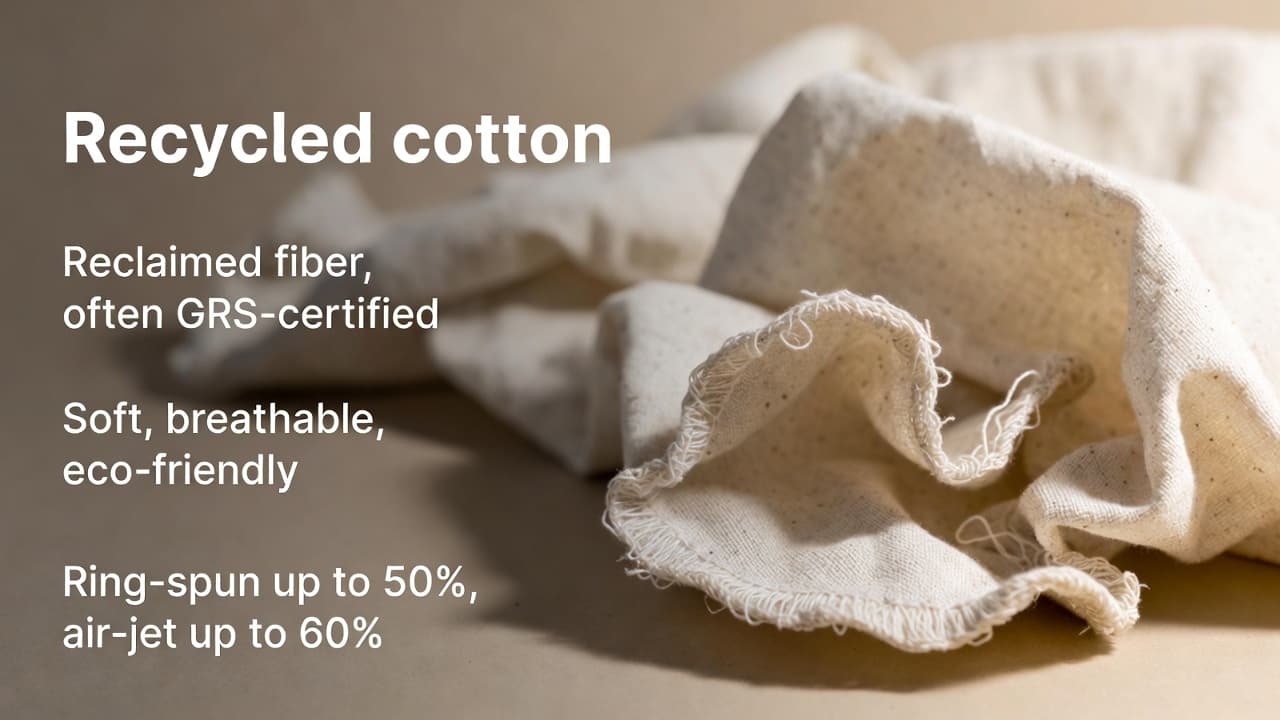
Recycled cotton is cotton fiber that has been reclaimed and reused—for example, from noil (short fibers and waste) generated during cotton processing and spinning. It belongs to the recycled-materials category and can be GRS (Global Recycling Standard) certified. Recycled cotton is often blended with virgin cotton or other fibers because noil quality varies; in ring-spun yarns the recycled content can be up to about 50%, and in air-jet (open-end) spinning up to about 60%.

In this guide, we explain what recycled cotton is, its advantages, and typical uses.


What Is Recycled Cotton?

Recycled cotton is regenerated cotton fiber that comes from reclaimed cotton (e.g. noil and other processing waste) before it is sold as virgin cotton. The noil produced during cotton processing and yarn production is collected and reused. Because noil is shorter and more irregular than premium staple, recycled cotton is usually blended with virgin cotton or other fibers. GRS (Global Recycling Standard) is an international, voluntary standard that verifies recycled content, chain of custody, social and environmental norms, and chemical restrictions through third-party certification; recycled cotton can be GRS-certified to communicate recycled content to brands and consumers.

Key Characteristics of Recycled Cotton

  • Reclaimed fiber: From pre-consumer (e.g. noil) or post-consumer sources.
  • Blended: Often blended with virgin cotton or other fibers; ring-spun can use up to ~50% recycled cotton, air-jet up to ~60%.
  • GRS: Can be part of GRS-certified supply chains to verify recycled content and sustainability claims.
  • Soft, breathable: Recycled cotton fabrics can be soft, breathable, and moisture-absorbent.
  • Eco-friendly: Reduces waste and extends the use of cotton fiber.

What Are the Advantages of Recycled Cotton?

1. Soft Touch, Breathability, Moisture Absorption

Recycled cotton fabrics can have soft hand, good breathability, and good moisture absorption and wicking, similar in comfort to many virgin-cotton fabrics.

2. Dyeability and Color Fastness

Recycled cotton can be dyed well with good color fastness, soft luster, and natural appearance.

3. Recyclable and Environmentally Friendly

As a recycled fiber, it supports resource efficiency and reduced waste in the textile chain. GRS certification helps ensure traceable recycled content and compliance with environmental and social criteria.


Recycled Cotton by the Numbers

  • Ring-spun: Recycled cotton content up to ~50% (rest virgin cotton or other fibers).
  • Air-jet (open-end) spinning: Recycled cotton content up to ~60%.
  • Source: Often pre-consumer noil from cotton processing and yarn production.

When to Choose Recycled Cotton

Choose Recycled Cotton If You Want:

  • Lower environmental impact and use of reclaimed fiber.
  • GRS or similar certification for recycled content and sustainability claims.
  • Soft, breathable cotton-like fabric with good dyeability and color fastness.
  • To support circular economy and reduced waste in textiles.

Be Aware:

  • Quality and consistency depend on the noil/reclaimed source and blend ratio; blended yarns are common to balance performance and cost.
  • End use: Suitable for many apparel and home applications; check supplier specs for strength and appearance for demanding uses.

Final Thoughts

Recycled cotton is cotton made from reclaimed fiber (e.g. noil), often blended with virgin cotton and GRS-certified. It offers softness, breathability, good dyeability, and environmental benefits. Ring-spun can contain up to ~50% recycled cotton, air-jet up to ~60%. Choosing recycled cotton supports sustainability and circular use of cotton fiber.


Frequently Asked Questions

What is recycled cotton made from?

Recycled cotton is made from reclaimed cotton fiber, such as noil (short fibers and waste) from cotton processing and yarn production. It is often blended with virgin cotton or other fibers.

What is GRS certification for recycled cotton?

GRS (Global Recycling Standard) is an international, voluntary standard that certifies recycled content, chain of custody, and social and environmental norms. GRS-certified recycled cotton allows brands and consumers to verify recycled content in the supply chain.

How much recycled cotton can be in a yarn?

In ring-spun yarns, recycled cotton can typically account for up to about 50%; in air-jet (open-end) spinning, up to about 60%. The rest is usually virgin cotton or other fibers to maintain quality and processability.


This article is part of our yarn knowledge series, offering practical insights into sustainable fibers, recycling, and certifications for buyers and makers.

この記事を共有

TwitterLinkedInFacebookEmail