Sullivans International
製品
糸編み物とかぎ針編み
私たちについて
会社概要
糸メーカー
OEM・大口供給
ブログ
アマゾンのベストセラー糸の基礎知識
ニュース
最新のアップデート
お問い合わせ
sales@sullivansintl.com@sullivansintl
© 2026 Sullivans International (China) Co., Ltd.
無断転載を禁じます。
ホーム/ブログ/糸の基礎知識/Is Merino as Warm as Cashmere? Warmth Comparison Guide
Cover Image for Is Merino as Warm as Cashmere? Warmth Comparison Guide

Is Merino as Warm as Cashmere? Warmth Comparison Guide

Sullivans International
March 1, 2026•4 min read
大量・OEM糸をお探しですか?製造能力の詳細を見る →

Merino wool and cashmere are both premium natural fibers used for winter clothing. Many people ask: Is merino as warm as cashmere? The short answer: Cashmere is warmer per ounce, but merino offers excellent warmth plus breathability and often better value.

In this guide, we compare fiber origin, warmth, breathability, and best uses so you can choose the right material for your needs.


What Is Cashmere?

Cashmere is a luxury fiber from the soft undercoat of cashmere goats (Capra hircus laniger). The goats grow a dense, fine undercoat in winter to survive cold climates. Cashmere fibers are typically 14�?9 microns in diameter—finer than most wool—and provide exceptional warmth with a soft, lightweight feel.

Key Characteristics of Cashmere

  • Exceptionally warm per unit weight
  • Soft, fine fibers (14�?9 microns)
  • Lightweight yet insulating
  • Luxurious hand feel
  • Higher price due to limited supply and labor-intensive harvesting
  • Commonly used for sweaters, scarves, and premium winter wear

What Is Merino Wool?

Merino wool comes from merino sheep, bred for their fine, soft wool. Merino fibers are typically 17�?4 microns—finer than standard wool—and offer warmth, breathability, and moisture management. Merino is more widely available and generally more affordable than cashmere.

Key Characteristics of Merino Wool

  • Warm and traps heat close to the body
  • Breathable and regulates body temperature
  • Moisture-wicking—stays comfortable when active
  • Soft (finer than standard wool)
  • More affordable than cashmere
  • Commonly used for base layers, sweaters, socks, and everyday winter wear

Merino vs Cashmere: Warmth Comparison

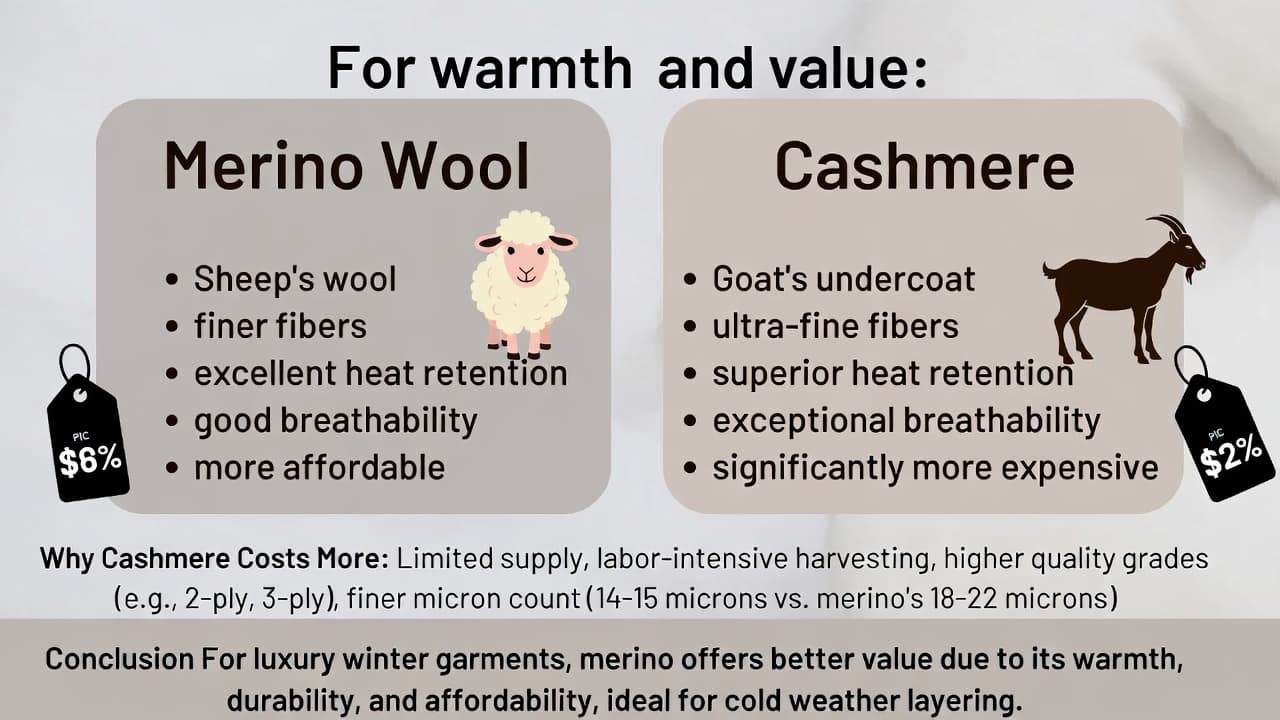
Aspect Cashmere Merino Wool
Warmth per ounce Higher Slightly lower
Fiber fineness 14�?9 microns 17�?4 microns
Breathability Good Excellent
Temperature regulation Warm Warm + regulates (less overheating)
Moisture management Good Excellent
Price Higher More affordable
Durability Delicate More durable

Summary: Cashmere is warmer per ounce and feels more luxurious. Merino is slightly less warm but offers better breathability and temperature regulation, making it ideal for layering and active wear.


Is Merino as Warm as Cashmere?

Merino is not quite as warm as cashmere when comparing equal weights, but the difference is small for most uses. Merino traps heat effectively and keeps you warm in cold conditions. Its breathability means you are less likely to overheat indoors, so it suits everyday wear better than cashmere in many situations.

When to Choose Cashmere

  • Maximum warmth with minimal weight
  • Special-occasion or luxury pieces
  • Budget allows for premium fiber

When to Choose Merino

  • Everyday winter wear
  • Layering and active use
  • Better value for warmth and comfort
  • Need for breathability and moisture management

Final Thoughts

Both cashmere and merino are excellent choices for winter clothing. Cashmere offers slightly more warmth and luxury; merino offers strong warmth, breathability, and value. For most people, merino is the better choice for daily wear, while cashmere suits special occasions and those who prioritize luxury.


Frequently Asked Questions

Is merino wool as warm as cashmere?

Cashmere is slightly warmer per ounce due to finer, denser fibers. Merino is still very warm and often more comfortable for all-day wear because of its breathability.

Which is better for layering: merino or cashmere?

Merino is generally better for layering because it breathes well and manages moisture, reducing overheating when worn under other layers.

Why is cashmere more expensive than merino?

Cashmere comes from the undercoat of cashmere goats, which produce limited fiber per animal. Harvesting and processing are labor-intensive, leading to higher prices.

Can merino wool get wet?

Yes. Merino wicks moisture and can retain some insulation when damp, making it suitable for active wear and damp conditions.


This article is part of our fabric knowledge series, offering practical insights into wool types, fiber performance, and textile selection for buyers and makers.

この記事を共有

TwitterLinkedInFacebookEmail