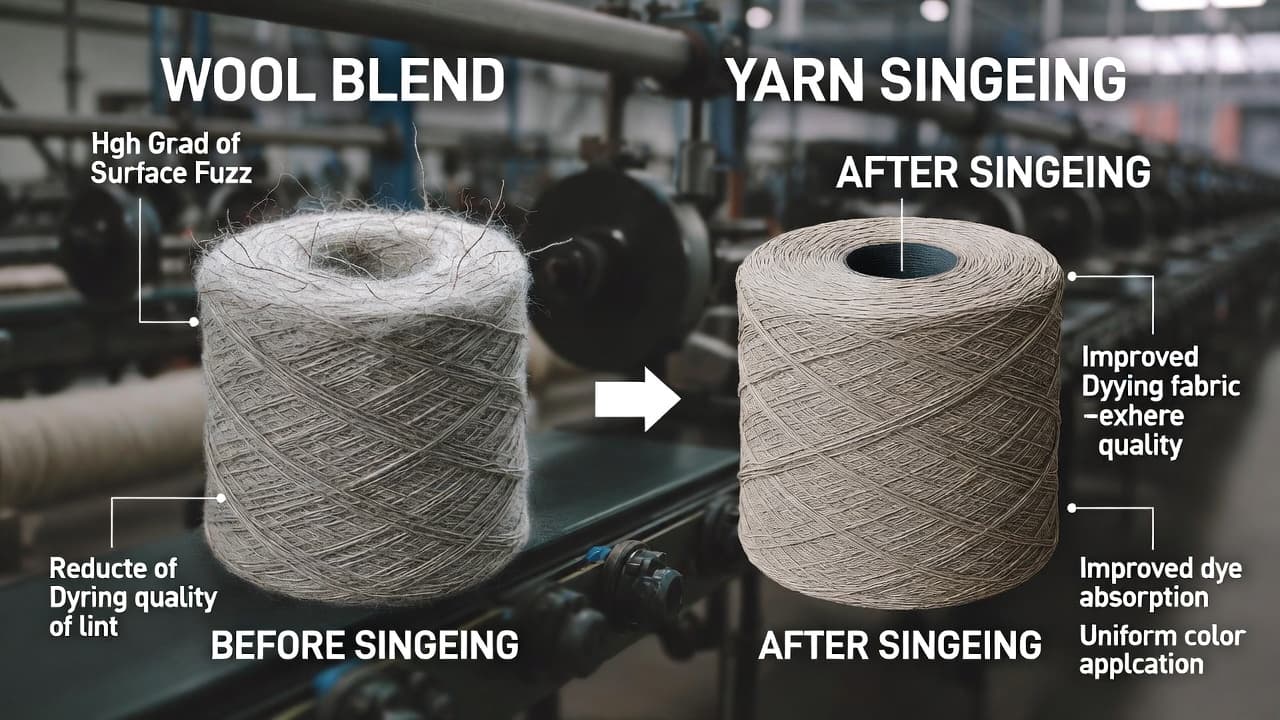

La bruciatura del filato è un processo di finissaggio tessile che elimina il pelo superficiale (pilosità) dal filato o tessuto facendolo passare rapidamente attraverso una fiamma o su una superficie metallica calda. Si usa per migliorare assorbimento del colorante, uniformità del colore e qualità del tessuto, soprattutto per tessili di alta qualità.
In questa guida spieghiamo cos'è la bruciatura del filato, perché si usa e come beneficia il tessuto finale.
La bruciatura del filato consiste nel far passare rapidamente il filato (o tessuto) attraverso una fiamma o su una superficie metallica calda per bruciare il pelo superficiale (pilosità). Il processo è breve così la fibra principale non viene danneggiata—solo le fibre sporgenti vengono rimosse.
La bruciatura può essere applicata a:
I tessuti di alta qualità usano spesso prima la bruciatura del filato per un risultato più pulito e uniforme.
La lunga pilosità superficiale sul filato di cotone intrappola polvere e impurità. La bruciatura elimina questo pelo e rende il filato più pulito e più facile da lavorare.
La pilosità superficiale può causare assorbimento disuniforme del colorante e luminosità ridotta. Il filato bruciato si tinge in modo più uniforme e produce colori più vivaci e omogenei.
La pilosità può portare a sbavature e striature (flowering) durante la tintura. La bruciatura crea una superficie più liscia per un'applicazione del colore più costante.
I tessuti tessuti con filato bruciato sono più fini, più delicati e più facili da tingere rispetto a quelli non bruciati. Il risultato è una finitura di qualità superiore per tessili premium.
| Aspetto | Bruciatura del filato | Bruciatura del tessuto |
|---|---|---|
| Quando | Prima di tessitura/maglieria | Dopo la tessitura |
| Applicazione | Filato singolo | Tessuto tessuto |
| Uso tipico | Tessuti alta qualità | Tessili generali |
| Risultato | Filato più pulito, migliore tintura | Superficie tessuto più liscia |
La bruciatura del filato è un passo di preparazione che elimina il pelo superficiale per migliorare tintura, uniformità del colore e qualità del tessuto. È particolarmente importante per tessuti di alta qualità che richiedono una finitura pulita e uniforme. Capire la bruciatura aiuta ad apprezzare come la lavorazione tessile influisce sul prodotto finale.
La bruciatura è il processo di eliminazione del pelo superficiale (pilosità) dal filato o tessuto con fiamma o superficie metallica calda. Migliora tintura e qualità del tessuto.
Il filato di cotone viene bruciato per eliminare pilosità, ridurre polvere, migliorare uniformità e luminosità del colore, e produrre tessuto più fine e pulito.
Eseguita correttamente, la bruciatura elimina solo il pelo superficiale. La fibra principale non viene danneggiata perché l'esposizione è breve e controllata.
No. La bruciatura è comune per cotone e miscele di alta qualità. Alcuni tessuti la omettono in base alla finitura desiderata e al costo.
Questo articolo fa parte della nostra serie tessile, con approfondimenti pratici su lavorazione del filato, finissaggio e qualità del tessuto per acquirenti e produttori.