Sullivans International
Prodotti
FilatoLavoro a maglia e uncinetto
Chi siamo
Profilo Aziendale
Produttore di filati
OEM e fornitura in grandi quantitĂ 
Blog
I best seller di AmazonApprofondimenti sul filato
Notizie
Ultimi aggiornamenti
Contattaci
sales@sullivansintl.com@sullivansintl
© 2026 Sullivans International (China) Co., Ltd.
Tutti i diritti riservati.
Home/Blog/Approfondimenti sul filato/What Is Knitted Cotton? Knitted Cotton vs Pure Cotton Explained
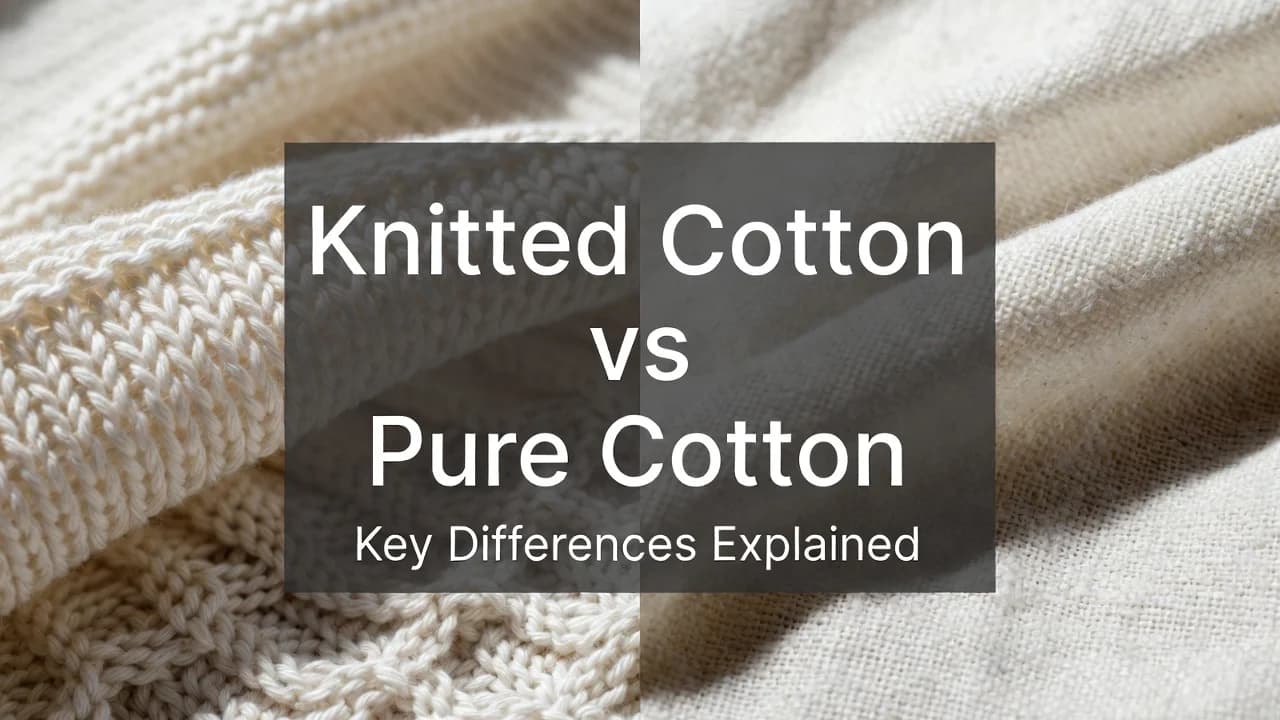
Cover Image for What Is Knitted Cotton? Knitted Cotton vs Pure Cotton Explained

What Is Knitted Cotton? Knitted Cotton vs Pure Cotton Explained

Sullivans International
February 1, 2026•5 min read
Looking for bulk supply or OEM yarn?Learn more about our manufacturing capabilities →

Cotton fabrics are widely loved for their comfort, breathability, and skin-friendly properties, but many people are confused by terms like knitted cotton and pure cotton. They often look similar, feel similar, and are both labeled as “cotton”—so what’s the real difference?

In this article, we’ll clearly explain what knitted cotton is, what pure cotton means, how they differ in structure and performance, and ultimately which one is better for different needs.


What Is Knitted Cotton?

Knitted cotton is a fabric made from cotton yarns formed into interlocking loops using knitting techniques. Instead of a rigid warp-and-weft structure, the yarn bends and connects in a looped structure, similar to sweater knitting but usually much finer.

Key Characteristics of Knitted Cotton

  • Made from cotton yarn, but constructed by knitting
  • Naturally elastic and stretchable
  • Soft, comfortable, and skin-friendly
  • Excellent breathability and moisture absorption
  • Provides gentle warmth without heaviness
  • Commonly used for children’s clothing, T-shirts, underwear, and casual wear

Knitted cotton is especially popular in garments that require flexibility and comfort, making it ideal for daily wear.


What Is Pure Cotton?

Pure cotton refers to a fabric made from 100% cotton fiber. The term describes the fiber composition, not the fabric structure. Pure cotton fabrics can be woven or knitted, but they are defined by the absence of synthetic fibers.

Key Characteristics of Pure Cotton

  • Composed entirely of natural cotton fiber
  • Highly breathable and moisture-absorbing
  • Soft, hygienic, and comfortable against the skin
  • Good heat retention
  • Commonly used for shirts, bedding, underwear, and close-fitting garments

Pure cotton is often chosen for its natural feel and safety, especially for sensitive skin.


Knitted Cotton vs Pure Cotton: Understanding the Core Difference

Although they appear similar, knitted cotton and pure cotton differ in fabric logic.

  • Knitted cotton describes a fabric structure
  • Pure cotton describes a fiber content

In practice, most knitted cotton fabrics are also pure cotton—but not all pure cotton fabrics are knitted.


Key Differences Between Knitted Cotton and Pure Cotton

1. Fabric Structure

  • Knitted Cotton: Loop-based structure, flexible and stretchable
  • Pure Cotton (Woven): Tighter, more stable warp-and-weft structure

The looped construction gives knitted cotton its characteristic elasticity.


2. Elasticity & Comfort

  • Knitted Cotton: Naturally elastic, moves with the body
  • Pure Cotton: Less stretch unless blended or specially woven

This makes knitted cotton more comfortable for active wear and children’s clothing.


3. Dyeability & Color Performance

  • Knitted Cotton: Excellent dye absorption, bright colors, good color fastness
  • Pure Cotton: Also dyes well, but brightness may vary depending on weave

Knitted cotton often appears more vivid due to its surface structure.


4. Durability & Shape Retention

  • Knitted Cotton: Softer but can deform over time if poorly constructed
  • Pure Cotton: More resistant to deformation and generally more stable

Pure cotton woven fabrics tend to hold shape better in long-term use.


5. Heat Resistance & Pilling

  • Pure Cotton: Better heat resistance and less prone to deformation
  • Knitted Cotton: Surface is smoother but may pill if yarn quality is low

Fabric quality and finishing play a major role here.


Which Is Better: Knitted Cotton or Pure Cotton?

There is no absolute winner—the better choice depends on how the fabric will be used.

Choose Knitted Cotton If You Want:

  • Stretch and flexibility
  • Maximum comfort and softness
  • Breathable, casual, or children’s garments
  • Better fit for movement

Choose Pure Cotton If You Want:

  • Structural stability
  • Less deformation and shrinkage risk
  • Crisp appearance for shirts or bedding
  • Long-term durability

In essence, knitted cotton prioritizes comfort, while pure cotton prioritizes stability.


Washing & Care for Knitted Cotton and Pure Cotton

Since both fabrics are cotton-based, their care methods are largely the same:

  • Wash with cool or lukewarm water
  • Avoid high-temperature washing
  • Use gentle detergents
  • Air dry in a ventilated area
  • Avoid prolonged sun exposure
  • Light ironing after drying is recommended
  • Hang for storage to prevent creasing

Shrinkage is natural for cotton, so proper washing is key to maintaining fabric quality.


Final Thoughts

Knitted cotton and pure cotton are not rivals—they simply serve different purposes. Knitted cotton excels in comfort, elasticity, and wearability, while pure cotton stands out for natural purity and structural reliability.

Understanding the difference between fiber content and fabric construction helps you make better choices when selecting clothing or textiles. When chosen correctly, both fabrics offer the timeless comfort that cotton is known for.


This article is part of our fabric knowledge series, offering practical insights into cotton structures, yarn behavior, and textile performance for buyers, designers, and manufacturers alike.

Condividi questo articolo

TwitterLinkedInFacebookEmail