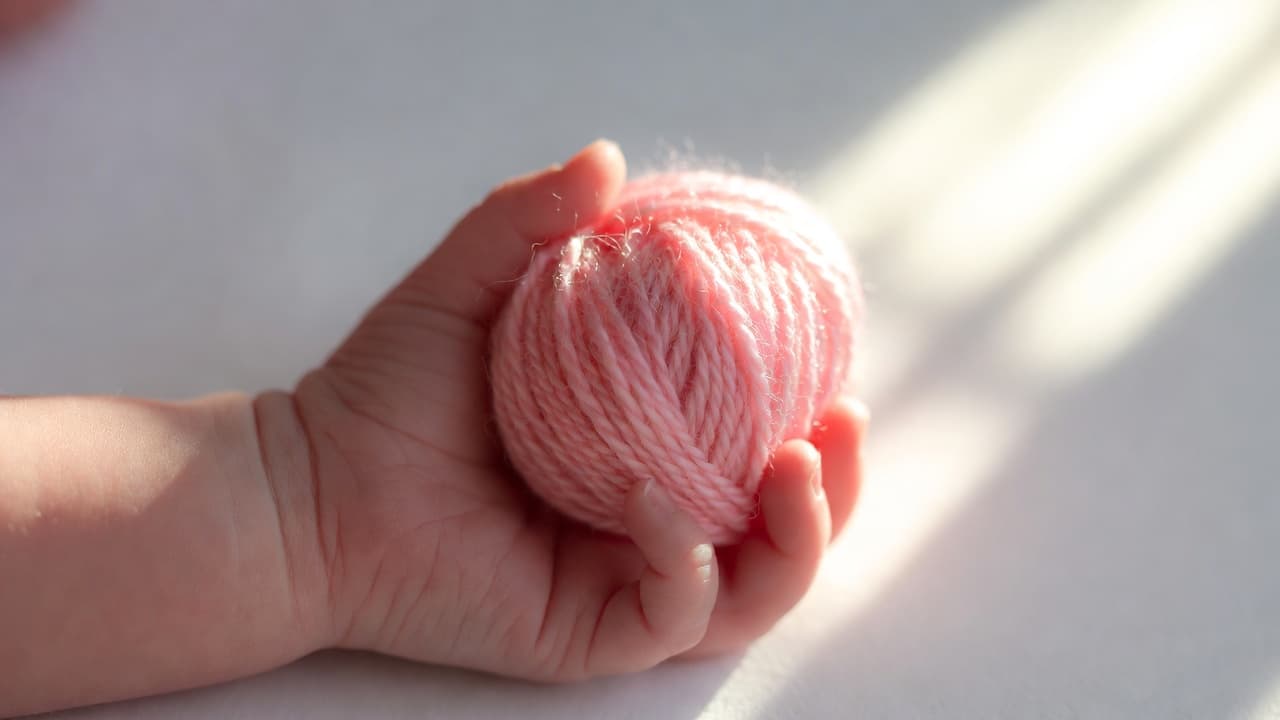

Le fil bébé et le fil classique diffèrent par la douceur, les propriétés hypoallergéniques et l'inflammabilité. Le fil bébé est conçu pour la sécurité des nourrissons : ultra-doux, hypoallergénique, anti-démangeaisons et résistant au feu. Le fil classique contient souvent de l'acrylique, qui peut être inflammable et n'est pas recommandé pour les produits bébé.
Dans ce guide, nous comparons fil bébé vs fil classique et expliquons pourquoi le fil bébé est recommandé pour les vêtements et couvertures de bébé.
Le fil bébé est spécialement formulé pour les produits destinés aux nourrissons et tout-petits. Il est ultra-doux, hypoallergénique, anti-démangeaisons et résistant au feu. Il évite les produits chimiques agressifs et les matériaux susceptibles d'irriter la peau sensible ou de présenter un risque d'incendie.
Le fil classique est un fil polyvalent pour les projets adultes et enfants plus âgés. Il peut être doux et parfois hypoallergénique, mais contient souvent de l'acrylique, qui est inflammable. Il n'est pas conçu pour les normes de sécurité des nourrissons.
| Aspect | Fil bébé | Fil classique |
|---|---|---|
| Douceur | Ultra-doux | Correcte |
| Hypoallergénique | Oui | Parfois |
| Anti-démangeaisons | Oui | Variable |
| Inflammabilité | Résistant au feu | Souvent inflammable (acrylique) |
| Acrylique | Généralement évité | Souvent présent |
| Idéal pour | Bébés, tout-petits | Adultes, enfants plus âgés |
Les fils classiques contenant de l'acrylique sont inflammables : ils peuvent s'enflammer et brûler rapidement. Le fil bébé est formulé pour être résistant au feu, réduisant le risque pour les couvertures, vêtements de nuit et accessoires utilisés près des nourrissons. C'est une différence de sécurité essentielle pour les produits bébé.
Le fil bébé est ultra-doux, hypoallergénique, anti-démangeaisons et résistant au feu – conçu pour la sécurité des nourrissons. Le fil classique contient souvent de l'acrylique et est inflammable, ce qui le rend inadapté aux produits bébé. Utilisez toujours du fil bébé pour vêtements, couvertures et accessoires de bébé.
Non recommandé. Le fil classique contient souvent de l'acrylique et est inflammable. Le fil bébé est résistant au feu et plus sûr pour les nourrissons.
Un fil hypoallergénique est exempt de produits chimiques et matériaux provoquant couramment des réactions allergiques. Il est plus doux pour la peau sensible.
L'acrylique est inflammable et peut présenter un risque d'incendie. Le fil bébé évite généralement l'acrylique pour respecter les normes de sécurité des produits bébé.
Oui. Le fil bébé en coton est souvent utilisé : il est doux, respirant et, s'il est certifié bébé, respecte les normes de sécurité. Vérifiez l'étiquette pour une certification spécifique bébé.
Cet article fait partie de notre série sur les fils, avec des conseils pratiques pour choisir un fil sûr pour les projets bébé et tout-petit.