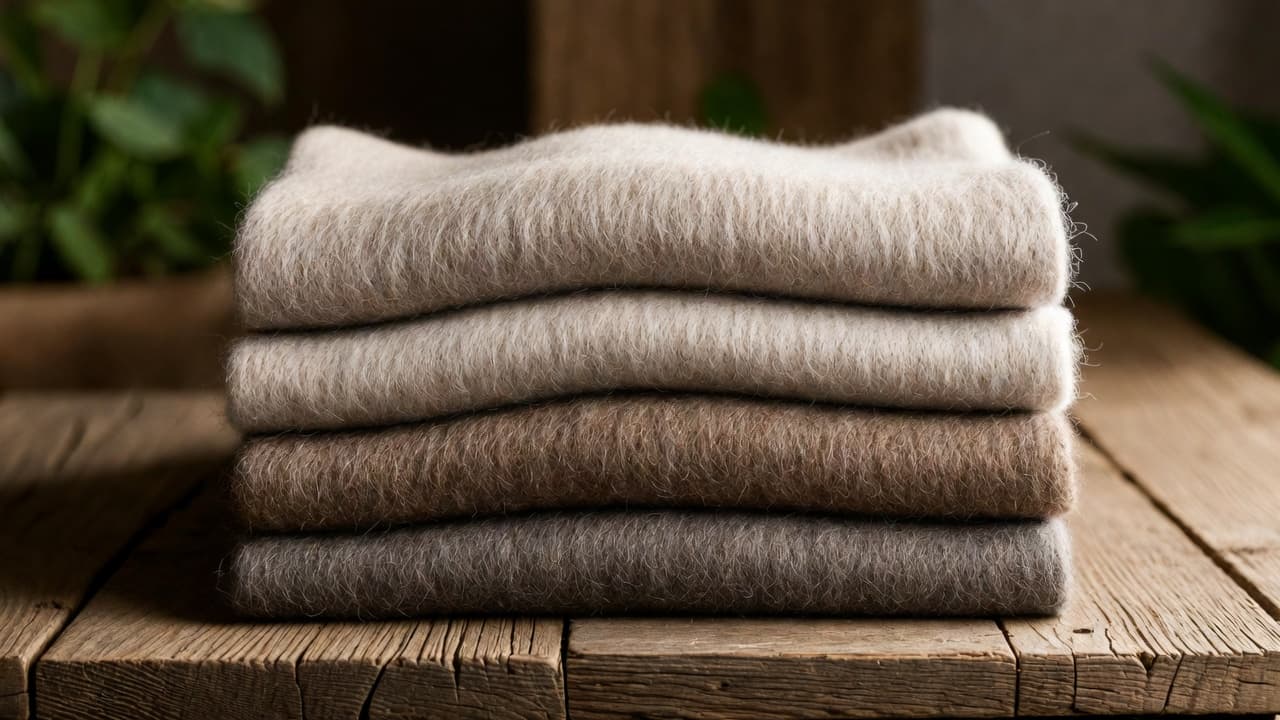

La lana virgen es lana que no ha sido procesada ni utilizada anteriormente; suele proceder del primer esquileo de la oveja y es más fina y suave que la lana reciclada o reutilizada. El precio más alto refleja una oferta limitada, mayor calidad (menor recuento de micras) y, a menudo, un procesado más cuidadoso y prácticas sostenibles.
En esta guía explicamos por qué la lana virgen es cara y cuándo merece la pena elegirla.
La lana virgen es lana del primer esquileo que no se ha utilizado en otro producto ni reprocesado. La calidad se determina en gran medida por el recuento de micras—el diámetro de la fibra en micrones. Cuanto menor es el recuento de micras, más fina y suave es la lana. La lana virgen suele tener un recuento de micras más bajo que las lanas mezcladas o recicladas, lo que ofrece mejor suavidad, brillo y confort.
La lana virgen suele ser de mayor calidad porque proviene del primer esquileo. Las fibras más finas (menor recuento de micras) tienen un precio premium: son más suaves, más brillantes y más agradables. Esta diferencia de calidad justifica directamente un precio más alto.
La lana virgen es limitada en oferta. Cada oveja solo produce un «primer esquileo», y esa lana debe esquilarse, clasificarse y procesarse con cuidado para mantener la calidad. El volumen limitado y los mayores costes de manipulación contribuyen al precio final.
Muchos productores de lana virgen siguen prácticas agrícolas sostenibles y éticas—bienestar animal, cuidado del medio ambiente y apoyo a la comunidad. Estas prácticas pueden aumentar los costes de producción, pero favorecen la sostenibilidad a largo plazo y suelen reflejarse en el precio.
La lana virgen a menudo pasa por un procesado especial (p. ej., lavado, peinado) para eliminar impurezas y alinear las fibras. Esto añade costes, pero ayuda a garantizar alta calidad y durabilidad y que la lana esté libre de contaminación.
| Factor | Lana virgen | Otras / lana reciclada |
|---|---|---|
| Origen | Solo primer esquileo | Esquileos posteriores, mezclas o reciclado |
| Recuento de micras | Normalmente más bajo (más fina) | A menudo más alto (más gruesa) |
| Oferta | Limitada | Más abundante |
| Procesado | A menudo más cuidadoso | Variable |
| Precio | Más alto | Generalmente más bajo |
La lana virgen es cara por la calidad del primer esquileo, el menor recuento de micras, la oferta limitada y, a menudo, el procesado sostenible. Si el precio merece la pena depende de sus prioridades: suavidad, durabilidad y ética favorecen la lana virgen; el presupuesto y algunos objetivos de sostenibilidad pueden favorecer otras lanas.
La lana virgen es lana del primer esquileo que no se ha utilizado en otro producto ni reprocesado. Suele ser más fina y suave por su menor recuento de micras.
Un recuento de micras más bajo significa fibras más finas y suaves. La lana virgen suele tener un recuento de micras más bajo que la lana mezclada o reciclada, lo que justifica un precio más alto.
Muchos productores de lana virgen utilizan prácticas agrícolas sostenibles y éticas. El término «virgen» se refiere a la calidad de primer uso, no a la sostenibilidad; consulte certificaciones o declaraciones de la marca sobre estándares ambientales y de bienestar.
Este artículo forma parte de nuestra serie de conocimiento sobre hilos con información práctica sobre tipos de lana, calidad y compras para tejedores y compradores.