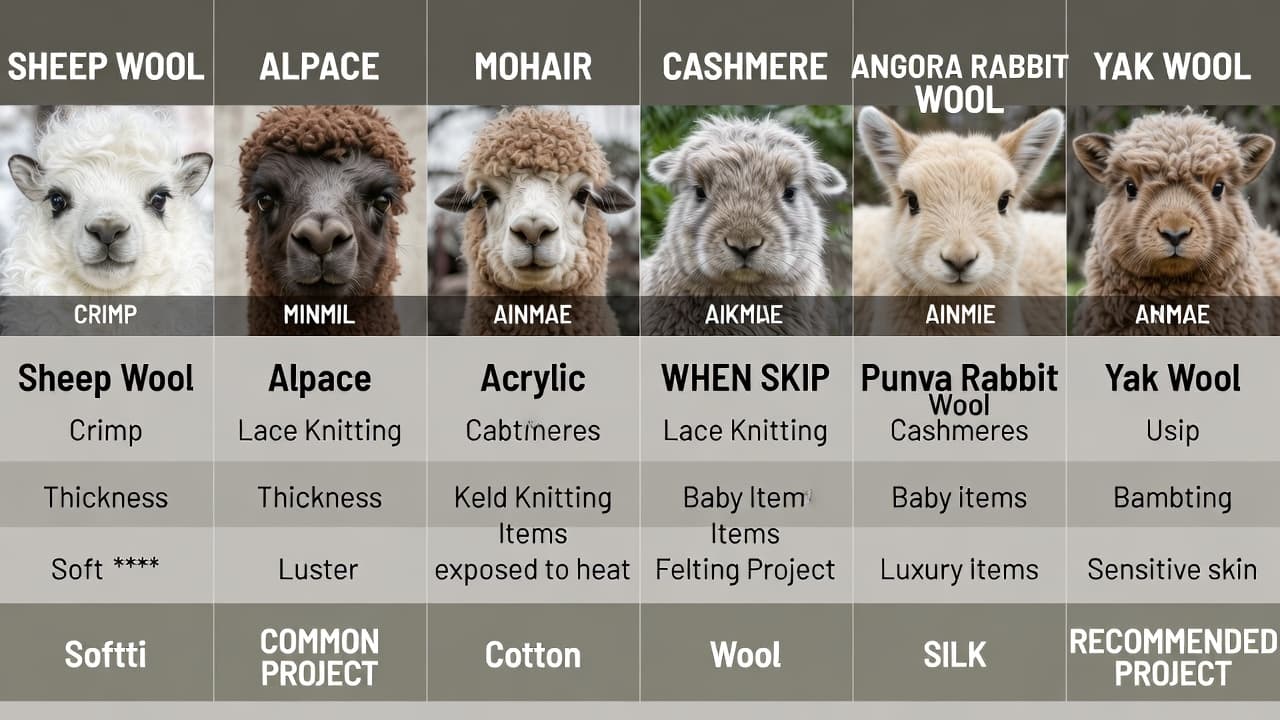

La lana proviene de muchos animales—ovejas, alpaca, cabras cashmere, cabras angora, conejos, yak y más. Cada tipo tiene características distintas: suavidad, calidez, brillo y formación de bolitas. Esta guía cubre los principales tipos de lana y sus usos típicos en textiles.
Origen: Ovejas (p. ej., merino de Australia, Nueva Zelanda, Sudáfrica)
Características: Buena calidez, absorción y elasticidad. La calidad y el precio varían según la raza. El merino está entre las más finas y suaves.
Usos: Suéteres, calcetines, mantas, textiles de alta gama. Oceanía produce alrededor del 40 % de la lana mundial.
Origen: Alpaca (Sudamérica)
Características: Muy suave, cálida y cada vez más popular. A menudo más cara que la lana de oveja. Fibras largas y lisas.
Usos: Prendas de lujo, mantas, accesorios. A menudo mezclada con otras fibras por coste y rendimiento.
Origen: Cabra angora (Sudáfrica, Turquía, Argentina)
Características: Fibras largas y sedosas con superficie lisa y brillo natural. Resiste mejor las bolitas y el fieltro que muchas lanas. A menudo mezclado para reducir el pilling en otras fibras.
Usos: Tejidos de alta calidad, suéteres, textiles de lujo. La fibra tiene un brillo distintivo.
Origen: Cabra cashmere (China, Mongolia, Irán, Asia Central)
Características: Subpelo muy fino y suave. Fibra de lujo con alta relación calor-peso. Cara por oferta limitada y procesamiento.
Usos: Suéteres, bufandas, accesorios premium.
Origen: Conejo angora
Características: Muy suave, largo, cálido. Superficie lisa—las fibras no se adhieren bien, por lo que la angora pura es difícil de hilar y puede soltarse. Normalmente mezclada con lana u otras fibras.
Usos: Mezclas para suavidad y calidez. A veces usada en «falso cashmere» de baja calidad.
Origen: Yak (región del Himalaya)
Características: Cálida, suave y duradera. Similar al cashmere en finura. Menos común que la lana de oveja o cashmere.
Usos: Mezclas, punto de lujo, equipamiento para frío.
| Tipo | Origen | Rasgos clave | Uso típico |
|---|---|---|---|
| Oveja/Merino | Oveja | Cálida, elástica, versátil | Suéteres, calcetines, mantas |
| Alpaca | Alpaca | Suave, cálida, premium | Prendas de lujo |
| Mohair | Cabra angora | Brillante, poco pilling | Tejidos de alta gama |
| Cashmere | Cabra cashmere | Fina, lujosa | Prendas premium |
| Conejo angora | Conejo | Muy suave, a menudo mezclada | Mezclas para suavidad |
| Yak | Yak | Cálida, duradera | Mezclas, frío |
Los tipos de lana incluyen lana de oveja (incluido merino), alpaca, mohair, cashmere, conejo angora, yak y otros. Cada uno tiene distinta suavidad, calidez y usos. Elige según proyecto, presupuesto y tacto deseado.
El cashmere y el merino de alta calidad están entre los más suaves. La alpaca y el conejo angora también son muy suaves.
El mohair tiene escamas planas y lisas que se superponen menos que la lana de oveja, por lo que las fibras tienen menos probabilidad de enredarse y formar bolitas.
La angora pura es difícil de hilar sola por fibras lisas de baja cohesión. Suele mezclarse con lana u otras fibras.
Australia es un gran productor, especialmente de merino. Nueva Zelanda, China y Sudáfrica también producen cantidades significativas.
Este artículo forma parte de nuestra serie de conocimiento sobre lana, con información práctica sobre tipos, características y selección para proyectos textiles.