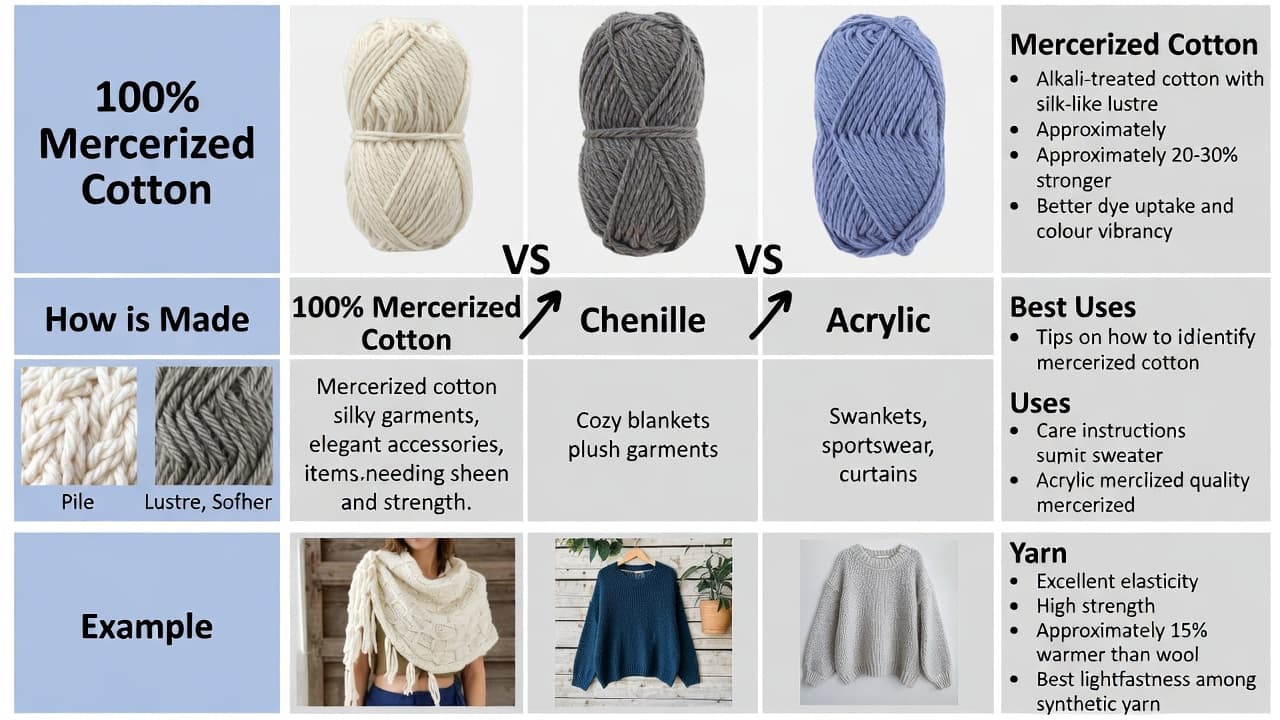

El hilo acrílico es un hilo de fibra sintética fabricado con poliacrilonitrilo (PAN). Imita a la lana en suavidad y calidez, y ofrece además mejor elasticidad que la lana y la mejor solidez a la luz entre las fibras sintéticas. Se usa mucho en prendas de punto, mantas, ropa deportiva y textiles para el hogar.
En esta guía explicamos qué es el hilo acrílico, sus características principales y sus usos típicos.
El hilo acrílico es hilo hilado a partir de fibra acrílica (poliacrilonitrilo). La fibra acrílica se produce mediante polimerización, hilado, estirado y termofijado; la fibra terminada suele rizarse y cortarse en fibra corta para el hilado. El acrílico a veces se llama "lana sintética" porque es esponjoso, suave y cálido — con una retención del calor aproximadamente un 15% superior a la lana — y a menudo se mezcla con lana para aplicaciones de uso cotidiano.
El hilo acrílico se utiliza en una amplia gama de aplicaciones de vestir y del hogar:
| Uso | Notas |
|---|---|
| Jerséis y prendas de punto | Suave, cálido, a menudo mezclado con lana |
| Mantas y colchas | Buen volumen y retención del calor |
| Ropa deportiva y punto informal | Fácil cuidado, no destiñe |
| Cortinas y lonas | Excelente solidez a la luz |
| Pelo sintético y peluche | Tacto voluminoso y suave |
| Calcetines, gorros, bufandas | Económico y duradero |
Los hilos acrílicos voluminosos convencionales (p. ej. 820, 826, 832, 842) son habituales. También existe el hilo acrílico sólido (no voluminoso), que se comporta de forma distinta en cuanto a densidad y caída del tejido.
El hilo acrílico es un sintético versátil con calidez y suavidad parecidas a las de la lana, buena solidez a la luz y buena elasticidad. Sirve para jerséis, mantas, ropa deportiva y textiles para el hogar. La elección depende del tipo de proyecto, las necesidades de cuidado y la preferencia por fibras naturales o sintéticas.
El hilo acrílico está hecho de fibra de poliacrilonitrilo (PAN). La fibra se produce mediante polimerización química y luego se hila en fibra corta y hebra; a menudo se riza para añadir volumen y suavidad.
El acrílico retiene aproximadamente un 15% más de calor que la lana y se usa a menudo como sustituto de la lana o en mezclas para jerséis y mantas.
Sí. El acrílico generalmente se puede lavar a máquina y es fácil de cuidar; consulta la etiqueta del ovillo para las instrucciones de temperatura y secado.
El hilo acrílico voluminoso utiliza la elasticidad térmica de la fibra para crear un hilo esponjoso y suave. Los tipos convencionales incluyen el 820, 826, 832 y 842; se diferencian del acrílico sólido (no voluminoso) en tacto y volumen.
Este artículo forma parte de nuestra serie de conocimientos sobre hilos, con consejos prácticos sobre tipos de hilo, propiedades de las fibras y aplicaciones para tejedores y crocheteros.