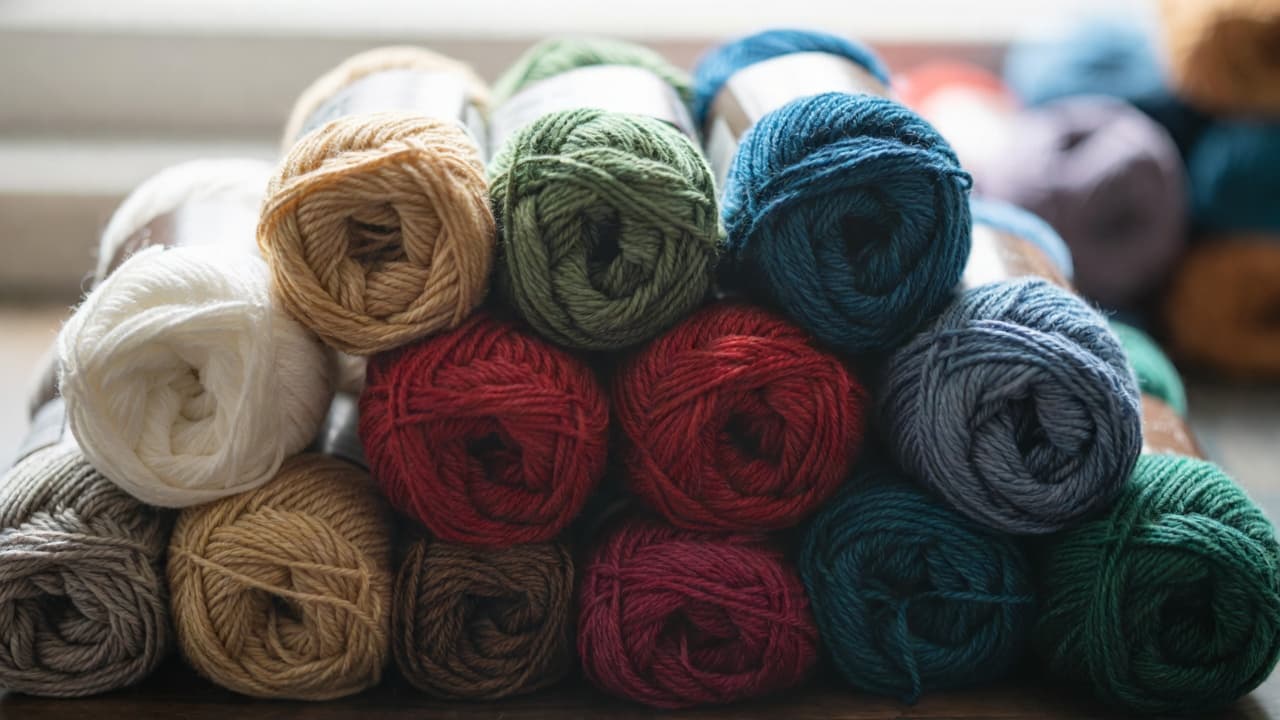

El hilo acrílico es hilo hecho de un polímero sintético llamado poliacrilonitrilo (PAN)—así que sí, es un tipo de plástico. El polímero se fila en fibras y luego en hilos. El acrílico es asequible, duradero, color estable y versátil en textura y color; no es biodegradable y es menos transpirable que la mayoría de las fibras naturales.
En esta guía aclaramos qué es el hilo acrílico, cómo se compara con las fibras naturales y cuándo elegirlo o evitarlo.
El hilo acrílico es hilo hecho de fibra acrílica, producida a partir de poliacrilonitrilo—un polímero sintético, es decir, un plástico. El polímero se fila en fibras y luego en hilos para tejer y crochet. El acrílico puede parecer y sentirse como lana, algodón o seda y a menudo se tiñe en una amplia gama de colores; también puede diseñarse con propiedades como evacuación de humedad o resistencia al fuego.
Sí. El hilo acrílico se hace de poliacrilonitrilo, que es un tipo de plástico. Eso no significa que sea «malo»—significa que es sintético y tiene distintos rasgos de cuidado, medio ambiente y rendimiento que la lana o el algodón. Elegirlo depende del presupuesto, el proyecto y las prioridades (p. ej. facilidad de cuidado vs. fibras naturales y sostenibilidad).
| Aspecto | Acrílico (plástico) | Lana / Algodón (natural) |
|---|---|---|
| Material | Polímero sintético (plástico) | Fibra animal o vegetal |
| Coste | Generalmente menor | Generalmente mayor |
| Encogimiento / decoloración | Resiste encogimiento y decoloración | Puede encoger; puede decolorar |
| Transpirabilidad | Menor | Mayor |
| Biodegradabilidad | No | Sí (en condiciones normales) |
| Plagas / podredumbre | Resistente | Puede verse afectado |
| Textura / color | Puede imitar lana, algodón, seda | Tacto y tintes naturales |
El hilo acrílico es un hilo a base de plástico (poliacrilonitrilo). Es asequible, duradero y versátil, pero no biodegradable y menos transpirable que lana o algodón. Usarlo o no es una elección personal según proyecto, presupuesto y prioridades ambientales.
Sí. El hilo acrílico se hace de poliacrilonitrilo, un polímero sintético (un tipo de plástico), filado en fibras y luego en hilo.
El acrílico no es biodegradable y puede persistir en vertederos. Tiene una huella ambiental distinta a las fibras naturales; la elección depende de sus prioridades de sostenibilidad.
Algunas personas experimentan irritación cutánea o alergias con acrílico. Si tiene piel sensible, pruebe una zona pequeña o elija fibras naturales.
Este artículo forma parte de nuestra serie de conocimiento sobre hilos, con información práctica sobre tipos de fibra y selección para tejedores y crochetistas.